
Our Gardening & Landscaping Service Areas Across Adelaide
BP Blitz services 80+ suburbs right across Adelaide. Find your suburb below to see local gardening and lawn care.
GET A FREE QUOTE
Simple Monthly Garden Care Plans
We take care of everything, so you enjoy your free time.
areas we serve
Gardening and Landscaping
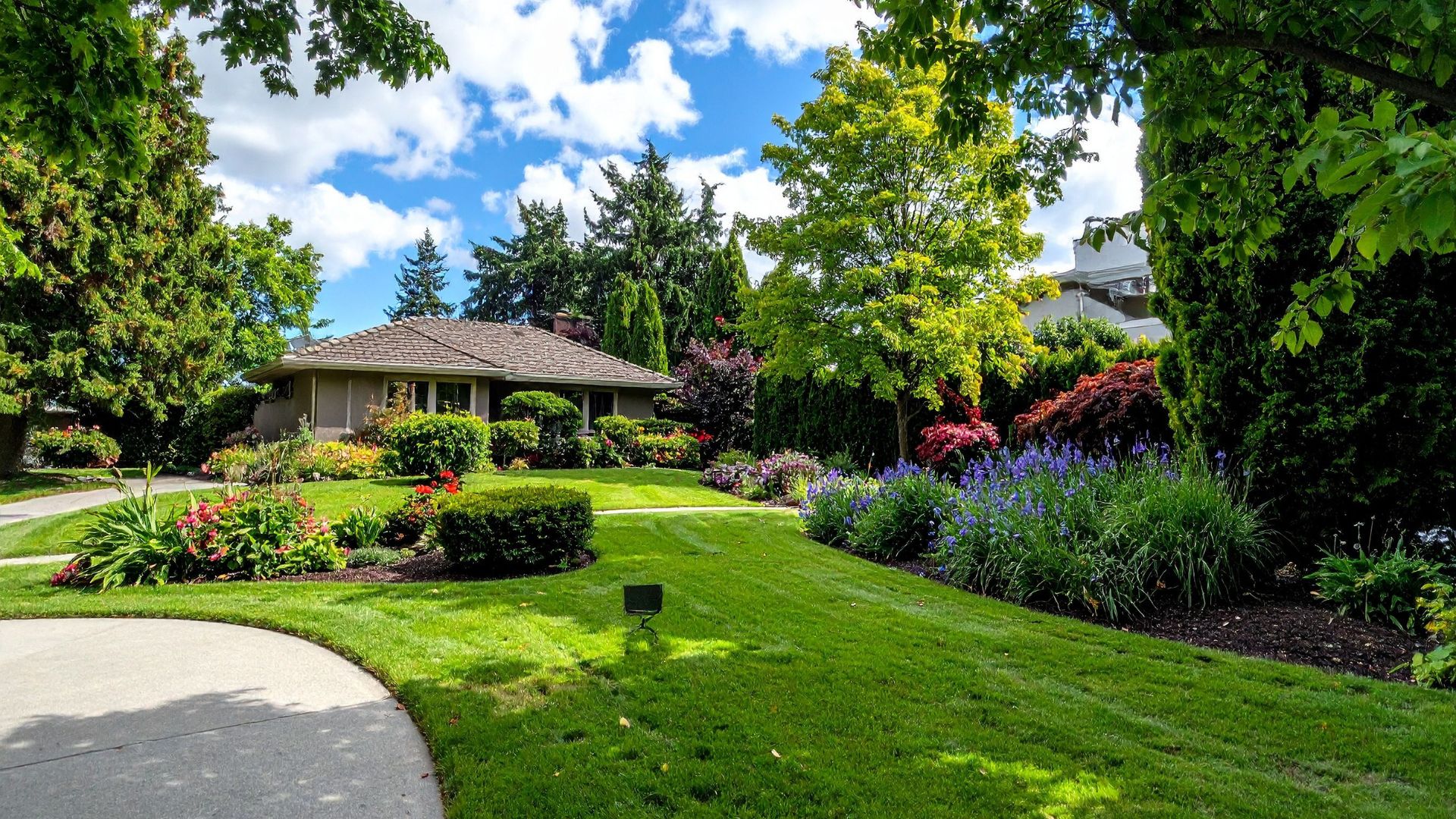
Salisbury is home. BP Blitz works out of Brooklyn Avenue, so the gardens we look after here are in the streets around us rather than at the end of a long drive. This is reactive clay country, the ground that swells through a wet winter and cracks open by February, and it dictates everything from how a lawn is laid to why beds waterlog in June and bake in January. Most of the housing is 1950s and 1960s Housing Trust stock on 600 to 800 square metre blocks, much of it now being subdivided, with kikuyu and couch lawns that are sixty years old. We handle mowing, garden maintenance, turf, irrigation, mulch and gutters right across the suburb. Call Mitesh on 0406 147 913.
Beaumont was laid out as a village in 1849, and the ground it sits on has its own entry in Adelaide's soil record: the Beaumont Association, a shallow rendzina and terra rossa formed directly on outcropping Beaumont Dolomite. The state soil survey calls it invariably shallow, not more than one to two feet, roughly 300 to 600 millimetres, before a spade hits weathered limestone. That single fact explains most of what goes wrong in a Beaumont garden: alkaline lime-rich ground that locks up iron and yellows camellias and citrus, a root zone that runs dry fast through February, and slopes where the same survey warns of soil creep. Add heritage olives planted in 1852 and a canopy of deciduous street trees, and this is a suburb that rewards a gardener who knows the ground. Call Mitesh on 0406 147 913 for a free measured quote.
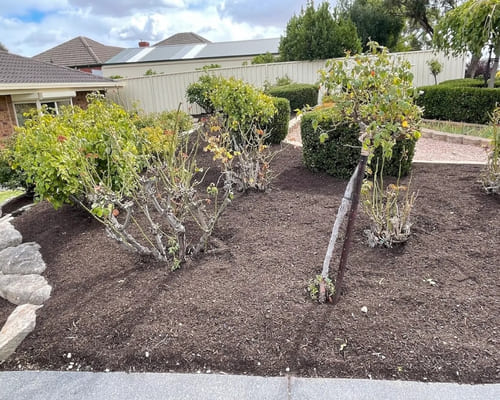
Brighton is the one suburb on our round where the garden is built on beach sand, and not figuratively. When the Coast Protection Board writes the specification for sand good enough to replenish Adelaide's beaches, the benchmark it measures against is the sand at Brighton: silica, at least half of it coarser than 0.2 millimetres, less than 5 per cent silt and clay. Under five per cent fines is the whole gardening problem in a single number, because silt and clay are the fraction that holds water and hangs on to fertiliser. Water drains before roots reach it, feed follows the water down, and the onshore wind carries salt over the top of the lot. Add kikuyu and couch escaping into the dunes, gutters corroding in salt air, and a suburb where nearly a third of homes are semi-detached with courtyard gardens, and Brighton rewards a gardener who works with the sand rather than against it. Call Mitesh on 0406 147 913 for a free measured quote.
Albert Park was laid out in 1877 and sold on the strength of its rich alluvial soil, advertised as ground for flower and market gardens. That sales pitch is still the single most useful thing to know about gardening here. The free-draining western sand grows things quickly when it is fed and watered, and gives up water and nutrient just as quickly when it is not. The Bureau of Meteorology's coastal-plain gauge at Adelaide Airport averages only about 440 millimetres of rain a year, close to 100 millimetres under the Kent Town gauge on the other side of the city, so a summer here is carried by irrigation or it is not carried at all. Across this small 0.8 square kilometre suburb of roughly 1,780 people we look after original front gardens, tenanted blocks and new courtyards. Call Mitesh on 0406 147 913 for a free measured quote.
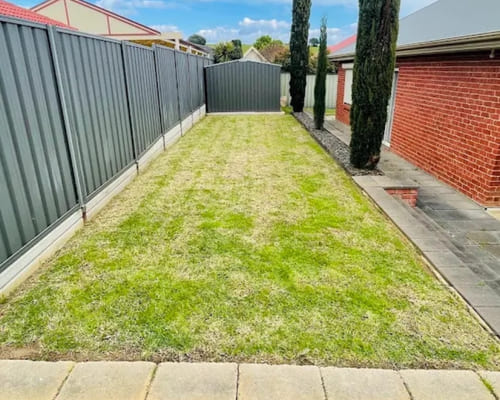
Broadview sits about 6 kilometres north of the city and it is a suburb in the middle of rebuilding itself. Laid out in 1915 and sold off in 1918, its original allotments carry 1920s bungalows and solid 1950s brick homes, and one by one those blocks are being split into pairs of two-storey courtyard houses. That leaves two entirely different gardens on the same street: deep established beds with eighty-year-old plantings next door to a courtyard finished last winter. Add carbonate-rich alkaline ground, a dry Adelaide summer and a suburb split across two councils with different green bin rules, and local knowledge genuinely counts here. BP Blitz covers Broadview on our inner-north round. Call Mitesh on 0406 147 913 for a free measured quote.
Athelstone runs from the River Torrens flats up to the boundary of Black Hill Conservation Park, and that one fact governs how a garden here is looked after. The management plan for Black Hill and Morialta puts average rainfall near Athelstone at about 640 millimetres a year, roughly 200 more than the western plain, so growth through winter and spring is heavier and the dry that follows it is sharper. Blocks on the Fifth Creek outwash plain sit on deep alluvial soil, while the streets climbing toward the park sit on shallow stony ground that erodes the moment it is scalped. Add a fire danger season opening on 1 December and gutters that fill with eucalypt litter, and the round here is part gardening and part fuel management. Call Mitesh on 0406 147 913 for a free measured quote.
Beaumont was laid out as a village in 1849, and the ground it sits on has its own entry in Adelaide's soil record: the Beaumont Association, a shallow rendzina and terra rossa formed directly on outcropping Beaumont Dolomite. The state soil survey calls it invariably shallow, not more than one to two feet, roughly 300 to 600 millimetres, before a spade hits weathered limestone. That single fact explains most of what goes wrong in a Beaumont garden: alkaline lime-rich ground that locks up iron and yellows camellias and citrus, a root zone that runs dry fast through February, and slopes where the same survey warns of soil creep. Add heritage olives planted in 1852 and a canopy of deciduous street trees, and this is a suburb that rewards a gardener who knows the ground. Call Mitesh on 0406 147 913 for a free measured quote.
Beaumont was laid out as a village in 1849, and the ground it sits on has its own entry in Adelaide's soil record: the Beaumont Association, a shallow rendzina and terra rossa formed directly on outcropping Beaumont Dolomite. The state soil survey calls it invariably shallow, not more than one to two feet, roughly 300 to 600 millimetres, before a spade hits weathered limestone. That single fact explains most of what goes wrong in a Beaumont garden: alkaline lime-rich ground that locks up iron and yellows camellias and citrus, a root zone that runs dry fast through February, and slopes where the same survey warns of soil creep. Add heritage olives planted in 1852 and a canopy of deciduous street trees, and this is a suburb that rewards a gardener who knows the ground. Call Mitesh on 0406 147 913 for a free measured quote.
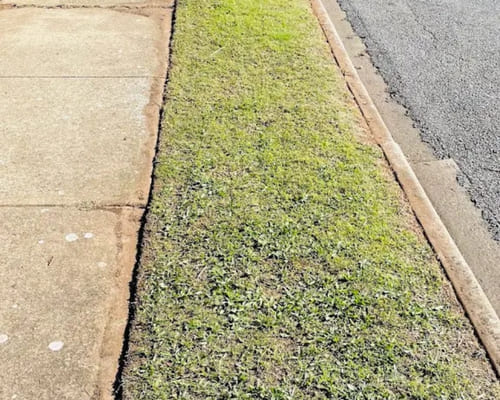
Brighton is the one suburb on our round where the garden is built on beach sand, and not figuratively. When the Coast Protection Board writes the specification for sand good enough to replenish Adelaide's beaches, the benchmark it measures against is the sand at Brighton: silica, at least half of it coarser than 0.2 millimetres, less than 5 per cent silt and clay. Under five per cent fines is the whole gardening problem in a single number, because silt and clay are the fraction that holds water and hangs on to fertiliser. Water drains before roots reach it, feed follows the water down, and the onshore wind carries salt over the top of the lot. Add kikuyu and couch escaping into the dunes, gutters corroding in salt air, and a suburb where nearly a third of homes are semi-detached with courtyard gardens, and Brighton rewards a gardener who works with the sand rather than against it. Call Mitesh on 0406 147 913 for a free measured quote.
Brighton is the one suburb on our round where the garden is built on beach sand, and not figuratively. When the Coast Protection Board writes the specification for sand good enough to replenish Adelaide's beaches, the benchmark it measures against is the sand at Brighton: silica, at least half of it coarser than 0.2 millimetres, less than 5 per cent silt and clay. Under five per cent fines is the whole gardening problem in a single number, because silt and clay are the fraction that holds water and hangs on to fertiliser. Water drains before roots reach it, feed follows the water down, and the onshore wind carries salt over the top of the lot. Add kikuyu and couch escaping into the dunes, gutters corroding in salt air, and a suburb where nearly a third of homes are semi-detached with courtyard gardens, and Brighton rewards a gardener who works with the sand rather than against it. Call Mitesh on 0406 147 913 for a free measured quote.
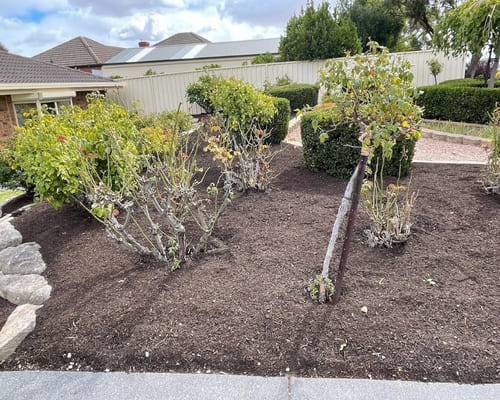
Broadview sits about 6 kilometres north of the city and it is a suburb in the middle of rebuilding itself. Laid out in 1915 and sold off in 1918, its original allotments carry 1920s bungalows and solid 1950s brick homes, and one by one those blocks are being split into pairs of two-storey courtyard houses. That leaves two entirely different gardens on the same street: deep established beds with eighty-year-old plantings next door to a courtyard finished last winter. Add carbonate-rich alkaline ground, a dry Adelaide summer and a suburb split across two councils with different green bin rules, and local knowledge genuinely counts here. BP Blitz covers Broadview on our inner-north round. Call Mitesh on 0406 147 913 for a free measured quote.
Broadview sits about 6 kilometres north of the city and it is a suburb in the middle of rebuilding itself. Laid out in 1915 and sold off in 1918, its original allotments carry 1920s bungalows and solid 1950s brick homes, and one by one those blocks are being split into pairs of two-storey courtyard houses. That leaves two entirely different gardens on the same street: deep established beds with eighty-year-old plantings next door to a courtyard finished last winter. Add carbonate-rich alkaline ground, a dry Adelaide summer and a suburb split across two councils with different green bin rules, and local knowledge genuinely counts here. BP Blitz covers Broadview on our inner-north round. Call Mitesh on 0406 147 913 for a free measured quote.
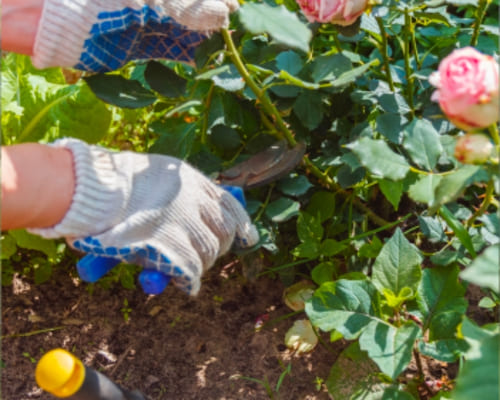
Burnside is named after a burn. Peter Anderson leased the land in 1839, called his farm Burnside because it sat on the side of Second Creek, and that creek still decides how a garden here behaves. The state soil survey maps this ground as the Knightsbridge Association, soils laid down by First Creek and Second Creek out of eroded Stonyfell Quartzite: a brown sandy loam about 450 millimetres deep, sandy clay beneath it, very little lime, and enough water-worn quartzite cobble through the profile to stop a spade at any depth. So beds and trenches are dug by hand, sand lets water and feed straight through, and the flats beside the creek stay wet all winter while blocks a few streets upslope are dry by December. BP Blitz gardens both halves of it. Call Mitesh on 0406 147 913 for a free measured quote.
Beaumont was laid out as a village in 1849, and the ground it sits on has its own entry in Adelaide's soil record: the Beaumont Association, a shallow rendzina and terra rossa formed directly on outcropping Beaumont Dolomite. The state soil survey calls it invariably shallow, not more than one to two feet, roughly 300 to 600 millimetres, before a spade hits weathered limestone. That single fact explains most of what goes wrong in a Beaumont garden: alkaline lime-rich ground that locks up iron and yellows camellias and citrus, a root zone that runs dry fast through February, and slopes where the same survey warns of soil creep. Add heritage olives planted in 1852 and a canopy of deciduous street trees, and this is a suburb that rewards a gardener who knows the ground. Call Mitesh on 0406 147 913 for a free measured quote.
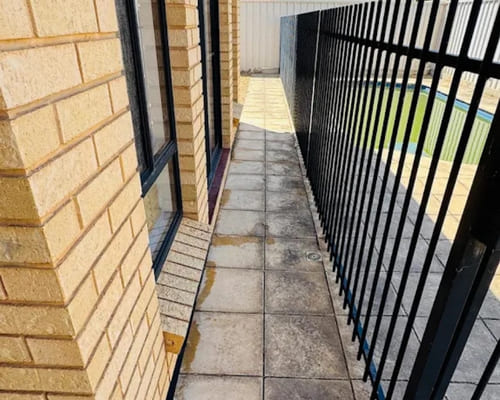
Brighton is the one suburb on our round where the garden is built on beach sand, and not figuratively. When the Coast Protection Board writes the specification for sand good enough to replenish Adelaide's beaches, the benchmark it measures against is the sand at Brighton: silica, at least half of it coarser than 0.2 millimetres, less than 5 per cent silt and clay. Under five per cent fines is the whole gardening problem in a single number, because silt and clay are the fraction that holds water and hangs on to fertiliser. Water drains before roots reach it, feed follows the water down, and the onshore wind carries salt over the top of the lot. Add kikuyu and couch escaping into the dunes, gutters corroding in salt air, and a suburb where nearly a third of homes are semi-detached with courtyard gardens, and Brighton rewards a gardener who works with the sand rather than against it. Call Mitesh on 0406 147 913 for a free measured quote.
Campbelltown is the flat one. It is 348 hectares of near level ground on the River Torrens flats, about 45 metres above sea level, with Fourth Creek along the southern boundary and the old orchard and market garden country sitting west of Lower North East Road. That ground is river alluvium, silt and fine sand over old channel gravel, and it lets water through fast, so the rainfall swing recorded at the Felixstow gauge, 262.8 millimetres in 2006 against 733.0 millimetres in 2016, lands on gardens that cannot run one fixed watering programme all year. Add a third of the suburb gardening a courtyard rather than a quarter acre, the council area's biggest concentration of retirement housing, and a fifth of residents with Italian ancestry growing food out the back, and this is not a hills block. BP Blitz works the whole of it. Call Mitesh on 0406 147 913 for a free measured quote.
Broadview sits about 6 kilometres north of the city and it is a suburb in the middle of rebuilding itself. Laid out in 1915 and sold off in 1918, its original allotments carry 1920s bungalows and solid 1950s brick homes, and one by one those blocks are being split into pairs of two-storey courtyard houses. That leaves two entirely different gardens on the same street: deep established beds with eighty-year-old plantings next door to a courtyard finished last winter. Add carbonate-rich alkaline ground, a dry Adelaide summer and a suburb split across two councils with different green bin rules, and local knowledge genuinely counts here. BP Blitz covers Broadview on our inner-north round. Call Mitesh on 0406 147 913 for a free measured quote.
Clarence Gardens is the alkaline one. It is a rectangle of roughly 1.26 kilometres by 870 metres, hemmed in by Cross Road, South Road, Winston Avenue and Edward Street, with no creek anywhere inside it. Under the lawns sits Edwardstown Association red-brown earth: a brown sandy loam skin, a compact sandy loam layer from about five inches down, friable red-brown clay beneath that and a lime horizon just below two feet. The published profile for this soil reads pH 7.1 at a foot and 8.9 at four feet, which is why the citrus and gardenias here yellow between green veins while the grass beside them looks perfectly healthy. Add 915 dwellings that are 84.1 per cent separate houses and this is full-size garden work on ground that has to be fed correctly. Call Mitesh on 0406 147 913 for a free measured quote.
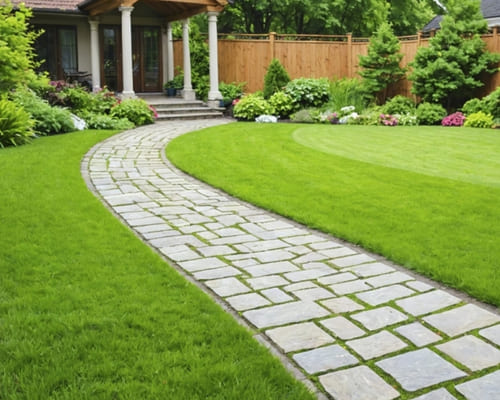
Collinswood is the rented one. It is a 52-hectare triangle with D'erlanger Avenue down the western side, the line of Lecornu Street across the top and North East Road running the long diagonal from Hampstead Road to Nottage Terrace, and only about a dozen streets inside it. The 2021 Census counted 1,496 people in 687 private dwellings, and only 46.8 per cent of those dwellings are separate houses: 31.2 per cent are semi-detached or townhouses, 22.5 per cent are flats, 43.3 per cent have two bedrooms and 41.5 per cent are rented. That makes this small, tight, repeat garden work, very often booked by a landlord, a property manager or a body corporate rather than by the person standing in the garden. Call Mitesh on 0406 147 913 for a free measured quote.
Beaumont was laid out as a village in 1849, and the ground it sits on has its own entry in Adelaide's soil record: the Beaumont Association, a shallow rendzina and terra rossa formed directly on outcropping Beaumont Dolomite. The state soil survey calls it invariably shallow, not more than one to two feet, roughly 300 to 600 millimetres, before a spade hits weathered limestone. That single fact explains most of what goes wrong in a Beaumont garden: alkaline lime-rich ground that locks up iron and yellows camellias and citrus, a root zone that runs dry fast through February, and slopes where the same survey warns of soil creep. Add heritage olives planted in 1852 and a canopy of deciduous street trees, and this is a suburb that rewards a gardener who knows the ground. Call Mitesh on 0406 147 913 for a free measured quote.
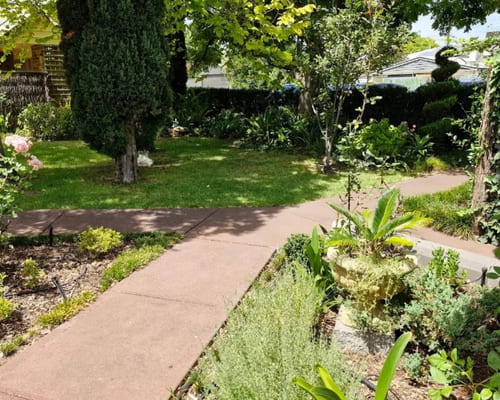
Brighton is the one suburb on our round where the garden is built on beach sand, and not figuratively. When the Coast Protection Board writes the specification for sand good enough to replenish Adelaide's beaches, the benchmark it measures against is the sand at Brighton: silica, at least half of it coarser than 0.2 millimetres, less than 5 per cent silt and clay. Under five per cent fines is the whole gardening problem in a single number, because silt and clay are the fraction that holds water and hangs on to fertiliser. Water drains before roots reach it, feed follows the water down, and the onshore wind carries salt over the top of the lot. Add kikuyu and couch escaping into the dunes, gutters corroding in salt air, and a suburb where nearly a third of homes are semi-detached with courtyard gardens, and Brighton rewards a gardener who works with the sand rather than against it. Call Mitesh on 0406 147 913 for a free measured quote.
Colonel Light Gardens is the heritage one. The whole suburb, 154 hectares between Grange Road, Winston Avenue, Springbank Road and View Street, has been a State Heritage Area since 4 May 2000, which means the verge outside your gate, the street trees along it and anything you put in the front garden all sit under a published standard. Inside those rules is the most settled housing on our Adelaide round. Of the 1,210 private dwellings counted in 2021, 91.2 per cent are separate houses, 36.2 per cent carry four bedrooms or more, and only 11.6 per cent are rented against 27.6 per cent across South Australia. Deep front gardens and generous rear yards were written into Charles Reade's plan in 1917 and they still have to be looked after. Call Mitesh on 0406 147 913 for a free measured quote.
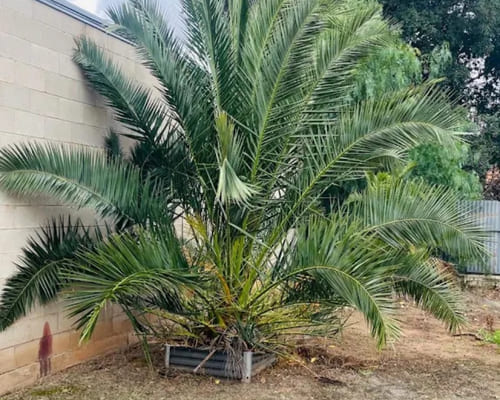
Broadview sits about 6 kilometres north of the city and it is a suburb in the middle of rebuilding itself. Laid out in 1915 and sold off in 1918, its original allotments carry 1920s bungalows and solid 1950s brick homes, and one by one those blocks are being split into pairs of two-storey courtyard houses. That leaves two entirely different gardens on the same street: deep established beds with eighty-year-old plantings next door to a courtyard finished last winter. Add carbonate-rich alkaline ground, a dry Adelaide summer and a suburb split across two councils with different green bin rules, and local knowledge genuinely counts here. BP Blitz covers Broadview on our inner-north round. Call Mitesh on 0406 147 913 for a free measured quote.
Cumberland Park is the verge one. When the City of Mitcham built the verge gardens it now sends every resident out to look at, it planted them here, on Winston Avenue between Cumberland Avenue and Somerset Avenue. That matters, because the same council holds Colonel Light Gardens next door to plain mown grass and leaves a Cumberland Park frontage wide open: a permit, plants under 500 millimetres, and a rebate of half the installation cost up to $500. Behind the fence this is the most mixed suburb on our Adelaide round. The 2021 Census counted 997 occupied dwellings inside 100 hectares, 68.5 per cent separate houses, 13.9 per cent townhouses and 16.5 per cent flats. BP Blitz works the whole rectangle between Cross Road, Goodwood Road, Edward Street and Winston Avenue. Call Mitesh on 0406 147 913 for a free measured quote.
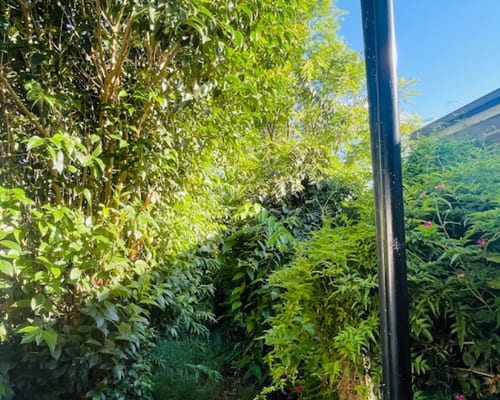
Dernancourt is the two-council suburb. Most of its 203 hectares sit inside the City of Tea Tree Gully, but the south-western corner around Riverside Grove, Ridgefield Avenue and Willowbrook Road falls inside the City of Port Adelaide Enfield, so two verge rulebooks run across one suburb barely 2.4 kilometres wide. The ground ignores the line. Dernancourt drops 53 metres from its Highbury edge down to the River Torrens, so every garden in it drains the same way and the bottom of the suburb stays wet long after the top has dried out. BP Blitz keeps a regular round through these streets, from Parsons Road and Balmoral Road to the tree-named grid off Lower North East Road, and we know which council a property answers to before we quote it rather than after.
Beaumont was laid out as a village in 1849, and the ground it sits on has its own entry in Adelaide's soil record: the Beaumont Association, a shallow rendzina and terra rossa formed directly on outcropping Beaumont Dolomite. The state soil survey calls it invariably shallow, not more than one to two feet, roughly 300 to 600 millimetres, before a spade hits weathered limestone. That single fact explains most of what goes wrong in a Beaumont garden: alkaline lime-rich ground that locks up iron and yellows camellias and citrus, a root zone that runs dry fast through February, and slopes where the same survey warns of soil creep. Add heritage olives planted in 1852 and a canopy of deciduous street trees, and this is a suburb that rewards a gardener who knows the ground. Call Mitesh on 0406 147 913 for a free measured quote.
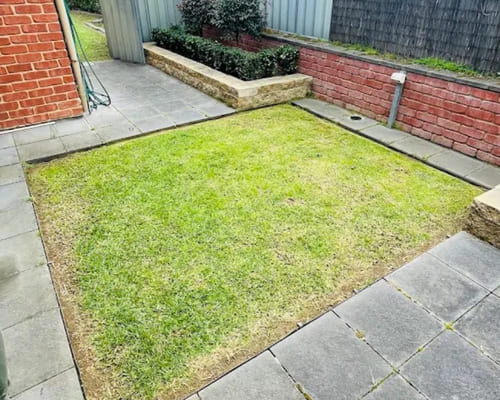
Brighton is the one suburb on our round where the garden is built on beach sand, and not figuratively. When the Coast Protection Board writes the specification for sand good enough to replenish Adelaide's beaches, the benchmark it measures against is the sand at Brighton: silica, at least half of it coarser than 0.2 millimetres, less than 5 per cent silt and clay. Under five per cent fines is the whole gardening problem in a single number, because silt and clay are the fraction that holds water and hangs on to fertiliser. Water drains before roots reach it, feed follows the water down, and the onshore wind carries salt over the top of the lot. Add kikuyu and couch escaping into the dunes, gutters corroding in salt air, and a suburb where nearly a third of homes are semi-detached with courtyard gardens, and Brighton rewards a gardener who works with the sand rather than against it. Call Mitesh on 0406 147 913 for a free measured quote.
Dulwich packs about 23 residential streets into 56.7 hectares, and the City of Burnside's own Urban Tree Strategy names the tree planted on nearly every one of them. Jacaranda on Cleland Avenue, Everett Avenue and Mill Street. Desert Ash on Albert Street, Gurney Road and Parkstone Avenue. White Cedar on Grandview Grove, Thornton Street and Williams Avenue. That canopy is what makes gardening here its own job rather than a generic mow: leaf and fruit litter falling onto small blocks, gutters that fill more than once a year, and lawn asked to hold on under closed shade. BP Blitz runs a regular round through these streets, from the Park Lands edge across to Fullarton Road, and we plan a Dulwich visit around the tree out the front instead of pretending it is not there.
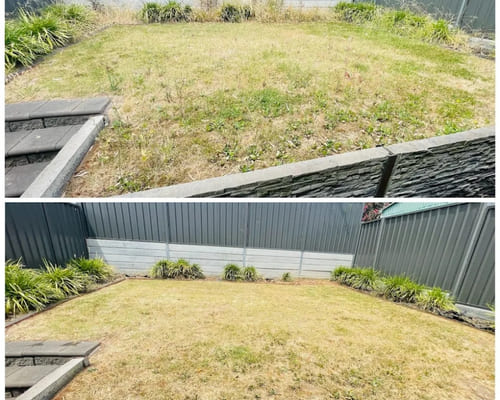
Broadview sits about 6 kilometres north of the city and it is a suburb in the middle of rebuilding itself. Laid out in 1915 and sold off in 1918, its original allotments carry 1920s bungalows and solid 1950s brick homes, and one by one those blocks are being split into pairs of two-storey courtyard houses. That leaves two entirely different gardens on the same street: deep established beds with eighty-year-old plantings next door to a courtyard finished last winter. Add carbonate-rich alkaline ground, a dry Adelaide summer and a suburb split across two councils with different green bin rules, and local knowledge genuinely counts here. BP Blitz covers Broadview on our inner-north round. Call Mitesh on 0406 147 913 for a free measured quote.
Findon was glasshouse country before it was suburbia. The City of Charles Sturt's own local history records eight men from the Veneto working market gardens on land it describes as now bounded by Grange, Findon, Valetta and Frogmore Roads, growing tomatoes and beans under glasshouses of 15 feet by 112 feet, and buying their ten-acre lots in 1950. The gardens that replaced those lots sit on flat, exposed ground. Council measured its tree canopy at 13.84 per cent in 2020 and says plainly that it is lower than most councils in metropolitan Adelaide, and the Adelaide Airport gauge records 410 millimetres of rain a year against 1,326 millimetres of evaporative demand. BP Blitz runs a regular round through Findon, from Grange Road up to Trimmer Parade, and prices a visit around how little shade this suburb actually has.
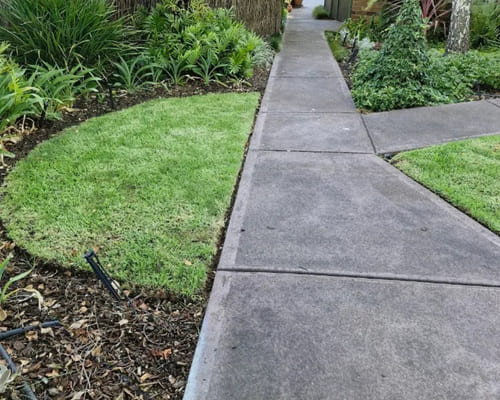
Flinders Park is here because the River Torrens was engineered. Breakout Creek was cut in 1937 to send Torrens floodwater straight out to sea, which opened the western suburbs to housing after the Second World War, and the streets laid over that ground were named for explorers: Flinders Parade, Baudin Avenue, Tasman Avenue, Van Dieman Street. What went up on them was detached housing, and it still is. The 2021 Census counts 85.6 per cent separate houses here against 78.0 per cent across South Australia, 62.0 per cent of them three-bedroom, and 71.9 per cent owner-occupied. Those are real back gardens on flat ground, working with 422 millimetres of rain a year against 1,344 millimetres of evaporative demand, with a 30 kilometre flood mitigation corridor along the southern boundary. BP Blitz runs a fortnightly round through all of it.
Beaumont was laid out as a village in 1849, and the ground it sits on has its own entry in Adelaide's soil record: the Beaumont Association, a shallow rendzina and terra rossa formed directly on outcropping Beaumont Dolomite. The state soil survey calls it invariably shallow, not more than one to two feet, roughly 300 to 600 millimetres, before a spade hits weathered limestone. That single fact explains most of what goes wrong in a Beaumont garden: alkaline lime-rich ground that locks up iron and yellows camellias and citrus, a root zone that runs dry fast through February, and slopes where the same survey warns of soil creep. Add heritage olives planted in 1852 and a canopy of deciduous street trees, and this is a suburb that rewards a gardener who knows the ground. Call Mitesh on 0406 147 913 for a free measured quote.
Brighton is the one suburb on our round where the garden is built on beach sand, and not figuratively. When the Coast Protection Board writes the specification for sand good enough to replenish Adelaide's beaches, the benchmark it measures against is the sand at Brighton: silica, at least half of it coarser than 0.2 millimetres, less than 5 per cent silt and clay. Under five per cent fines is the whole gardening problem in a single number, because silt and clay are the fraction that holds water and hangs on to fertiliser. Water drains before roots reach it, feed follows the water down, and the onshore wind carries salt over the top of the lot. Add kikuyu and couch escaping into the dunes, gutters corroding in salt air, and a suburb where nearly a third of homes are semi-detached with courtyard gardens, and Brighton rewards a gardener who works with the sand rather than against it. Call Mitesh on 0406 147 913 for a free measured quote.
Fulham was a swamp before it was a suburb. The Torrens once stopped short of the sea and spread into shallow freshwater wetlands called The Reedbeds, Kaurna Witongga tarto, 'low swampy reed country', and present-day Fulham sits inside that old footprint. Breakout Creek was cut between 1935 and 1937 to divert the river at Lockleys, the reedbeds were drained, and the streets went in over the top of them after the Second World War. What is left is low, level ground sitting at a median of 10 metres, carrying 414.6 millimetres of rain a year against 1,330 millimetres of evaporative demand. BP Blitz keeps a standing round through it.
Broadview sits about 6 kilometres north of the city and it is a suburb in the middle of rebuilding itself. Laid out in 1915 and sold off in 1918, its original allotments carry 1920s bungalows and solid 1950s brick homes, and one by one those blocks are being split into pairs of two-storey courtyard houses. That leaves two entirely different gardens on the same street: deep established beds with eighty-year-old plantings next door to a courtyard finished last winter. Add carbonate-rich alkaline ground, a dry Adelaide summer and a suburb split across two councils with different green bin rules, and local knowledge genuinely counts here. BP Blitz covers Broadview on our inner-north round. Call Mitesh on 0406 147 913 for a free measured quote.
Fulham Gardens carries its name honestly. Bulgarian migrants planted the first commercial market gardens on this ground in 1912, and a Chinese grower known as Hop Sing worked a plot here from 1911 to 1966, more than half a century of continuous cultivation before the Fulham Gardens Estate was carved up and offered for private sale in 1925, marketed as easy walking distance of Henley Beach and the Grange. That worked, enriched ground is still under every lawn we mow. Fulham Gardens sits in the City of Charles Sturt, not West Torrens like Fulham next door, and the council's rules on verges, street trees and canopy targets are genuinely different from the suburb over the boundary. BP Blitz runs a standing round through it, from Grange Road down to Tapleys Hill Road.
Fullarton sits three kilometres from the Adelaide CBD in the City of Unley, on the ground James Frew first laid out in 1849 and named after his wife, Jane Fullarton. The suburb's leafy streets carry character homes from every era since: Victorian villas, Edwardian bungalows, Art Deco frontages and Californian bungalows, set on the reactive Bay of Biscay clay common across Adelaide's eastern suburbs, ground that swells in winter and cracks hard by February. Around 4,500 residents live here, on blocks split evenly between free-standing houses and semi-detached homes and units, many with mature gardens that have outgrown the person who planted them. BP Blitz Gardening and Landscaping Services works Fullarton alongside neighbouring Malvern, Highgate, Myrtle Bank and Glenunga on the same run, keeping mowing, pruning and clean-ups on a schedule that suits reactive clay and established trees rather than fighting them.
Beaumont was laid out as a village in 1849, and the ground it sits on has its own entry in Adelaide's soil record: the Beaumont Association, a shallow rendzina and terra rossa formed directly on outcropping Beaumont Dolomite. The state soil survey calls it invariably shallow, not more than one to two feet, roughly 300 to 600 millimetres, before a spade hits weathered limestone. That single fact explains most of what goes wrong in a Beaumont garden: alkaline lime-rich ground that locks up iron and yellows camellias and citrus, a root zone that runs dry fast through February, and slopes where the same survey warns of soil creep. Add heritage olives planted in 1852 and a canopy of deciduous street trees, and this is a suburb that rewards a gardener who knows the ground. Call Mitesh on 0406 147 913 for a free measured quote.
Brighton is the one suburb on our round where the garden is built on beach sand, and not figuratively. When the Coast Protection Board writes the specification for sand good enough to replenish Adelaide's beaches, the benchmark it measures against is the sand at Brighton: silica, at least half of it coarser than 0.2 millimetres, less than 5 per cent silt and clay. Under five per cent fines is the whole gardening problem in a single number, because silt and clay are the fraction that holds water and hangs on to fertiliser. Water drains before roots reach it, feed follows the water down, and the onshore wind carries salt over the top of the lot. Add kikuyu and couch escaping into the dunes, gutters corroding in salt air, and a suburb where nearly a third of homes are semi-detached with courtyard gardens, and Brighton rewards a gardener who works with the sand rather than against it. Call Mitesh on 0406 147 913 for a free measured quote.
Glenelg South sits on Adelaide's coast in the City of Holdfast Bay, where 1920s bungalows and Art Deco character homes back onto the same deep dunal sand that has shaped what grows well along this stretch of coastline for a century. The soil here is sandy, alkaline and often salt-affected, draining fast and holding almost no moisture against the onshore wind that comes straight off Gulf St Vincent. BP Blitz Gardening and Landscaping Services works Glenelg South alongside neighbouring Somerton Park, keeping lawns, hedges and garden beds in shape against conditions that punish anything planted the wrong way. Around 2,184 residents call the suburb home, on blocks that range from beachside cottages to character homes set back from South Esplanade and Broadway.
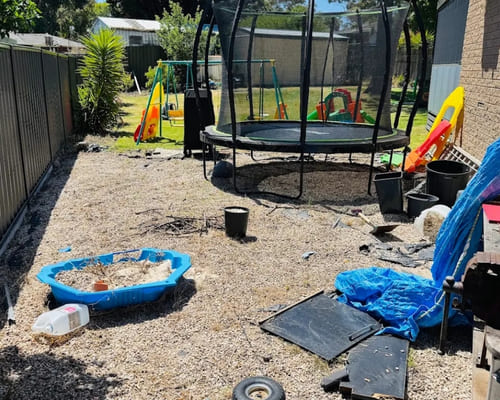
Broadview sits about 6 kilometres north of the city and it is a suburb in the middle of rebuilding itself. Laid out in 1915 and sold off in 1918, its original allotments carry 1920s bungalows and solid 1950s brick homes, and one by one those blocks are being split into pairs of two-storey courtyard houses. That leaves two entirely different gardens on the same street: deep established beds with eighty-year-old plantings next door to a courtyard finished last winter. Add carbonate-rich alkaline ground, a dry Adelaide summer and a suburb split across two councils with different green bin rules, and local knowledge genuinely counts here. BP Blitz covers Broadview on our inner-north round. Call Mitesh on 0406 147 913 for a free measured quote.
Glenside sits in the City of Burnside, just 4.9 kilometres south-east of the Adelaide CBD, where jacaranda-lined streets and generous quarter-acre blocks back onto what was once mixed farmland and, later, the extensive grounds of the old Glenside Hospital. The heavier clay-loam soil here behaves nothing like the sandy coastal ground BP Blitz Gardening and Landscaping Services also works, holding moisture well but compacting hard and draining slowly if it isn't managed properly. Mature jacaranda and shade trees are a defining feature of the suburb, and their flower and leaf drop keeps gutters, lawns and garden beds busier here than in most other suburbs. BP Blitz works Glenside alongside neighbouring Dulwich, Toorak Gardens and Fullarton, keeping period-home gardens and the newer townhouses built on the old hospital land in shape year-round.

Glenunga sits in the City of Burnside, a few kilometres south-east of the Adelaide CBD, on 89 hectares first farmed in the 1840s as part of the same Knoxville land that gave neighbouring Glenside its start. Council's own street-tree strategy splits the suburb in two: broad, jacaranda-lined verges in the north toward Glenside, and narrower verges in the south nearer Glen Osmond, where Prunus and Melia take over instead. The ground rises steadily toward the foothills, from around 68 metres near the Glenside boundary to 125 metres toward Portrush Road, and Glenunga gets noticeably more rain than its flatter neighbours as a result. Glenunga International High School and the Glenunga Village shops anchor the middle of the suburb, and a backyard on Bevington Road is where the Hills Hoist got its start. BP Blitz works Glenunga's older quarter-acre gardens and newer townhouse blocks, alongside Glenside and Fullarton next door.
Beaumont was laid out as a village in 1849, and the ground it sits on has its own entry in Adelaide's soil record: the Beaumont Association, a shallow rendzina and terra rossa formed directly on outcropping Beaumont Dolomite. The state soil survey calls it invariably shallow, not more than one to two feet, roughly 300 to 600 millimetres, before a spade hits weathered limestone. That single fact explains most of what goes wrong in a Beaumont garden: alkaline lime-rich ground that locks up iron and yellows camellias and citrus, a root zone that runs dry fast through February, and slopes where the same survey warns of soil creep. Add heritage olives planted in 1852 and a canopy of deciduous street trees, and this is a suburb that rewards a gardener who knows the ground. Call Mitesh on 0406 147 913 for a free measured quote.
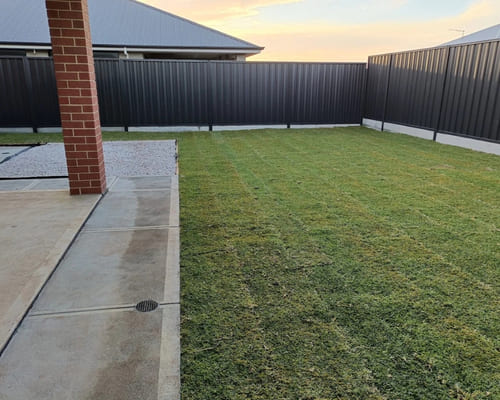
Brighton is the one suburb on our round where the garden is built on beach sand, and not figuratively. When the Coast Protection Board writes the specification for sand good enough to replenish Adelaide's beaches, the benchmark it measures against is the sand at Brighton: silica, at least half of it coarser than 0.2 millimetres, less than 5 per cent silt and clay. Under five per cent fines is the whole gardening problem in a single number, because silt and clay are the fraction that holds water and hangs on to fertiliser. Water drains before roots reach it, feed follows the water down, and the onshore wind carries salt over the top of the lot. Add kikuyu and couch escaping into the dunes, gutters corroding in salt air, and a suburb where nearly a third of homes are semi-detached with courtyard gardens, and Brighton rewards a gardener who works with the sand rather than against it. Call Mitesh on 0406 147 913 for a free measured quote.
Golden Grove is a master-planned estate rather than an organic suburb. The SA Urban Land Trust contracted Delfin in 1983 and construction began in 1985, which produced a very consistent built form: brick veneer slab-on-ground project homes with matching detailing, uniform front gardens and an estate presentation standard that residents still hold each other to. Gardens here are now thirty to forty years old, so the original estate plantings have matured well past the scale they were designed at, and front-garden presentation genuinely matters in a street where every house was built to the same brief. BP Blitz maintains Golden Grove gardens on scheduled rounds through the City of Tea Tree Gully. Call Mitesh on 0406 147 913.
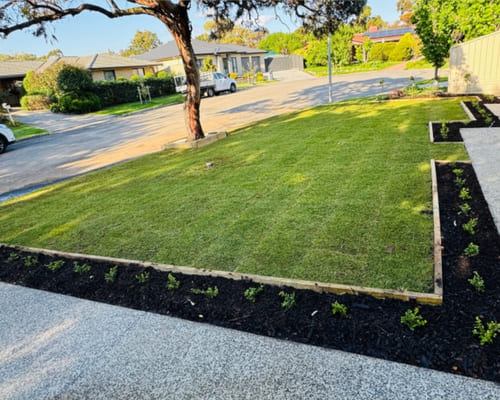
Broadview sits about 6 kilometres north of the city and it is a suburb in the middle of rebuilding itself. Laid out in 1915 and sold off in 1918, its original allotments carry 1920s bungalows and solid 1950s brick homes, and one by one those blocks are being split into pairs of two-storey courtyard houses. That leaves two entirely different gardens on the same street: deep established beds with eighty-year-old plantings next door to a courtyard finished last winter. Add carbonate-rich alkaline ground, a dry Adelaide summer and a suburb split across two councils with different green bin rules, and local knowledge genuinely counts here. BP Blitz covers Broadview on our inner-north round. Call Mitesh on 0406 147 913 for a free measured quote.
Grange was subdivided in 1878 by a private company setting out to build a beach resort around Charles Sturt's old cottage, and a railway line built the following decade to bring the crowds down from the city still runs today as part of the Outer Harbor line. That resort-town layout, and the 6,143 people now settled into it with a median age of 49, means most Grange gardens are decades old rather than newly planted. The suburb sits on Coast Protection Board-replenished dune sand, fine and shell-flecked, holding a steady salt wind off the Gulf St Vincent that inland Adelaide gardens never have to fight. BP Blitz Gardening and Landscaping Services works Grange on scheduled coastal rounds, from routine mowing and hedge shaping through to renovating salt-stressed beds and refreshing tired lawns. Call Mitesh on 0406 147 913 for a free written quote.
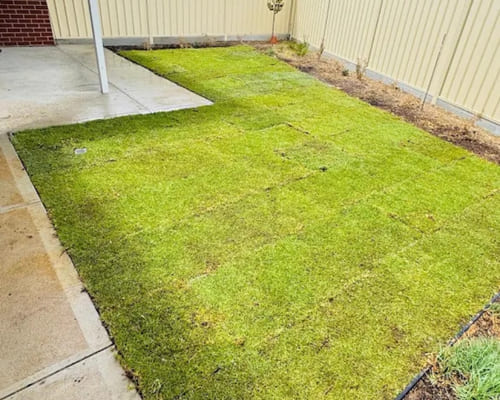
Greenwith was built through the 1990s as part of the Golden Grove Development Area, on the sloping upper north-eastern ground where the plains start climbing toward the hills face. Slope is the practical reality of gardening here: terraced beds, retaining walls, water that runs off before it soaks in, and lawns that dry out on the high side while the bottom corner stays damp. The estate plantings are now twenty-five to thirty years old and many have grown well past the scale they were chosen for. BP Blitz services Greenwith on our City of Tea Tree Gully rounds, with mowing, staged shrub reductions, mulch that stays put and irrigation zoned for a fall. Call Mitesh on 0406 147 913.
Beaumont was laid out as a village in 1849, and the ground it sits on has its own entry in Adelaide's soil record: the Beaumont Association, a shallow rendzina and terra rossa formed directly on outcropping Beaumont Dolomite. The state soil survey calls it invariably shallow, not more than one to two feet, roughly 300 to 600 millimetres, before a spade hits weathered limestone. That single fact explains most of what goes wrong in a Beaumont garden: alkaline lime-rich ground that locks up iron and yellows camellias and citrus, a root zone that runs dry fast through February, and slopes where the same survey warns of soil creep. Add heritage olives planted in 1852 and a canopy of deciduous street trees, and this is a suburb that rewards a gardener who knows the ground. Call Mitesh on 0406 147 913 for a free measured quote.
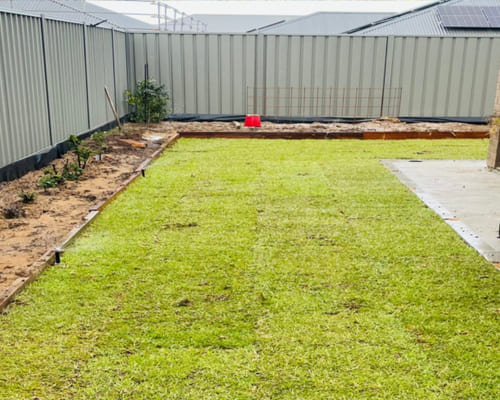
Brighton is the one suburb on our round where the garden is built on beach sand, and not figuratively. When the Coast Protection Board writes the specification for sand good enough to replenish Adelaide's beaches, the benchmark it measures against is the sand at Brighton: silica, at least half of it coarser than 0.2 millimetres, less than 5 per cent silt and clay. Under five per cent fines is the whole gardening problem in a single number, because silt and clay are the fraction that holds water and hangs on to fertiliser. Water drains before roots reach it, feed follows the water down, and the onshore wind carries salt over the top of the lot. Add kikuyu and couch escaping into the dunes, gutters corroding in salt air, and a suburb where nearly a third of homes are semi-detached with courtyard gardens, and Brighton rewards a gardener who works with the sand rather than against it. Call Mitesh on 0406 147 913 for a free measured quote.
Hawthorn is one of the tightest suburbs BP Blitz Gardening and Landscaping Services covers, just 1.06 square kilometres bounded by Cross Road, Grange Road, Sussex Terrace and Belair Road, with Brown Hill Creek running straight through it. Being closer to the foothills than the CBD means Hawthorn gardens typically hold a little more rain than the city average, but the clay-loam soil underneath sets hard once the weather dries out, so watering and mulching schedules need to flex rather than run on a flat monthly rota. Streets like Sussex Terrace still carry the brick bungalows built here in the early 1900s, their gardens matured for well over a century, while a median resident age of 43 and a large share of long-term owners means most of our Hawthorn work is standing maintenance for gardens that have been cared for the same way for years. Call Mitesh on 0406 147 913 for a fixed, written quote.
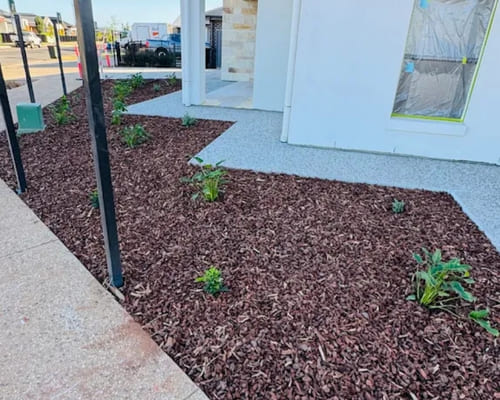
Broadview sits about 6 kilometres north of the city and it is a suburb in the middle of rebuilding itself. Laid out in 1915 and sold off in 1918, its original allotments carry 1920s bungalows and solid 1950s brick homes, and one by one those blocks are being split into pairs of two-storey courtyard houses. That leaves two entirely different gardens on the same street: deep established beds with eighty-year-old plantings next door to a courtyard finished last winter. Add carbonate-rich alkaline ground, a dry Adelaide summer and a suburb split across two councils with different green bin rules, and local knowledge genuinely counts here. BP Blitz covers Broadview on our inner-north round. Call Mitesh on 0406 147 913 for a free measured quote.
Hazelwood Park gardens run larger and older than most of eastern Adelaide, a legacy of the dairy farm and orphanage that occupied the site before it was ever subdivided. First Creek feeds a pond inside Hazelwood Park itself, and the mature gums that shade it mean heavier leaf litter and deeper root competition on the blocks nearest the park, while Greenhill Road splits the rest of the suburb in half: flat garden ground to the north, thinner foothills soil to the south and east. It began in 1848 as the village of Knightsbridge, then an orphanage, then the Coote family's dairy farm until 1950. Census figures back it up: 76.3 per cent separate houses, most owned outright or mortgaged, not rented, and a median household income well above the Adelaide average. BP Blitz gardens both halves of it, from the creek-fed flat to the foothills fringe. Call Mitesh on 0406 147 913 for a free measured quote.

Henley Beach's coastal position puts every garden within salt-spray range of the sea, from the dune-fringe blocks behind the Esplanade to the older villas set back along Seaview Road and Military Road. BP Blitz Gardening and Landscaping Services has worked this stretch of the Charles Sturt coast long enough to know which plants shrug off the salt air and wind and which ones burn by their second summer, and where the sandy soil needs real organic matter rather than a token top-up of fertiliser. Henley Square, the jetty and the dune reserve running toward Tennyson give this suburb a different character to the inland gardens we also service, and the mostly owner-occupied, well-established housing here tends to want considered planting and proper turf, not a bare-minimum mow. Every quote is measured on-site and written down before we start, for a mow, a clean-up or a full salt-hardy replant.
Beaumont was laid out as a village in 1849, and the ground it sits on has its own entry in Adelaide's soil record: the Beaumont Association, a shallow rendzina and terra rossa formed directly on outcropping Beaumont Dolomite. The state soil survey calls it invariably shallow, not more than one to two feet, roughly 300 to 600 millimetres, before a spade hits weathered limestone. That single fact explains most of what goes wrong in a Beaumont garden: alkaline lime-rich ground that locks up iron and yellows camellias and citrus, a root zone that runs dry fast through February, and slopes where the same survey warns of soil creep. Add heritage olives planted in 1852 and a canopy of deciduous street trees, and this is a suburb that rewards a gardener who knows the ground. Call Mitesh on 0406 147 913 for a free measured quote.
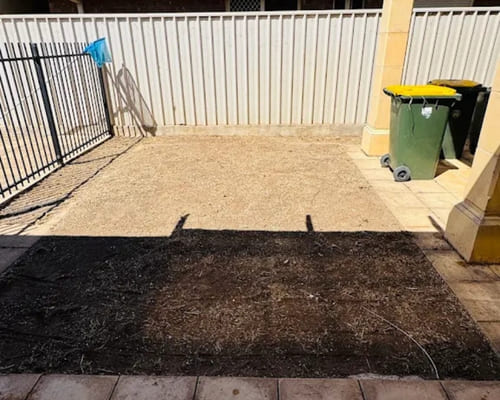
Brighton is the one suburb on our round where the garden is built on beach sand, and not figuratively. When the Coast Protection Board writes the specification for sand good enough to replenish Adelaide's beaches, the benchmark it measures against is the sand at Brighton: silica, at least half of it coarser than 0.2 millimetres, less than 5 per cent silt and clay. Under five per cent fines is the whole gardening problem in a single number, because silt and clay are the fraction that holds water and hangs on to fertiliser. Water drains before roots reach it, feed follows the water down, and the onshore wind carries salt over the top of the lot. Add kikuyu and couch escaping into the dunes, gutters corroding in salt air, and a suburb where nearly a third of homes are semi-detached with courtyard gardens, and Brighton rewards a gardener who works with the sand rather than against it. Call Mitesh on 0406 147 913 for a free measured quote.
Henley Beach South sits on ground that was flood-prone wetland until the Torrens Outlet drainage works finished in 1937, a suburb built on reclaimed flood-plain behind the coastal dune line rather than the closely-subdivided Victorian township next door in Henley Beach. BP Blitz Gardening and Landscaping Services works this stretch of the Charles Sturt coast regularly, from the exposed frontage blocks near William Atkin Reserve and the Catalina Flying Boats Memorial to the mostly post-war brick homes set back along Seaview Road and Lexington Road. The suburb's flatter, historically low-lying ground drains and holds moisture differently to both the pure dune sand right on the beachfront and the heavier clay soils we manage further inland, so turf establishment and drainage grading get more attention here than a standard mow-and-go. Every quote is measured on-site and fixed in writing before work starts, whether that's ongoing maintenance, a lawn overhaul or a salt-hardy replant.
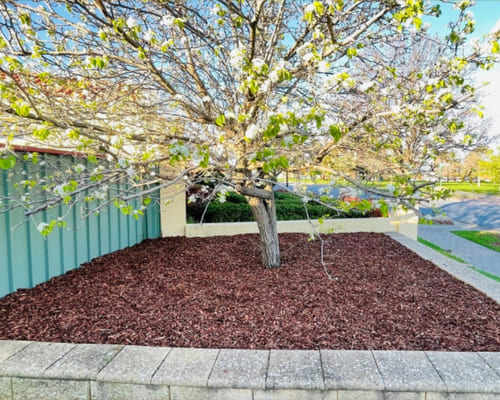
Broadview sits about 6 kilometres north of the city and it is a suburb in the middle of rebuilding itself. Laid out in 1915 and sold off in 1918, its original allotments carry 1920s bungalows and solid 1950s brick homes, and one by one those blocks are being split into pairs of two-storey courtyard houses. That leaves two entirely different gardens on the same street: deep established beds with eighty-year-old plantings next door to a courtyard finished last winter. Add carbonate-rich alkaline ground, a dry Adelaide summer and a suburb split across two councils with different green bin rules, and local knowledge genuinely counts here. BP Blitz covers Broadview on our inner-north round. Call Mitesh on 0406 147 913 for a free measured quote.
Highbury splits into two different gardens depending on which side of the suburb you're on: workable, acidic foothill soil toward Hope Valley and Dernancourt, and shallow, skeletal rocky ground rising toward the Adelaide Hills Face Zone on the suburb's eastern edge. BP Blitz Gardening and Landscaping Services works this contrast regularly, from the tree-named streets around Radiata Road and Rosewood Road to the older character homes and mid-century blocks nearer Highbury Drive and Amber Road. The City of Tea Tree Gully area averages around 550 millimetres of rain a year, noticeably wetter than the Adelaide plains, which keeps gardens greener but also pushes spring hedge and weed growth harder, so our mowing and trimming rounds here run tighter than on the coast. Every quote is measured on-site and fixed in writing before work starts, whether that's ongoing maintenance, a lawn overhaul or a full garden bed rebuild.
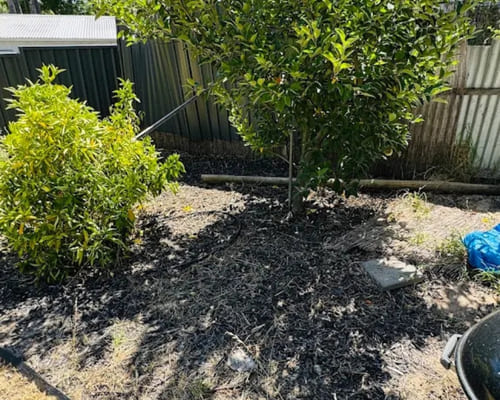
Highgate is the vineyard one. Before F.J. Botting laid the suburb out as “Highgate-on-the-Hill” in September 1881, George White ran 25 acres of the same ground as a working vineyard on land William Ferguson had already named Rosefield, with cellars holding 54,000 imperial gallons of wine by 1875. That agricultural start is why so much of Highgate still sits on generous, deep-soiled blocks rather than the tight subdivisions of its neighbours, 35 per cent of homes here carry four or more bedrooms, and 40.6 per cent are owned outright, which in this trade means gardens planted once and kept, not replaced every decade. BP Blitz Gardening and Landscaping Services works Highgate alongside Fullarton, Malvern and Myrtle Bank on the same round, matched to the City of Unley's own rules for this ground.
Beaumont was laid out as a village in 1849, and the ground it sits on has its own entry in Adelaide's soil record: the Beaumont Association, a shallow rendzina and terra rossa formed directly on outcropping Beaumont Dolomite. The state soil survey calls it invariably shallow, not more than one to two feet, roughly 300 to 600 millimetres, before a spade hits weathered limestone. That single fact explains most of what goes wrong in a Beaumont garden: alkaline lime-rich ground that locks up iron and yellows camellias and citrus, a root zone that runs dry fast through February, and slopes where the same survey warns of soil creep. Add heritage olives planted in 1852 and a canopy of deciduous street trees, and this is a suburb that rewards a gardener who knows the ground. Call Mitesh on 0406 147 913 for a free measured quote.
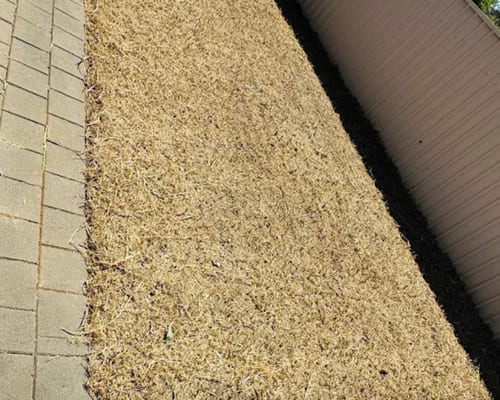
Brighton is the one suburb on our round where the garden is built on beach sand, and not figuratively. When the Coast Protection Board writes the specification for sand good enough to replenish Adelaide's beaches, the benchmark it measures against is the sand at Brighton: silica, at least half of it coarser than 0.2 millimetres, less than 5 per cent silt and clay. Under five per cent fines is the whole gardening problem in a single number, because silt and clay are the fraction that holds water and hangs on to fertiliser. Water drains before roots reach it, feed follows the water down, and the onshore wind carries salt over the top of the lot. Add kikuyu and couch escaping into the dunes, gutters corroding in salt air, and a suburb where nearly a third of homes are semi-detached with courtyard gardens, and Brighton rewards a gardener who works with the sand rather than against it. Call Mitesh on 0406 147 913 for a free measured quote.
Hope Valley sits about 13 kilometres north-east of the CBD on the foothills fringe, at roughly 140 metres elevation beside the Hope Valley Reservoir. That position gives it a genuinely different growing climate to the plains: cooler nights, heavier dew, and gardens that stay damper into the morning. With a population of around 8,184 and a median age of 46, it is a settled suburb of long-tenure owners, and the result is mature leafy gardens that have been developing for decades. Mature trees mean shade, serious autumn leaf drop and gutters that fill fast. BP Blitz services Hope Valley on our Tea Tree Gully rounds with mowing, pruning, mulching and gutter cleaning. Call Mitesh on 0406 147 913.
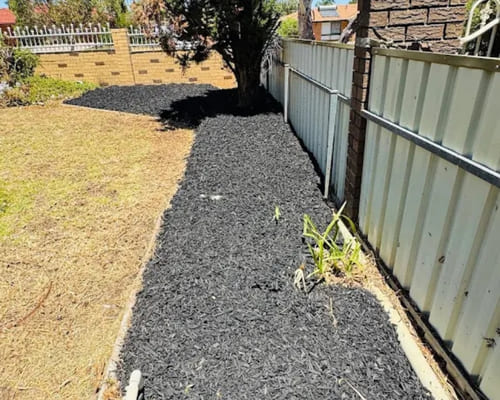
Broadview sits about 6 kilometres north of the city and it is a suburb in the middle of rebuilding itself. Laid out in 1915 and sold off in 1918, its original allotments carry 1920s bungalows and solid 1950s brick homes, and one by one those blocks are being split into pairs of two-storey courtyard houses. That leaves two entirely different gardens on the same street: deep established beds with eighty-year-old plantings next door to a courtyard finished last winter. Add carbonate-rich alkaline ground, a dry Adelaide summer and a suburb split across two councils with different green bin rules, and local knowledge genuinely counts here. BP Blitz covers Broadview on our inner-north round. Call Mitesh on 0406 147 913 for a free measured quote.
Hyde Park's tree-lined streets carry a genuine mix of grand Victorian and Edwardian villas alongside newer townhouses and apartments off King William Road. That split, 65.2 per cent separate houses against 34.1 per cent semi-detached, townhouse and flat stock, means BP Blitz Gardening and Landscaping Services runs everything from established quarter-acre villa gardens to tight courtyard planters on the same round. We work Hyde Park alongside Highgate, Unley and Parkside on the same days, matched to the City of Unley's own standards for this ground, and we carry $20 million in public liability cover so a strata block or a period villa gets the same certificate of currency on request. Call Mitesh on 0406 147 913 for a free measured quote.
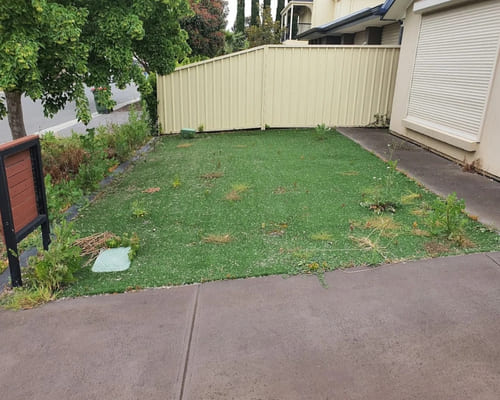
Kensington Gardens' tree-lined streets carry a genuine mix of century-old villa blocks near the Reserve and newer flats and townhouses clustered around the Kensington Road shops. That split, 46.0 per cent separate houses against a combined 53.8 per cent semi-detached, townhouse and apartment stock, means BP Blitz Gardening and Landscaping Services runs everything from established quarter-acre gardens to tight strata courtyards on the same round. We work Kensington Gardens alongside Kensington Park, St Morris and Tranmere on the same days, and we carry $20 million in public liability cover so a villa block or a strata complex gets the same certificate of currency on request. Call Mitesh on 0406 147 913 for a free measured quote.
Beaumont was laid out as a village in 1849, and the ground it sits on has its own entry in Adelaide's soil record: the Beaumont Association, a shallow rendzina and terra rossa formed directly on outcropping Beaumont Dolomite. The state soil survey calls it invariably shallow, not more than one to two feet, roughly 300 to 600 millimetres, before a spade hits weathered limestone. That single fact explains most of what goes wrong in a Beaumont garden: alkaline lime-rich ground that locks up iron and yellows camellias and citrus, a root zone that runs dry fast through February, and slopes where the same survey warns of soil creep. Add heritage olives planted in 1852 and a canopy of deciduous street trees, and this is a suburb that rewards a gardener who knows the ground. Call Mitesh on 0406 147 913 for a free measured quote.

Brighton is the one suburb on our round where the garden is built on beach sand, and not figuratively. When the Coast Protection Board writes the specification for sand good enough to replenish Adelaide's beaches, the benchmark it measures against is the sand at Brighton: silica, at least half of it coarser than 0.2 millimetres, less than 5 per cent silt and clay. Under five per cent fines is the whole gardening problem in a single number, because silt and clay are the fraction that holds water and hangs on to fertiliser. Water drains before roots reach it, feed follows the water down, and the onshore wind carries salt over the top of the lot. Add kikuyu and couch escaping into the dunes, gutters corroding in salt air, and a suburb where nearly a third of homes are semi-detached with courtyard gardens, and Brighton rewards a gardener who works with the sand rather than against it. Call Mitesh on 0406 147 913 for a free measured quote.
Kensington Park's streets carry a rare mix for the inner east: heritage villa blocks near Holden Street, where Sir Donald Bradman lived from 1934 until his death in 2001, sitting alongside the newer townhouses and flats that have filled in around The Parade and Pembroke School's Girton and King's campuses. That split, 68.3 per cent separate houses against a combined 31.0 per cent semi-detached, townhouse and flat stock, means BP Blitz Gardening and Landscaping Services runs everything from established quarter-acre gardens to school-adjacent courtyards on the same round. We work Kensington Park alongside Kensington Gardens, Trinity Gardens and St Morris on the same days, and we carry $20 million in public liability cover so a heritage block or a strata complex gets the same certificate of currency on request. Call Mitesh on 0406 147 913 for a free measured quote.
Broadview sits about 6 kilometres north of the city and it is a suburb in the middle of rebuilding itself. Laid out in 1915 and sold off in 1918, its original allotments carry 1920s bungalows and solid 1950s brick homes, and one by one those blocks are being split into pairs of two-storey courtyard houses. That leaves two entirely different gardens on the same street: deep established beds with eighty-year-old plantings next door to a courtyard finished last winter. Add carbonate-rich alkaline ground, a dry Adelaide summer and a suburb split across two councils with different green bin rules, and local knowledge genuinely counts here. BP Blitz covers Broadview on our inner-north round. Call Mitesh on 0406 147 913 for a free measured quote.
Kidman Park sits between Grange Road and the River Torrens, on ground the South Australian Housing Trust developed from 1954 on land that once carried pastoralist Sir Sidney Kidman's name and, before that, the market gardens Venetian immigrant families worked along the river flats. That sandy loam legacy still shapes the suburb: quick-draining soil under 81.2 per cent standalone houses, now filling out further as the 430-home St James estate rises on the old Metcash distribution site at Findon and Valetta Roads. BP Blitz Gardening and Landscaping Services runs established Kidman Park gardens and brand-new St James blocks on the same fixed-price, same-crew basis, and we carry $20 million in public liability cover so a new-build landscaping job or an established Grange Road garden gets the same certificate of currency on request. Call Mitesh on 0406 147 913 for a free measured quote.
Largs Bay began life as a seaside resort in 1882, when the Largs Bay Land and Investment Company opened the jetty, the railway and the Largs Pier Hotel on the same day, and that beachfront layout still shapes the suburb: 82.5 per cent separate houses on sandy, fast-draining ground running back from The Esplanade toward Jetty Road and Largs Reserve. That coastal sand and the salt-laden onshore wind off Gulf St Vincent both change how a garden needs to be run compared with Adelaide's clay-based suburbs, and BP Blitz Gardening and Landscaping Services prices every Largs Bay job on the same fixed-price, same-crew basis whether it's a character home near the jetty or a rental turnover further back from the beach. We carry $20 million in public liability cover with a certificate of currency on request. Call Mitesh on 0406 147 913 for a free measured quote.
Beaumont was laid out as a village in 1849, and the ground it sits on has its own entry in Adelaide's soil record: the Beaumont Association, a shallow rendzina and terra rossa formed directly on outcropping Beaumont Dolomite. The state soil survey calls it invariably shallow, not more than one to two feet, roughly 300 to 600 millimetres, before a spade hits weathered limestone. That single fact explains most of what goes wrong in a Beaumont garden: alkaline lime-rich ground that locks up iron and yellows camellias and citrus, a root zone that runs dry fast through February, and slopes where the same survey warns of soil creep. Add heritage olives planted in 1852 and a canopy of deciduous street trees, and this is a suburb that rewards a gardener who knows the ground. Call Mitesh on 0406 147 913 for a free measured quote.
Brighton is the one suburb on our round where the garden is built on beach sand, and not figuratively. When the Coast Protection Board writes the specification for sand good enough to replenish Adelaide's beaches, the benchmark it measures against is the sand at Brighton: silica, at least half of it coarser than 0.2 millimetres, less than 5 per cent silt and clay. Under five per cent fines is the whole gardening problem in a single number, because silt and clay are the fraction that holds water and hangs on to fertiliser. Water drains before roots reach it, feed follows the water down, and the onshore wind carries salt over the top of the lot. Add kikuyu and couch escaping into the dunes, gutters corroding in salt air, and a suburb where nearly a third of homes are semi-detached with courtyard gardens, and Brighton rewards a gardener who works with the sand rather than against it. Call Mitesh on 0406 147 913 for a free measured quote.
Leabrook is one of the smallest suburbs BP Blitz Gardening and Landscaping Services covers, just over a square kilometre of streets between Kensington Park and Kensington Gardens to the north and Tusmore and Hazelwood Park to the south, still carrying the name Alfred Watts gave the land in the 1850s. The suburb's split housing stock, 40.3 per cent separate houses against a combined 59.2 per cent semi-detached, townhouse and flat stock clustered near the Glynburn Road shops, means BP Blitz runs everything from established gardens near Statenborough Street to compact courtyards on the same round. We work Leabrook alongside Kensington Park, Marryatville and Tusmore on the same days, and we carry $20 million in public liability cover so a heritage block or a strata complex gets the same certificate of currency on request. Call Mitesh on 0406 147 913 for a free measured quote.
Broadview sits about 6 kilometres north of the city and it is a suburb in the middle of rebuilding itself. Laid out in 1915 and sold off in 1918, its original allotments carry 1920s bungalows and solid 1950s brick homes, and one by one those blocks are being split into pairs of two-storey courtyard houses. That leaves two entirely different gardens on the same street: deep established beds with eighty-year-old plantings next door to a courtyard finished last winter. Add carbonate-rich alkaline ground, a dry Adelaide summer and a suburb split across two councils with different green bin rules, and local knowledge genuinely counts here. BP Blitz covers Broadview on our inner-north round. Call Mitesh on 0406 147 913 for a free measured quote.
Linden Park was carved out of a single allotment and sold for housing in 1882, and today it's one of the more house-heavy suburbs BP Blitz Gardening and Landscaping Services covers: 61.4 per cent separate houses against the City of Burnside average, many sitting on the streets named after First Sea Lords, Hood, Keyes, Sturdee, Jellicoe, Beatty and Wemyss, that run off Hay Road. That mix of established quarter-acre gardens near Tregenza Oval and the newer townhouse infill closer to Glenunga means our Linden Park round covers full lawn and hedge programs one visit and a low-maintenance courtyard the next. We run Linden Park alongside Toorak Gardens, Glenunga and Leabrook on the same days, and carry $20 million in public liability cover so any job gets a certificate of currency on request. Call Mitesh on 0406 147 913 for a free measured quote.
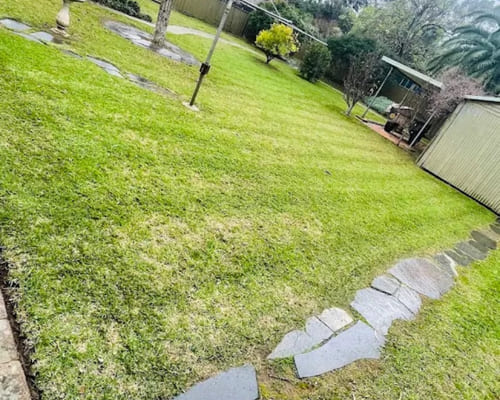
Lockleys sits within a bend of the River Torrens, where the Torrens Linear Park forms the suburb's northern edge, and BP Blitz Gardening and Landscaping Services works blocks running from the river down toward Henley Beach Road on ground that was market garden country until the 1920s. With 79.8 per cent separate houses and an average of 3.1 bedrooms per dwelling, most jobs are established gardens on generous blocks, though the semi-detached and flat stock nearer Underdale and Brooklyn Park need a lighter touch and a different visit length. We run Lockleys alongside Kidman Park, Flinders Park and Fulham Gardens on the same days, carry $20 million in public liability cover, and quote a fixed price before we start. Call Mitesh on 0406 147 913 for a free measured quote.
Beaumont was laid out as a village in 1849, and the ground it sits on has its own entry in Adelaide's soil record: the Beaumont Association, a shallow rendzina and terra rossa formed directly on outcropping Beaumont Dolomite. The state soil survey calls it invariably shallow, not more than one to two feet, roughly 300 to 600 millimetres, before a spade hits weathered limestone. That single fact explains most of what goes wrong in a Beaumont garden: alkaline lime-rich ground that locks up iron and yellows camellias and citrus, a root zone that runs dry fast through February, and slopes where the same survey warns of soil creep. Add heritage olives planted in 1852 and a canopy of deciduous street trees, and this is a suburb that rewards a gardener who knows the ground. Call Mitesh on 0406 147 913 for a free measured quote.
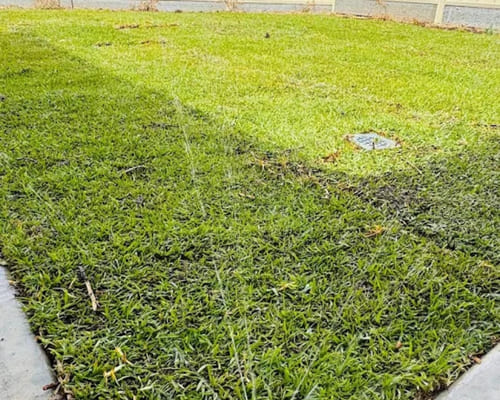
Brighton is the one suburb on our round where the garden is built on beach sand, and not figuratively. When the Coast Protection Board writes the specification for sand good enough to replenish Adelaide's beaches, the benchmark it measures against is the sand at Brighton: silica, at least half of it coarser than 0.2 millimetres, less than 5 per cent silt and clay. Under five per cent fines is the whole gardening problem in a single number, because silt and clay are the fraction that holds water and hangs on to fertiliser. Water drains before roots reach it, feed follows the water down, and the onshore wind carries salt over the top of the lot. Add kikuyu and couch escaping into the dunes, gutters corroding in salt air, and a suburb where nearly a third of homes are semi-detached with courtyard gardens, and Brighton rewards a gardener who works with the sand rather than against it. Call Mitesh on 0406 147 913 for a free measured quote.
Magill has grown gardens on the same ground since it was surveyed as the Makgill Estate in 1838, and Penfolds Magill Estate has kept Shiraz vines producing on the suburb's original topsoil since 1844, one of the few working urban vineyards left anywhere. BP Blitz Gardening and Landscaping Services works that mix of century-old blocks and newer courtyard infill across a suburb that straddles the City of Campbelltown and City of Burnside, from established gardens near Third Creek to strata grounds near the UniSA Magill campus on St Bernards Road. With 69.4 per cent separate houses against a growing share of semi-detached and flat stock, most Magill jobs are full-block gardens, though the ratio is shifting. We quote every job with a fixed price before we start, carry $20 million public liability cover, and run the same crew each visit. Call Mitesh on 0406 147 913 for a free measured quote.
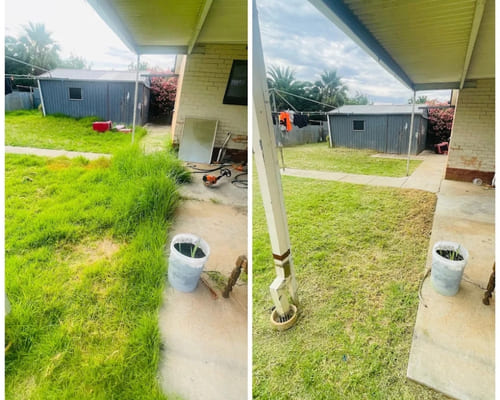
Broadview sits about 6 kilometres north of the city and it is a suburb in the middle of rebuilding itself. Laid out in 1915 and sold off in 1918, its original allotments carry 1920s bungalows and solid 1950s brick homes, and one by one those blocks are being split into pairs of two-storey courtyard houses. That leaves two entirely different gardens on the same street: deep established beds with eighty-year-old plantings next door to a courtyard finished last winter. Add carbonate-rich alkaline ground, a dry Adelaide summer and a suburb split across two councils with different green bin rules, and local knowledge genuinely counts here. BP Blitz covers Broadview on our inner-north round. Call Mitesh on 0406 147 913 for a free measured quote.
Malvern is the 1884 one: William Shierlaw and Thomas Matters laid out the Malvern Extension that year and South Malvern in 1886, on what had been wheat-growing land, and the streets they mapped, Dover, Sheffield, Cambridge among them, still carry jacaranda plantings and single-storey colonial villas from that original subdivision, with deeper, better-worked topsoil than a newer subdivision to show for it. BP Blitz Gardening and Landscaping Services works that mature, tree-lined streetscape alongside newer infill nearer Highgate and Unley Park, on the same fixed-price, same-crew basis every time. We carry $20 million public liability cover and quote before we start. Call Mitesh on 0406 147 913 for a free measured quote.
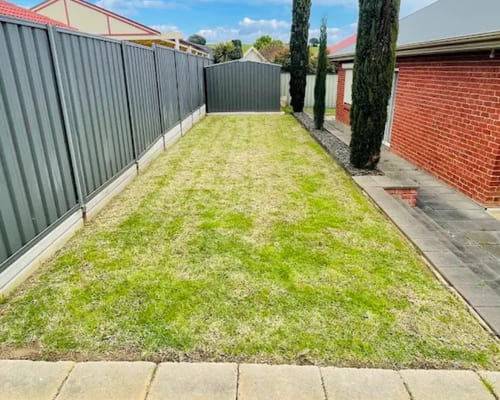
Marryatville is a compact inner-eastern suburb roughly four kilometres from the Adelaide CBD, carrying one of the more genuinely garden-relevant local histories we work with: Hackett's Nursery grew over 100,000 roses a year on this ground from 1854 to 1952. That history sits alongside a housing mix split almost evenly between older separate-house blocks and newer townhouses clustered toward Portrush Road and Kensington Road, plus two heritage school campuses, Marryatville High and Loreto College, both carrying grounds from the suburb's Victorian-era mansions. First and Second Creek run through the suburb and have flooded nearby gardens before, so drainage is never an afterthought here. We run fixed-price, $20 million insured visits across every one of those property types, from a full heritage rose garden to a tight townhouse courtyard.
Beaumont was laid out as a village in 1849, and the ground it sits on has its own entry in Adelaide's soil record: the Beaumont Association, a shallow rendzina and terra rossa formed directly on outcropping Beaumont Dolomite. The state soil survey calls it invariably shallow, not more than one to two feet, roughly 300 to 600 millimetres, before a spade hits weathered limestone. That single fact explains most of what goes wrong in a Beaumont garden: alkaline lime-rich ground that locks up iron and yellows camellias and citrus, a root zone that runs dry fast through February, and slopes where the same survey warns of soil creep. Add heritage olives planted in 1852 and a canopy of deciduous street trees, and this is a suburb that rewards a gardener who knows the ground. Call Mitesh on 0406 147 913 for a free measured quote.
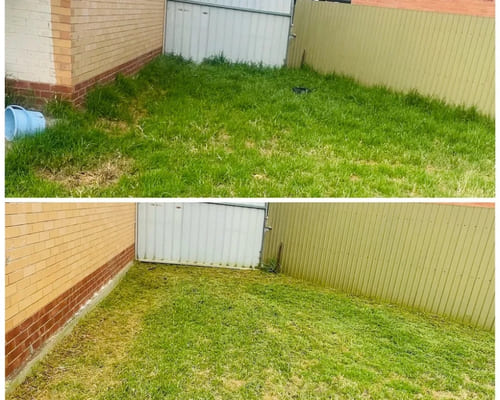
Brighton is the one suburb on our round where the garden is built on beach sand, and not figuratively. When the Coast Protection Board writes the specification for sand good enough to replenish Adelaide's beaches, the benchmark it measures against is the sand at Brighton: silica, at least half of it coarser than 0.2 millimetres, less than 5 per cent silt and clay. Under five per cent fines is the whole gardening problem in a single number, because silt and clay are the fraction that holds water and hangs on to fertiliser. Water drains before roots reach it, feed follows the water down, and the onshore wind carries salt over the top of the lot. Add kikuyu and couch escaping into the dunes, gutters corroding in salt air, and a suburb where nearly a third of homes are semi-detached with courtyard gardens, and Brighton rewards a gardener who works with the sand rather than against it. Call Mitesh on 0406 147 913 for a free measured quote.
Medindie Gardens is one of Adelaide's smallest suburbs - just six streets and 0.14 square kilometres, tucked inside the City of Prospect about four kilometres north of the CBD. It was carved off Section 2062 and formally named in 1944, and the housing that filled it since has stayed close to the original pattern: almost nine in ten homes here are separate houses on generous blocks, most owned outright or by long-term owner-occupiers rather than rented. BP Blitz Gardening and Landscaping Services knows this round well - the gardens are established, the hedges are mature, and the residents who call us tend to be the same faces year after year. Whether it's a fortnightly mow along Charlbury Road or a full clean-up before a Nottage Terrace open inspection, we're on your street already.
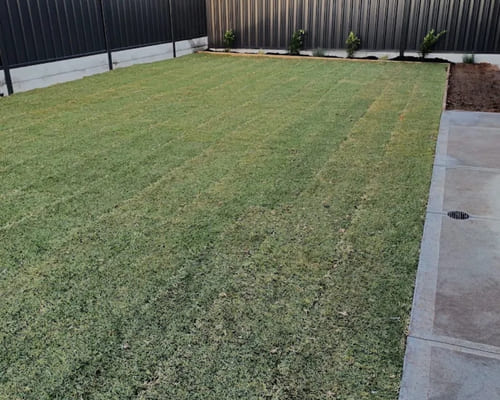
Broadview sits about 6 kilometres north of the city and it is a suburb in the middle of rebuilding itself. Laid out in 1915 and sold off in 1918, its original allotments carry 1920s bungalows and solid 1950s brick homes, and one by one those blocks are being split into pairs of two-storey courtyard houses. That leaves two entirely different gardens on the same street: deep established beds with eighty-year-old plantings next door to a courtyard finished last winter. Add carbonate-rich alkaline ground, a dry Adelaide summer and a suburb split across two councils with different green bin rules, and local knowledge genuinely counts here. BP Blitz covers Broadview on our inner-north round. Call Mitesh on 0406 147 913 for a free measured quote.
Millswood is an inner-southern suburb of Adelaide, five kilometres from the CBD, split cleanly in two by Goodwood Road, with Goodwood, Hyde Park, Unley Park and Kings Park on the eastern side and Goodwood, Forestville, Black Forest and Clarence Park on the western side. Almost every home here sits on a full block, with 90.1 per cent of the suburb's 842 dwellings being separate houses, and the backyard gums on many of those blocks are now 60-plus years old, a specific issue local arborists point to across Millswood, Highgate and Malvern. BP Blitz Gardening and Landscaping Services already works this exact stretch of the City of Unley, from lawns near Goodwood Oval to hedges backing onto the reopened Millswood railway station. Whatever side of Goodwood Road your block sits on, we quote it the same way: a fixed price before we start, not an hourly estimate that changes once we're on site.
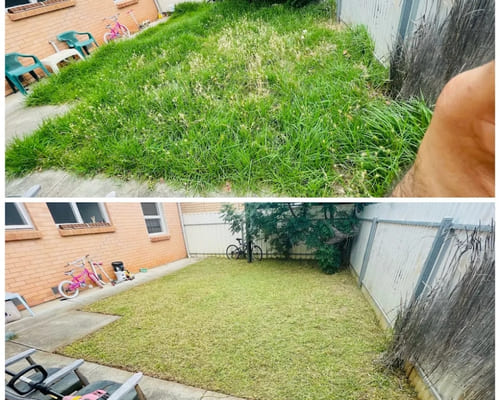
Mitcham is the suburb the whole City of Mitcham council is named after, an inner-southern pocket five kilometres from the CBD where Mitcham railway station has run on the Belair line since 1883 and Mitcham Reserve still marks the old Kaurna camp of Wirraparinga on Brown Hill Creek. The 2021 Census counted 1,832 people across 820 dwellings, a genuine mix of separate houses (61.7 per cent), semi-detached homes and flats rather than one uniform block type. BP Blitz Gardening and Landscaping Services already works this stretch of the council's own seat, from established gardens near the station to newer courtyards toward Springfield. Whatever the block size, we quote it the same way: measured on the day, fixed before we start, and covered by our public liability insurance.
Beaumont was laid out as a village in 1849, and the ground it sits on has its own entry in Adelaide's soil record: the Beaumont Association, a shallow rendzina and terra rossa formed directly on outcropping Beaumont Dolomite. The state soil survey calls it invariably shallow, not more than one to two feet, roughly 300 to 600 millimetres, before a spade hits weathered limestone. That single fact explains most of what goes wrong in a Beaumont garden: alkaline lime-rich ground that locks up iron and yellows camellias and citrus, a root zone that runs dry fast through February, and slopes where the same survey warns of soil creep. Add heritage olives planted in 1852 and a canopy of deciduous street trees, and this is a suburb that rewards a gardener who knows the ground. Call Mitesh on 0406 147 913 for a free measured quote.
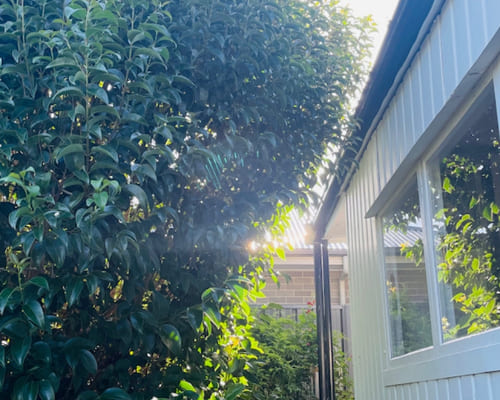
Brighton is the one suburb on our round where the garden is built on beach sand, and not figuratively. When the Coast Protection Board writes the specification for sand good enough to replenish Adelaide's beaches, the benchmark it measures against is the sand at Brighton: silica, at least half of it coarser than 0.2 millimetres, less than 5 per cent silt and clay. Under five per cent fines is the whole gardening problem in a single number, because silt and clay are the fraction that holds water and hangs on to fertiliser. Water drains before roots reach it, feed follows the water down, and the onshore wind carries salt over the top of the lot. Add kikuyu and couch escaping into the dunes, gutters corroding in salt air, and a suburb where nearly a third of homes are semi-detached with courtyard gardens, and Brighton rewards a gardener who works with the sand rather than against it. Call Mitesh on 0406 147 913 for a free measured quote.
Modbury Heights grew as a 1970s northerly extension of Modbury, bounded by Grenfell Road, Milne Road, McIntyre Road and Golden Grove Road in the foothills of the Mount Lofty Ranges, City of Tea Tree Gully. The 2021 Census counted 6,995 people across 2,789 dwellings, 91.6 per cent of them separate houses with three or four bedrooms - a genuinely established, family-sized suburb rather than a new estate. BP Blitz Gardening and Landscaping Services already works this pocket, from the older streets near The Heights School to blocks backing onto The Heights Reserve. Fifty years on from that 1970s subdivision, many of the trees planted with those first homes have grown well past the City of Tea Tree Gully's regulated size, and we check that before quoting any pruning or removal work. Whatever the block, we measure it on the day, quote it fixed, and cover it with our public liability insurance.
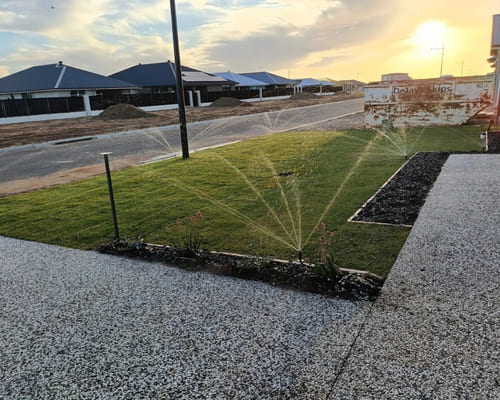
Broadview sits about 6 kilometres north of the city and it is a suburb in the middle of rebuilding itself. Laid out in 1915 and sold off in 1918, its original allotments carry 1920s bungalows and solid 1950s brick homes, and one by one those blocks are being split into pairs of two-storey courtyard houses. That leaves two entirely different gardens on the same street: deep established beds with eighty-year-old plantings next door to a courtyard finished last winter. Add carbonate-rich alkaline ground, a dry Adelaide summer and a suburb split across two councils with different green bin rules, and local knowledge genuinely counts here. BP Blitz covers Broadview on our inner-north round. Call Mitesh on 0406 147 913 for a free measured quote.
Myrtle Bank is the settled one: the suburb's median resident is 54, the oldest of any area we work, and 39.7 per cent of homes are owned outright against just 17.4 per cent rented, which means most gardens here have been tended by the same household for years rather than refreshed for a sale. BP Blitz Gardening and Landscaping Services works this established City of Unley streetscape, from full-block houses to the townhouse and unit gardens that make up four in ten Myrtle Bank homes, on the same fixed-price, same-crew basis every time. We carry $20 million public liability cover and quote before we start. Call Mitesh on 0406 147 913 for a free measured quote.
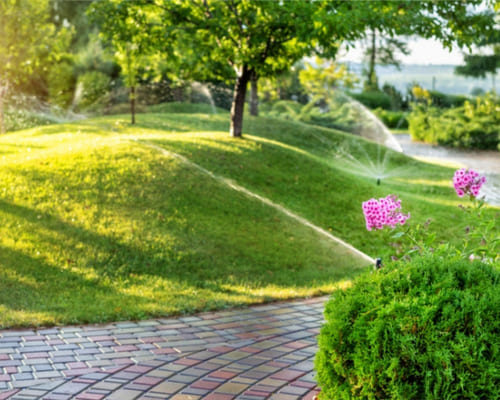
Nailsworth sits about 4 kilometres north of the CBD in the City of Prospect, and it's the middle ground on our inner-north run: older than most of the suburbs around it (subdivided back in 1851), but a genuine mix of separate houses, semi-detached homes and units rather than one extreme or the other. Just over half the households here are couple families with children, and most are still paying the place off rather than owning outright, so gardens tend to be lived in and used, not just kept tidy for the street. BP Blitz Gardening and Landscaping Services already runs regular rounds through Nailsworth's neighbouring suburbs, so we're on your street more often than a one-off call-out would suggest. Call Mitesh on 0406 147 913 for a free measured quote.
Beaumont was laid out as a village in 1849, and the ground it sits on has its own entry in Adelaide's soil record: the Beaumont Association, a shallow rendzina and terra rossa formed directly on outcropping Beaumont Dolomite. The state soil survey calls it invariably shallow, not more than one to two feet, roughly 300 to 600 millimetres, before a spade hits weathered limestone. That single fact explains most of what goes wrong in a Beaumont garden: alkaline lime-rich ground that locks up iron and yellows camellias and citrus, a root zone that runs dry fast through February, and slopes where the same survey warns of soil creep. Add heritage olives planted in 1852 and a canopy of deciduous street trees, and this is a suburb that rewards a gardener who knows the ground. Call Mitesh on 0406 147 913 for a free measured quote.
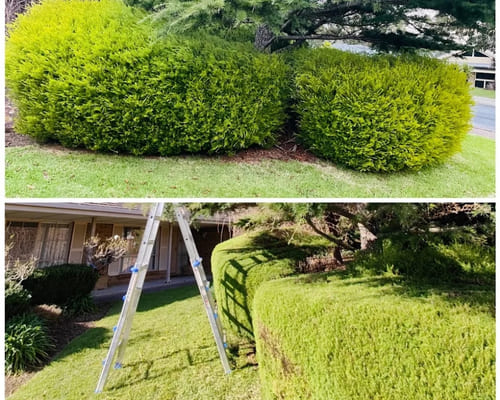
Brighton is the one suburb on our round where the garden is built on beach sand, and not figuratively. When the Coast Protection Board writes the specification for sand good enough to replenish Adelaide's beaches, the benchmark it measures against is the sand at Brighton: silica, at least half of it coarser than 0.2 millimetres, less than 5 per cent silt and clay. Under five per cent fines is the whole gardening problem in a single number, because silt and clay are the fraction that holds water and hangs on to fertiliser. Water drains before roots reach it, feed follows the water down, and the onshore wind carries salt over the top of the lot. Add kikuyu and couch escaping into the dunes, gutters corroding in salt air, and a suburb where nearly a third of homes are semi-detached with courtyard gardens, and Brighton rewards a gardener who works with the sand rather than against it. Call Mitesh on 0406 147 913 for a free measured quote.
Newton is the market-garden suburb, and its street signs still say so - Centofanti Avenue, Borrillo Avenue, Cini Avenue, Palumbo Avenue, Papagni Avenue, Verona Avenue and a dozen more carry the surnames of the Italian families who worked these blocks as market gardens through the 1950s and 60s, growing tomatoes and produce for the Adelaide market on streets like Graves Street. BP Blitz Gardening and Landscaping Services works that same ground today, from the older Italian-built gardens near Newton Village to the family homes filling out toward Paradise and Rostrevor. With 66.4 per cent separate houses against the highest semi-detached and row-house share of any suburb on our City of Campbelltown round, and the district's highest share of one-parent families, Newton is a genuinely mixed, family-heavy suburb rather than one property type. Call Mitesh on 0406 147 913 for a free measured quote.
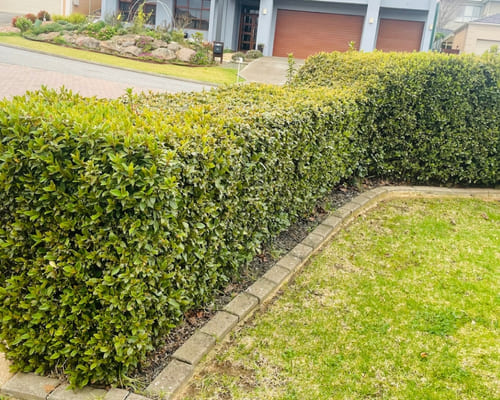
Broadview sits about 6 kilometres north of the city and it is a suburb in the middle of rebuilding itself. Laid out in 1915 and sold off in 1918, its original allotments carry 1920s bungalows and solid 1950s brick homes, and one by one those blocks are being split into pairs of two-storey courtyard houses. That leaves two entirely different gardens on the same street: deep established beds with eighty-year-old plantings next door to a courtyard finished last winter. Add carbonate-rich alkaline ground, a dry Adelaide summer and a suburb split across two councils with different green bin rules, and local knowledge genuinely counts here. BP Blitz covers Broadview on our inner-north round. Call Mitesh on 0406 147 913 for a free measured quote.
North Haven is the marina suburb, not a beach suburb. Gulf Point Drive runs the water's edge here, behind two artificial breakwaters that shelter the Cruising Yacht Club of South Australia, rather than an open stretch of Gulf St Vincent sand like the beach suburbs further south. BP Blitz Gardening and Landscaping Services works this stretch of the Lefevre Peninsula regularly, from the marina-front blocks on Gulf Point Drive to the retirement village and shopping strip around Military Road and Osborne Road. Subdivided as recently as 1975/76, the youngest ground of any suburb on our coastal round, and carrying the highest owned-outright share we've measured on this build at 43.8 per cent, North Haven is a settled, long-tenure suburb rather than a rental-turnover pocket. Call Mitesh on 0406 147 913 for a free measured quote.
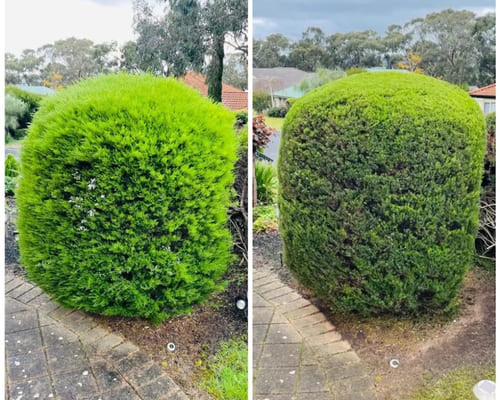
Norwood was laid out in 1847 as a village named after the London suburb of Norwood - itself derived from "northwode", Old English for north wood - and it's still Adelaide's densest concentration of Victorian and Edwardian cottages outside the CBD, split into quadrants by The Parade and Osmond Terrace. BP Blitz Gardening and Landscaping Services works these small, heritage-fronted blocks and the strata courtyards behind them, from cottage front gardens on Sydenham Road to the townhouse and apartment landscaping filling out the streets nearer The Parade. With 46.5 per cent of homes in semi-detached, row, terrace or townhouse stock and another 19.6 per cent in flats or units - the highest combined medium-density share of any suburb on our round - Norwood is a small-footprint, courtyard-first suburb rather than a quarter-acre one. Call Mitesh on 0406 147 913 for a free measured quote.
Beaumont was laid out as a village in 1849, and the ground it sits on has its own entry in Adelaide's soil record: the Beaumont Association, a shallow rendzina and terra rossa formed directly on outcropping Beaumont Dolomite. The state soil survey calls it invariably shallow, not more than one to two feet, roughly 300 to 600 millimetres, before a spade hits weathered limestone. That single fact explains most of what goes wrong in a Beaumont garden: alkaline lime-rich ground that locks up iron and yellows camellias and citrus, a root zone that runs dry fast through February, and slopes where the same survey warns of soil creep. Add heritage olives planted in 1852 and a canopy of deciduous street trees, and this is a suburb that rewards a gardener who knows the ground. Call Mitesh on 0406 147 913 for a free measured quote.
Brighton is the one suburb on our round where the garden is built on beach sand, and not figuratively. When the Coast Protection Board writes the specification for sand good enough to replenish Adelaide's beaches, the benchmark it measures against is the sand at Brighton: silica, at least half of it coarser than 0.2 millimetres, less than 5 per cent silt and clay. Under five per cent fines is the whole gardening problem in a single number, because silt and clay are the fraction that holds water and hangs on to fertiliser. Water drains before roots reach it, feed follows the water down, and the onshore wind carries salt over the top of the lot. Add kikuyu and couch escaping into the dunes, gutters corroding in salt air, and a suburb where nearly a third of homes are semi-detached with courtyard gardens, and Brighton rewards a gardener who works with the sand rather than against it. Call Mitesh on 0406 147 913 for a free measured quote.
Panorama is a small, elevated City of Mitcham suburb that started life as "Spring Hill" before residents of neighbouring Springfield had it renamed to avoid confusion, the new name chosen for the wide views its foothills-margin position gives it. Almost nine in ten Panorama homes are separate houses on full-sized blocks, not courtyards or units, and the suburb runs heavily to established families raising kids in three-bedroom homes along streets like Goodwood Road, Daniels Road and Frontenac Avenue. BP Blitz Gardening and Landscaping Services treats a Panorama garden the way that mix demands: mowing, hedging and bed work sized to a real backyard, not a strata common area. Call Mitesh on 0406 147 913 for a free measured quote.
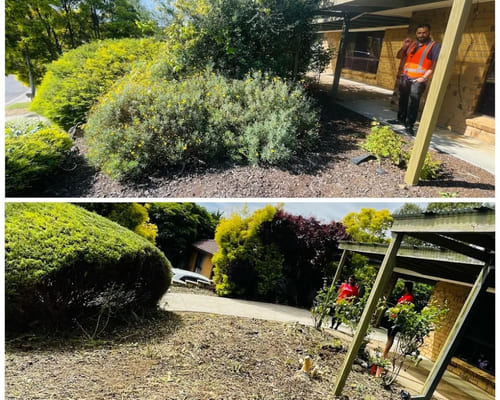
Broadview sits about 6 kilometres north of the city and it is a suburb in the middle of rebuilding itself. Laid out in 1915 and sold off in 1918, its original allotments carry 1920s bungalows and solid 1950s brick homes, and one by one those blocks are being split into pairs of two-storey courtyard houses. That leaves two entirely different gardens on the same street: deep established beds with eighty-year-old plantings next door to a courtyard finished last winter. Add carbonate-rich alkaline ground, a dry Adelaide summer and a suburb split across two councils with different green bin rules, and local knowledge genuinely counts here. BP Blitz covers Broadview on our inner-north round. Call Mitesh on 0406 147 913 for a free measured quote.
Paradise is the largest suburb we service, with more than 7,200 residents living across streets bounded by the River Torrens to the north. Its housing is genuinely mixed: three-quarters separate houses, but real pockets of semi-detached homes and units too, so garden jobs here range from full quarter-acre blocks to compact townhouse courtyards. BP Blitz Gardening and Landscaping Services has been mowing, hedging and clearing gardens across Paradise, Athelstone, Dernancourt and the surrounding suburbs since 2023, building on a local gardening business with more than 20 years of history. Every visit is fixed-priced and carried out by the same crew, whether it's a weekly mow on a family block or a strata common area near Thorndon Park. Call Mitesh on 0406 147 913 for a free measured quote.
Parafield Gardens was largely built out by the SA Housing Trust through the 1970s, and the pattern it left is consistent across the suburb: flat allotments, wide frontages, and a big open lawn front and back on most properties. Sitting alongside Parafield Airport, it is one of the more exposed suburbs in the City of Salisbury, and that exposure shows up in lawns that dry out from the edges in and in irrigation systems installed decades ago that no longer cover what they were built for. Underneath is the same reactive clay found right through Salisbury. BP Blitz services Parafield Gardens on our City of Salisbury rounds, a few minutes from our Brooklyn Avenue base. Call Mitesh on 0406 147 913 for a free measured quote.
Beaumont was laid out as a village in 1849, and the ground it sits on has its own entry in Adelaide's soil record: the Beaumont Association, a shallow rendzina and terra rossa formed directly on outcropping Beaumont Dolomite. The state soil survey calls it invariably shallow, not more than one to two feet, roughly 300 to 600 millimetres, before a spade hits weathered limestone. That single fact explains most of what goes wrong in a Beaumont garden: alkaline lime-rich ground that locks up iron and yellows camellias and citrus, a root zone that runs dry fast through February, and slopes where the same survey warns of soil creep. Add heritage olives planted in 1852 and a canopy of deciduous street trees, and this is a suburb that rewards a gardener who knows the ground. Call Mitesh on 0406 147 913 for a free measured quote.
Brighton is the one suburb on our round where the garden is built on beach sand, and not figuratively. When the Coast Protection Board writes the specification for sand good enough to replenish Adelaide's beaches, the benchmark it measures against is the sand at Brighton: silica, at least half of it coarser than 0.2 millimetres, less than 5 per cent silt and clay. Under five per cent fines is the whole gardening problem in a single number, because silt and clay are the fraction that holds water and hangs on to fertiliser. Water drains before roots reach it, feed follows the water down, and the onshore wind carries salt over the top of the lot. Add kikuyu and couch escaping into the dunes, gutters corroding in salt air, and a suburb where nearly a third of homes are semi-detached with courtyard gardens, and Brighton rewards a gardener who works with the sand rather than against it. Call Mitesh on 0406 147 913 for a free measured quote.
Parkside sits just 2.4 kilometres south of the Adelaide CBD in the City of Unley, bordered by Glen Osmond, Greenhill, Unley and Fullarton roads and backing onto Adelaide's southern park lands. Its 2,385 dwellings split more evenly than most nearby suburbs: 53.8 per cent separate houses against a genuine 27.1 per cent semi-detached and terrace homes and 18.8 per cent flats and units, so garden jobs here run from full quarter-acre blocks to tight courtyard planters two doors apart. BP Blitz Gardening and Landscaping Services works this stretch of the City of Unley alongside neighbouring Unley, Fullarton, Malvern and Hyde Park, building on a local gardening business with more than 20 years of history since taking the BP Blitz name in 2023. Every visit is fixed-priced and run by the same crew. Call Mitesh on 0406 147 913 for a free measured quote.
Broadview sits about 6 kilometres north of the city and it is a suburb in the middle of rebuilding itself. Laid out in 1915 and sold off in 1918, its original allotments carry 1920s bungalows and solid 1950s brick homes, and one by one those blocks are being split into pairs of two-storey courtyard houses. That leaves two entirely different gardens on the same street: deep established beds with eighty-year-old plantings next door to a courtyard finished last winter. Add carbonate-rich alkaline ground, a dry Adelaide summer and a suburb split across two councils with different green bin rules, and local knowledge genuinely counts here. BP Blitz covers Broadview on our inner-north round. Call Mitesh on 0406 147 913 for a free measured quote.
Pasadena is an inner-southern City of Mitcham suburb bordering Panorama, Melrose Park, Colonel Light Gardens, Daw Park, St Marys, Bellevue Heights and Eden Hills, its 1,381 dwellings running 67.2 per cent separate houses against a real 29.2 per cent semi-detached and terrace stock, denser than most suburbs BP Blitz Gardening and Landscaping Services works further from the city. The 2021 Census recorded 3,073 residents with a median age of 49, well above the state average, a settled population whose gardens tend to be established rather than newly landscaped. BP Blitz already works this stretch of the City of Mitcham alongside neighbouring Panorama and Mitcham, building on a local gardening business with more than 20 years of history since taking the BP Blitz name in 2023. Every visit is fixed-priced and run by the same crew. Call Mitesh on 0406 147 913 for a free measured quote.

Prospect sits about 6 kilometres from the CBD and it is the most character-driven suburb we service. The streets are lined with mature trees, and behind them sit symmetrical Victorian and Edwardian villas and bungalows on spacious blocks, most with a formal front garden that was designed to be looked at from the footpath. Alongside them, newer apartments and townhouses off the Prospect Road precinct have compact courtyards with completely different needs. Gardening here is presentation work: clipped hedges, rose beds, edge lines that read straight from the street, and a heavy annual leaf drop from those street trees. BP Blitz covers Prospect on our inner-north run. Call Mitesh on 0406 147 913.
Beaumont was laid out as a village in 1849, and the ground it sits on has its own entry in Adelaide's soil record: the Beaumont Association, a shallow rendzina and terra rossa formed directly on outcropping Beaumont Dolomite. The state soil survey calls it invariably shallow, not more than one to two feet, roughly 300 to 600 millimetres, before a spade hits weathered limestone. That single fact explains most of what goes wrong in a Beaumont garden: alkaline lime-rich ground that locks up iron and yellows camellias and citrus, a root zone that runs dry fast through February, and slopes where the same survey warns of soil creep. Add heritage olives planted in 1852 and a canopy of deciduous street trees, and this is a suburb that rewards a gardener who knows the ground. Call Mitesh on 0406 147 913 for a free measured quote.
Brighton is the one suburb on our round where the garden is built on beach sand, and not figuratively. When the Coast Protection Board writes the specification for sand good enough to replenish Adelaide's beaches, the benchmark it measures against is the sand at Brighton: silica, at least half of it coarser than 0.2 millimetres, less than 5 per cent silt and clay. Under five per cent fines is the whole gardening problem in a single number, because silt and clay are the fraction that holds water and hangs on to fertiliser. Water drains before roots reach it, feed follows the water down, and the onshore wind carries salt over the top of the lot. Add kikuyu and couch escaping into the dunes, gutters corroding in salt air, and a suburb where nearly a third of homes are semi-detached with courtyard gardens, and Brighton rewards a gardener who works with the sand rather than against it. Call Mitesh on 0406 147 913 for a free measured quote.
Rose Park is one of Adelaide's smallest and most established eastern suburbs, a compact 0.55 square kilometre pocket of the City of Burnside barely a kilometre from the CBD, laid out from 1878 and named after South Australia Company chairman Sir John Rose. Its 605 private dwellings run 57.3 per cent separate houses against a real 26.8 per cent semi-detached and terrace stock and 16.5 per cent flats, tree-lined streets built around heritage-era homes rather than the newer estates BP Blitz Gardening and Landscaping Services also works further out. The 2021 Census recorded 1,375 residents with a median age of 44, a settled, high-income community whose gardens tend to be established rather than newly landscaped. BP Blitz already works this stretch of the City of Burnside alongside neighbouring Dulwich and Toorak Gardens, building on a local gardening business with more than 20 years of history since taking the BP Blitz name in 2023. Every visit is fixed-priced and run by the same crew. Call Mitesh on 0406 147 913 for a free measured quote.
Broadview sits about 6 kilometres north of the city and it is a suburb in the middle of rebuilding itself. Laid out in 1915 and sold off in 1918, its original allotments carry 1920s bungalows and solid 1950s brick homes, and one by one those blocks are being split into pairs of two-storey courtyard houses. That leaves two entirely different gardens on the same street: deep established beds with eighty-year-old plantings next door to a courtyard finished last winter. Add carbonate-rich alkaline ground, a dry Adelaide summer and a suburb split across two councils with different green bin rules, and local knowledge genuinely counts here. BP Blitz covers Broadview on our inner-north round. Call Mitesh on 0406 147 913 for a free measured quote.
Rostrevor is a family suburb of 8,452 people at the foot of the Adelaide Hills, its main streets falling inside the City of Campbelltown with a smaller Adelaide Hills Council pocket running up toward Montacute Road. Named after the village of Rostrevor in Northern Ireland, the suburb's 3,330 dwellings run heavily to separate houses, 78.8 per cent, against 15.2 per cent semi-detached and terrace stock and 5.9 per cent flats, with 49.5 per cent of its families raising children at home. BP Blitz Gardening and Landscaping Services already works this stretch of the City of Campbelltown alongside neighbouring Athelstone, Newton, Campbelltown and Magill, building on a local gardening business with more than 20 years of history since taking the BP Blitz name in 2023. Every visit is fixed-priced and run by the same crew. Call Mitesh on 0406 147 913 for a free measured quote.
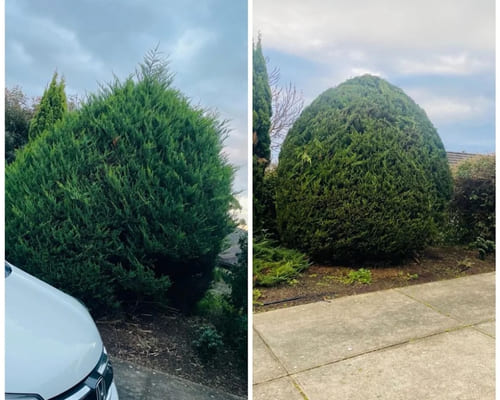
Seaton was rural land, market gardens, poultry farms and lucerne paddocks bounded by coastal sand dunes, until the South Australian Housing Trust carpeted it with worker housing after the Second World War, driven by demand from the Hendon munitions factory and the GMH assembly plant at Woodville. That single development wave is why most of the suburb's 5,007 homes sit on consistent block sizes with straightforward garden footprints rather than the mixed-era clutter closer to the CBD. BP Blitz has worked Seaton as part of our City of Charles Sturt round for years, from the original Housing Trust blocks through to the rental turnover that now makes up over a third of the suburb. We know the dune-fringe ground on the western edge, the sporting and golf grounds threaded through it, and what a fixed-price, reliable crew needs to look like on a street this size.
Beaumont was laid out as a village in 1849, and the ground it sits on has its own entry in Adelaide's soil record: the Beaumont Association, a shallow rendzina and terra rossa formed directly on outcropping Beaumont Dolomite. The state soil survey calls it invariably shallow, not more than one to two feet, roughly 300 to 600 millimetres, before a spade hits weathered limestone. That single fact explains most of what goes wrong in a Beaumont garden: alkaline lime-rich ground that locks up iron and yellows camellias and citrus, a root zone that runs dry fast through February, and slopes where the same survey warns of soil creep. Add heritage olives planted in 1852 and a canopy of deciduous street trees, and this is a suburb that rewards a gardener who knows the ground. Call Mitesh on 0406 147 913 for a free measured quote.
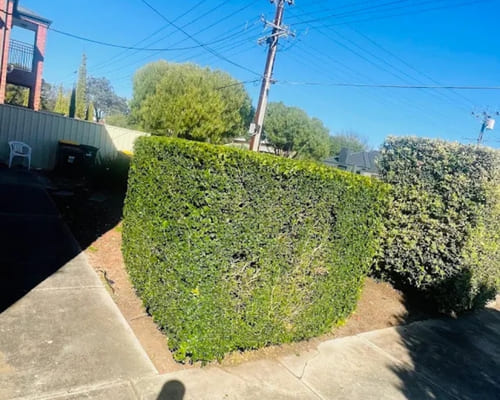
Brighton is the one suburb on our round where the garden is built on beach sand, and not figuratively. When the Coast Protection Board writes the specification for sand good enough to replenish Adelaide's beaches, the benchmark it measures against is the sand at Brighton: silica, at least half of it coarser than 0.2 millimetres, less than 5 per cent silt and clay. Under five per cent fines is the whole gardening problem in a single number, because silt and clay are the fraction that holds water and hangs on to fertiliser. Water drains before roots reach it, feed follows the water down, and the onshore wind carries salt over the top of the lot. Add kikuyu and couch escaping into the dunes, gutters corroding in salt air, and a suburb where nearly a third of homes are semi-detached with courtyard gardens, and Brighton rewards a gardener who works with the sand rather than against it. Call Mitesh on 0406 147 913 for a free measured quote.
Semaphore was first surveyed in 1849 and takes its name from a signal flagpole raised in 1851 to flag approaching ships to Port Adelaide, making it one of the oldest working coastal settlements on the Lefevre Peninsula rather than a purpose-built beach resort. That maritime past has left Semaphore with narrow, heritage-listed allotments along Semaphore Road and the Esplanade, most planted decades before the salt-tolerant native palette gardeners now recommend for this coast. The suburb sits on the same dune sand and onshore salt wind as the rest of the Gulf St Vincent frontage, but in the City of Port Adelaide Enfield rather than Charles Sturt, with its own bin day and dune-management rules. BP Blitz Gardening and Landscaping Services works Semaphore on scheduled coastal rounds, from mowing and hedge shaping through to renovating salt-stressed cottage gardens. Call Mitesh on 0406 147 913 for a free written quote.
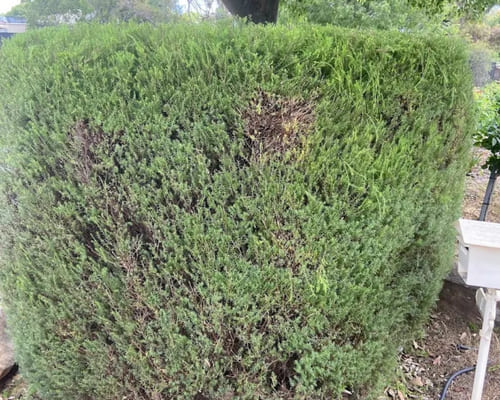
Broadview sits about 6 kilometres north of the city and it is a suburb in the middle of rebuilding itself. Laid out in 1915 and sold off in 1918, its original allotments carry 1920s bungalows and solid 1950s brick homes, and one by one those blocks are being split into pairs of two-storey courtyard houses. That leaves two entirely different gardens on the same street: deep established beds with eighty-year-old plantings next door to a courtyard finished last winter. Add carbonate-rich alkaline ground, a dry Adelaide summer and a suburb split across two councils with different green bin rules, and local knowledge genuinely counts here. BP Blitz covers Broadview on our inner-north round. Call Mitesh on 0406 147 913 for a free measured quote.
Semaphore South is a small, quiet residential pocket on the Le Fevre Peninsula, tucked between Semaphore and Glanville to the north and Semaphore Park to the south, with Gulf St Vincent forming its western edge. Established in 1945, it's home to just over a thousand residents across a compact grid running from the Hart Street boundary down to Military Road and the Esplanade beachfront. The free-draining dune sand and salt-laden coastal wind here demand a different approach to lawns, beds and hedges than gardens further inland, and Port Adelaide Enfield's dune protection works along the Semaphore South foreshore are a reminder of how exposed this edge of the peninsula really is. BP Blitz Gardening and Landscaping Services has worked this stretch of coast for years, from routine mowing and hedge trimming to salt-tolerant garden bed installation and fertiliser programmes built for sandy soil.
Somerton Park is a settled coastal suburb in the City of Holdfast Bay, sitting between Glenelg South to the north and North Brighton to the south, with Somerton Park Beach on Gulf St Vincent forming its western edge and Morphettville and Warradale inland to the east. First subdivided as Paringa Park before taking its current name, and served by its own post office from 1947 to 1988, it is home to just over 5,800 residents on quarter-acre blocks laid out along Brighton Road and Diagonal Road. The suburb sits on sandy coastal soil that drains fast and holds little nutrient, and it borders the Minda Dunes, one of only two remnant original dune systems left on the entire Adelaide coastline. BP Blitz Gardening and Landscaping Services has worked this stretch of coast for years, building lawns, beds and hedges around exactly that sandy, salt-exposed ground rather than fighting it.
Beaumont was laid out as a village in 1849, and the ground it sits on has its own entry in Adelaide's soil record: the Beaumont Association, a shallow rendzina and terra rossa formed directly on outcropping Beaumont Dolomite. The state soil survey calls it invariably shallow, not more than one to two feet, roughly 300 to 600 millimetres, before a spade hits weathered limestone. That single fact explains most of what goes wrong in a Beaumont garden: alkaline lime-rich ground that locks up iron and yellows camellias and citrus, a root zone that runs dry fast through February, and slopes where the same survey warns of soil creep. Add heritage olives planted in 1852 and a canopy of deciduous street trees, and this is a suburb that rewards a gardener who knows the ground. Call Mitesh on 0406 147 913 for a free measured quote.
Brighton is the one suburb on our round where the garden is built on beach sand, and not figuratively. When the Coast Protection Board writes the specification for sand good enough to replenish Adelaide's beaches, the benchmark it measures against is the sand at Brighton: silica, at least half of it coarser than 0.2 millimetres, less than 5 per cent silt and clay. Under five per cent fines is the whole gardening problem in a single number, because silt and clay are the fraction that holds water and hangs on to fertiliser. Water drains before roots reach it, feed follows the water down, and the onshore wind carries salt over the top of the lot. Add kikuyu and couch escaping into the dunes, gutters corroding in salt air, and a suburb where nearly a third of homes are semi-detached with courtyard gardens, and Brighton rewards a gardener who works with the sand rather than against it. Call Mitesh on 0406 147 913 for a free measured quote.
St Agnes sits in Adelaide's north-eastern foothills, 15 to 17km from the CBD in the City of Tea Tree Gully, bordered by Redwood Park, Ridgehaven, Modbury, Modbury Heights, Modbury North and Banksia Park, with Anstey Hill Recreation Park a few minutes from the suburb's edge. Renamed from Tea Tree Gully to St Agnes in 1969, right as the surrounding council area was built out through the 1960s and 70s residential boom, the suburb's gardens along streets like Sandalwood Drive, Tolley Road and Australia Avenue were largely planted in the same era and are now collectively reaching the same age. BP Blitz Gardening and Landscaping Services works St Agnes regularly, from routine lawn mowing and hedge trimming on established blocks to clean-ups on gardens that have outgrown their original planting. We know the foothills terrain, the older tree cover, the local rainfall pattern, and what a 50-plus-year-old garden here actually needs to stay tidy, safe and low-risk against the nearby bushland.
Broadview sits about 6 kilometres north of the city and it is a suburb in the middle of rebuilding itself. Laid out in 1915 and sold off in 1918, its original allotments carry 1920s bungalows and solid 1950s brick homes, and one by one those blocks are being split into pairs of two-storey courtyard houses. That leaves two entirely different gardens on the same street: deep established beds with eighty-year-old plantings next door to a courtyard finished last winter. Add carbonate-rich alkaline ground, a dry Adelaide summer and a suburb split across two councils with different green bin rules, and local knowledge genuinely counts here. BP Blitz covers Broadview on our inner-north round. Call Mitesh on 0406 147 913 for a free measured quote.
St Georges only became St Georges in 1918, chosen by public vote right after the First World War on what had been Edward Drew's Highfield estate and its open paddocks. That patriotic-era subdivision produced the wide, tree-lined streets of Wootoona Terrace, Craighill Road and Inverness Avenue, now home to established quarter-acre-style blocks and three heritage-listed houses. City of Burnside's own street-tree records show a genuinely current story here: ageing Prunus and Wootoona Terrace's drought-stressed Pengarry Ash are being progressively replaced with Ulmus, Pyrus, Jacaranda and Claret Ash. BP Blitz Gardening and Landscaping Services works St Georges regularly, from routine lawn mowing and hedge trimming on established gardens to irrigation upgrades that help older plantings cope with drier summers. We know the suburb's mature deciduous trees, its heritage streetscape and what a hundred-year-old garden here actually needs.
Stonyfell is the hilliest, most acreage-style suburb in BP Blitz's City of Burnside round, and the one where the streets still belong to the bush rather than the nursery. Its own council tree strategy is the outlier among neighbouring suburbs: rather than replacing street trees with exotic deciduous species, Burnside recommends retaining Stonyfell's remnant Eucalyptus leucoxylon, microcarpa and camaldulensis on informal, unkerbed verges, on ground that was quarried for sandstone and quartzite from 1837 and later planted with vines and olive groves. That native character carries onto private blocks too, many of which back onto Ferguson Conservation Park or sit near Stonyfell and Second Creek. BP Blitz Gardening and Landscaping Services works with that character rather than against it, from mature gum management and regulated-tree care through to the mowing, hedging, mulching and clean-up work every large Stonyfell block eventually needs.
Beaumont was laid out as a village in 1849, and the ground it sits on has its own entry in Adelaide's soil record: the Beaumont Association, a shallow rendzina and terra rossa formed directly on outcropping Beaumont Dolomite. The state soil survey calls it invariably shallow, not more than one to two feet, roughly 300 to 600 millimetres, before a spade hits weathered limestone. That single fact explains most of what goes wrong in a Beaumont garden: alkaline lime-rich ground that locks up iron and yellows camellias and citrus, a root zone that runs dry fast through February, and slopes where the same survey warns of soil creep. Add heritage olives planted in 1852 and a canopy of deciduous street trees, and this is a suburb that rewards a gardener who knows the ground. Call Mitesh on 0406 147 913 for a free measured quote.
Brighton is the one suburb on our round where the garden is built on beach sand, and not figuratively. When the Coast Protection Board writes the specification for sand good enough to replenish Adelaide's beaches, the benchmark it measures against is the sand at Brighton: silica, at least half of it coarser than 0.2 millimetres, less than 5 per cent silt and clay. Under five per cent fines is the whole gardening problem in a single number, because silt and clay are the fraction that holds water and hangs on to fertiliser. Water drains before roots reach it, feed follows the water down, and the onshore wind carries salt over the top of the lot. Add kikuyu and couch escaping into the dunes, gutters corroding in salt air, and a suburb where nearly a third of homes are semi-detached with courtyard gardens, and Brighton rewards a gardener who works with the sand rather than against it. Call Mitesh on 0406 147 913 for a free measured quote.
Tea Tree Gully has been a township since the late 1830s and it still sits where the plain gives way to the foothills, which is what makes gardening here genuinely different from the flat northern suburbs. Blocks slope, water runs rather than soaks, and mature gums drop leaf and bark into gutters, beds and downpipes year-round. It is also fire-season country, where an overgrown block toward the end of spring becomes a real problem rather than an untidy one. The gardens that do well here are the ones set up for slope and fuel load rather than fought against it. BP Blitz covers Tea Tree Gully on our eastern round. Call Mitesh on 0406 147 913 for a free measured quote.
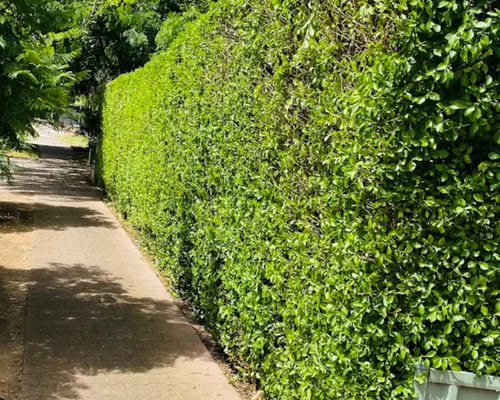
Broadview sits about 6 kilometres north of the city and it is a suburb in the middle of rebuilding itself. Laid out in 1915 and sold off in 1918, its original allotments carry 1920s bungalows and solid 1950s brick homes, and one by one those blocks are being split into pairs of two-storey courtyard houses. That leaves two entirely different gardens on the same street: deep established beds with eighty-year-old plantings next door to a courtyard finished last winter. Add carbonate-rich alkaline ground, a dry Adelaide summer and a suburb split across two councils with different green bin rules, and local knowledge genuinely counts here. BP Blitz covers Broadview on our inner-north round. Call Mitesh on 0406 147 913 for a free measured quote.
Tennyson is one of the narrowest suburbs on the Adelaide coast, a strip barely 450 metres wide running from the sand dunes and beach on Gulf St Vincent to the shore of West Lakes, with the heritage-listed Estcourt House marking its northern end. BP Blitz Gardening and Landscaping Services has worked this stretch long enough to know it is unlike any inland suburb we service: gardens here sit within reach of salt-laden onshore wind, the soil is sandy and fast-draining, and a good number of properties back directly onto the Wara Wayingga-Tennyson Dunes Conservation Reserve, one of the last remnant coastal dune systems on the Adelaide metropolitan coast. Whether it is routine mowing on a newer block near West Lakes or careful hedge work around an established coastal garden, we quote on-site and in writing before any work begins.
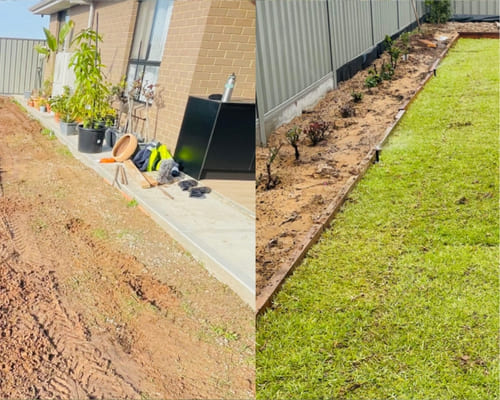
Toorak Gardens is one of the most tightly built suburbs BP Blitz Gardening and Landscaping Services covers, a legacy of the 1912 subdivision covenant that allowed only one substantial house per quarter-acre block. That rule filled the suburb's tree-lined streets, Grant Avenue, Alexandra Avenue and Cudmore Avenue among them, with 1920s and 1930s villas set in established gardens that still define the area today. We maintain those gardens on regular fortnightly and four-weekly rounds, from hedge lines along Prescott Terrace to the handful of blocks backing onto First Creek in the north-east corner near Kensington Road. Mitesh and the crew carry $20 million in public liability cover and quote every job in writing before starting, whether it's a single clean-up near Fergusson Square or an ongoing round on a heritage-character villa block.
Beaumont was laid out as a village in 1849, and the ground it sits on has its own entry in Adelaide's soil record: the Beaumont Association, a shallow rendzina and terra rossa formed directly on outcropping Beaumont Dolomite. The state soil survey calls it invariably shallow, not more than one to two feet, roughly 300 to 600 millimetres, before a spade hits weathered limestone. That single fact explains most of what goes wrong in a Beaumont garden: alkaline lime-rich ground that locks up iron and yellows camellias and citrus, a root zone that runs dry fast through February, and slopes where the same survey warns of soil creep. Add heritage olives planted in 1852 and a canopy of deciduous street trees, and this is a suburb that rewards a gardener who knows the ground. Call Mitesh on 0406 147 913 for a free measured quote.
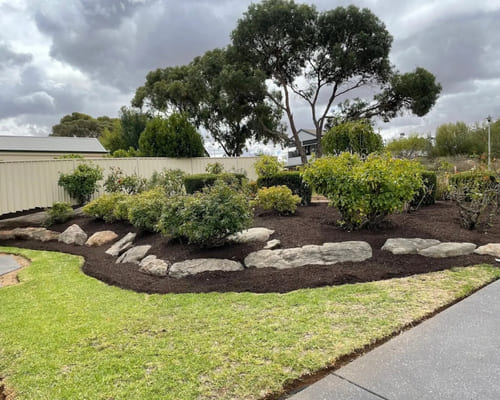
Brighton is the one suburb on our round where the garden is built on beach sand, and not figuratively. When the Coast Protection Board writes the specification for sand good enough to replenish Adelaide's beaches, the benchmark it measures against is the sand at Brighton: silica, at least half of it coarser than 0.2 millimetres, less than 5 per cent silt and clay. Under five per cent fines is the whole gardening problem in a single number, because silt and clay are the fraction that holds water and hangs on to fertiliser. Water drains before roots reach it, feed follows the water down, and the onshore wind carries salt over the top of the lot. Add kikuyu and couch escaping into the dunes, gutters corroding in salt air, and a suburb where nearly a third of homes are semi-detached with courtyard gardens, and Brighton rewards a gardener who works with the sand rather than against it. Call Mitesh on 0406 147 913 for a free measured quote.
Torrens Park takes its name from Sir Robert Torrens, who built his estate house here in 1853-54 on land that later expanded under Walter Watson Hughes and philanthropist Robert Barr Smith, before it became the core of Scotch College on Carruth Road. BP Blitz Gardening and Landscaping Services works the mix that legacy left behind, from the flatter northern blocks near Mitcham Square down to the hillier streets toward Belair and Lynton where Brown Hill Creek cuts through on its way north-west. The suburb's original gatehouse still stands at the corner of Belair Road and Ayr Avenue, and we treat the older gardens near it differently to a newer townhouse block near the station. Mitesh and the crew carry $20 million in public liability cover and quote every job in writing, whether it's a fortnightly round on a Belair Road frontage or a one-off clean-up on a foothills block backing onto the creek.
Broadview sits about 6 kilometres north of the city and it is a suburb in the middle of rebuilding itself. Laid out in 1915 and sold off in 1918, its original allotments carry 1920s bungalows and solid 1950s brick homes, and one by one those blocks are being split into pairs of two-storey courtyard houses. That leaves two entirely different gardens on the same street: deep established beds with eighty-year-old plantings next door to a courtyard finished last winter. Add carbonate-rich alkaline ground, a dry Adelaide summer and a suburb split across two councils with different green bin rules, and local knowledge genuinely counts here. BP Blitz covers Broadview on our inner-north round. Call Mitesh on 0406 147 913 for a free measured quote.
Tranmere is a compact eastern-suburbs pocket of 4,136 people whose best-known corner, Poets' Corner, was carved off between Richardson Avenue, Birkinshaw Avenue, Magill Road and Glynburn Road with streets named for Shakespeare, Milton, Dryden and Kipling. The wider suburb dates to 1838, when David Wylie named his 67-acre section after his hometown of Tranmere, Cheshire, and ran a schoolhouse on it until 1853. BP Blitz Gardening and Landscaping Services already works these streets alongside neighbouring Magill, Kensington Gardens and Newton, maintaining everything from Poets' Corner courtyards to the older blocks near The Gums Recreational Ground and Third Creek. Every visit is fixed-priced and run by the same crew, insured for $20 million. Call Mitesh on 0406 147 913 for a free measured quote.
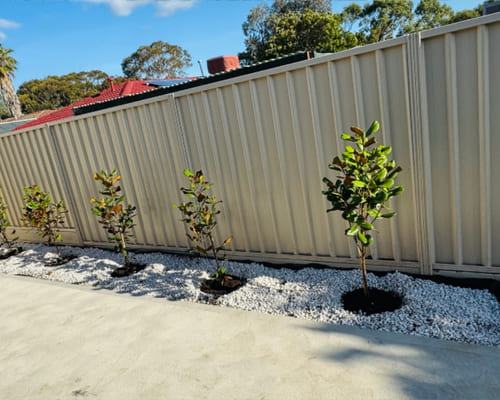
Tusmore is the City of Burnside's own flagship suburb for one tree. Council's Urban Tree Strategy says it is not hard to imagine a better known Adelaide suburb, and names Tusmore as carrying the highest proportion of Jacaranda trees per street of any suburb in the City, with Council itself flagging a resourced replacement programme as necessary in the coming years. BP Blitz Gardening and Landscaping Services works Tusmore's Fisher Street, Bakewell Street, Barr Smith Street, Kennaway Street, Brandreth Street and the Tusmore Avenue precinct, keeping established gardens, ageing Jacaranda avenues and courtyard blocks around Tusmore Park in shape year-round. With 20+ years of local experience and $20,000,000 in public liability cover, Mitesh and the team plan every Tusmore visit around what is actually growing out the front, not a generic mow. Call 0406 147 913 for a Tusmore quote.
Beaumont was laid out as a village in 1849, and the ground it sits on has its own entry in Adelaide's soil record: the Beaumont Association, a shallow rendzina and terra rossa formed directly on outcropping Beaumont Dolomite. The state soil survey calls it invariably shallow, not more than one to two feet, roughly 300 to 600 millimetres, before a spade hits weathered limestone. That single fact explains most of what goes wrong in a Beaumont garden: alkaline lime-rich ground that locks up iron and yellows camellias and citrus, a root zone that runs dry fast through February, and slopes where the same survey warns of soil creep. Add heritage olives planted in 1852 and a canopy of deciduous street trees, and this is a suburb that rewards a gardener who knows the ground. Call Mitesh on 0406 147 913 for a free measured quote.
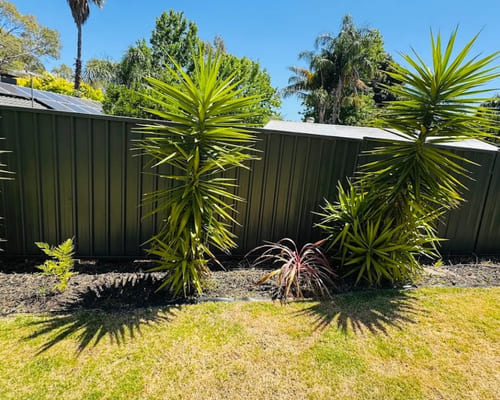
Brighton is the one suburb on our round where the garden is built on beach sand, and not figuratively. When the Coast Protection Board writes the specification for sand good enough to replenish Adelaide's beaches, the benchmark it measures against is the sand at Brighton: silica, at least half of it coarser than 0.2 millimetres, less than 5 per cent silt and clay. Under five per cent fines is the whole gardening problem in a single number, because silt and clay are the fraction that holds water and hangs on to fertiliser. Water drains before roots reach it, feed follows the water down, and the onshore wind carries salt over the top of the lot. Add kikuyu and couch escaping into the dunes, gutters corroding in salt air, and a suburb where nearly a third of homes are semi-detached with courtyard gardens, and Brighton rewards a gardener who works with the sand rather than against it. Call Mitesh on 0406 147 913 for a free measured quote.
Unley sits barely two kilometres south of the Adelaide CBD, inside the boundary formed by Greenhill Road, Unley Road, Cremorne Street and King William Road, and the gardens here are as heritage conscious as the houses in front of them. Sandstone and bluestone villas from the late 1800s and early 1900s line streets running off King William Road and Unley Road, many with established hedges, standard roses and mature trees that predate the houses they now shade. The City of Unley holds a Significant Tree Register of roughly 350 trees and requires PlanSA approval before any regulated or significant tree is touched, so garden work here has to be done by people who know the rules, not just the mower. BP Blitz maintains Unley's character gardens on a fixed-price, fortnightly round; call Mitesh on 0406 147 913.
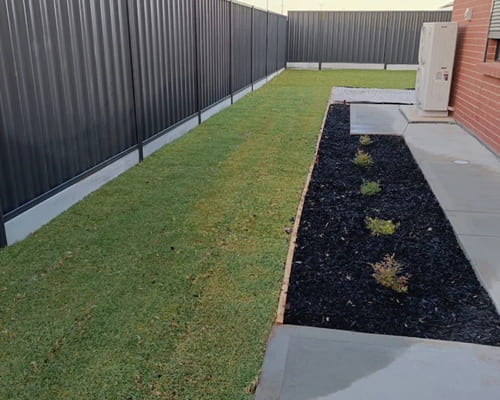
Broadview sits about 6 kilometres north of the city and it is a suburb in the middle of rebuilding itself. Laid out in 1915 and sold off in 1918, its original allotments carry 1920s bungalows and solid 1950s brick homes, and one by one those blocks are being split into pairs of two-storey courtyard houses. That leaves two entirely different gardens on the same street: deep established beds with eighty-year-old plantings next door to a courtyard finished last winter. Add carbonate-rich alkaline ground, a dry Adelaide summer and a suburb split across two councils with different green bin rules, and local knowledge genuinely counts here. BP Blitz covers Broadview on our inner-north round. Call Mitesh on 0406 147 913 for a free measured quote.
Vale Park sits about four kilometres north-east of the Adelaide CBD, wedged between North East Road and the River Torrens, and the suburb is literally split down the middle: the 1970 Ascot Avenue bridge divides it into a southern half under the Town of Walkerville and a northern half under the City of Port Adelaide Enfield, each with its own tree and verge rules. Development here is mostly post-war brick veneer from the 1960s and 70s rather than the Victorian villas found next door in Walkerville, with newer townhouses drawing younger families in recent years. Most homes are a five-minute walk from the River Torrens Linear Park, so back lawns running toward the reserve stay shaded and damp through winter and need a different mowing schedule to a front lawn. BP Blitz maintains Vale Park gardens on a fixed-price schedule; call Mitesh on 0406 147 913.
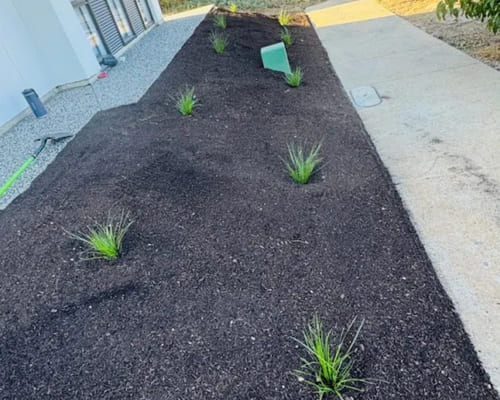
Walkerville sits about 4 kilometres north-east of the city and it is the most presentation-driven suburb on our books. Grand heritage villas, bungalows and churches sit behind mature established gardens on quiet tree-lined streets, and those gardens were designed as part of the property rather than added to it: formal hedges, rose beds, clipped structure and specimen exotic trees that have been in the ground for the better part of a century. Work here is not about tidying a garden up, it is about holding an established standard week after week without ever letting it slip. BP Blitz covers Walkerville on our inner-north round. Call Mitesh on 0406 147 913 for a free measured quote.
Beaumont was laid out as a village in 1849, and the ground it sits on has its own entry in Adelaide's soil record: the Beaumont Association, a shallow rendzina and terra rossa formed directly on outcropping Beaumont Dolomite. The state soil survey calls it invariably shallow, not more than one to two feet, roughly 300 to 600 millimetres, before a spade hits weathered limestone. That single fact explains most of what goes wrong in a Beaumont garden: alkaline lime-rich ground that locks up iron and yellows camellias and citrus, a root zone that runs dry fast through February, and slopes where the same survey warns of soil creep. Add heritage olives planted in 1852 and a canopy of deciduous street trees, and this is a suburb that rewards a gardener who knows the ground. Call Mitesh on 0406 147 913 for a free measured quote.
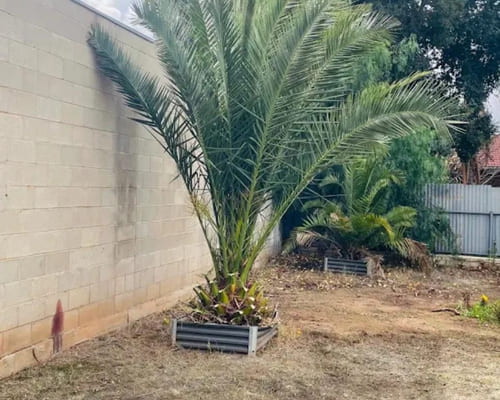
Brighton is the one suburb on our round where the garden is built on beach sand, and not figuratively. When the Coast Protection Board writes the specification for sand good enough to replenish Adelaide's beaches, the benchmark it measures against is the sand at Brighton: silica, at least half of it coarser than 0.2 millimetres, less than 5 per cent silt and clay. Under five per cent fines is the whole gardening problem in a single number, because silt and clay are the fraction that holds water and hangs on to fertiliser. Water drains before roots reach it, feed follows the water down, and the onshore wind carries salt over the top of the lot. Add kikuyu and couch escaping into the dunes, gutters corroding in salt air, and a suburb where nearly a third of homes are semi-detached with courtyard gardens, and Brighton rewards a gardener who works with the sand rather than against it. Call Mitesh on 0406 147 913 for a free measured quote.
Wattle Park is a small, leafy suburb in the City of Burnside with an unusual history for a residential address: part of its ground was once planted out by the Stonyfell Olive Company, and the suburb's own namesake property later became Wattle Park Teachers College before being redeveloped in 1991 as Wattle Grove, a Southern Cross Homes retirement village. With 86.2% of its 741 dwellings separate houses and among the highest owner-occupancy of any Burnside-area suburb we cover, it's an established-garden suburb of long-term owners, not a rental-turnover market. BP Blitz Gardening and Landscaping Services works across Wattle Park's mature residential blocks and its retirement-village grounds alike, from routine mowing and hedging through to the careful, safety-first pruning that communal aged-care gardens need.
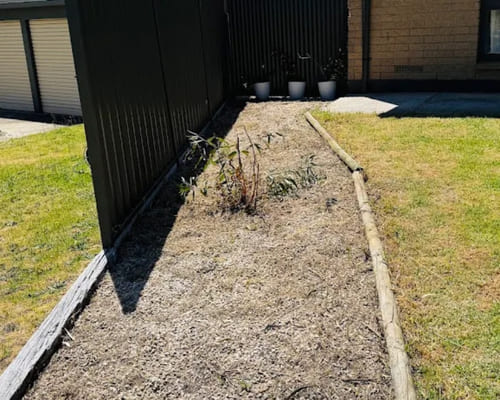
Broadview sits about 6 kilometres north of the city and it is a suburb in the middle of rebuilding itself. Laid out in 1915 and sold off in 1918, its original allotments carry 1920s bungalows and solid 1950s brick homes, and one by one those blocks are being split into pairs of two-storey courtyard houses. That leaves two entirely different gardens on the same street: deep established beds with eighty-year-old plantings next door to a courtyard finished last winter. Add carbonate-rich alkaline ground, a dry Adelaide summer and a suburb split across two councils with different green bin rules, and local knowledge genuinely counts here. BP Blitz covers Broadview on our inner-north round. Call Mitesh on 0406 147 913 for a free measured quote.
West Lakes was built from 1970 by developer Delfin and the South Australian Government, who moved roughly 10 million tonnes of earth to turn the old River Torrens wetlands into the tidal lake the suburb opened around in 1977, and that reclaimed ground still means most homes sit on raft foundations rather than a standard slab. BP Blitz Gardening and Landscaping Services works both eras of the suburb every week: the original lakeside gardens, now approaching fifty years old and due for structural hedge and rose work, and the denser new-build courtyards going up in the WEST development on the old Football Park site. Every West Lakes quote is agreed in writing before we start, with the same crew returning each visit, backed by $20 million in public liability cover with a certificate of currency on request. Call Mitesh on 0406 147 913 for a free measured quote.
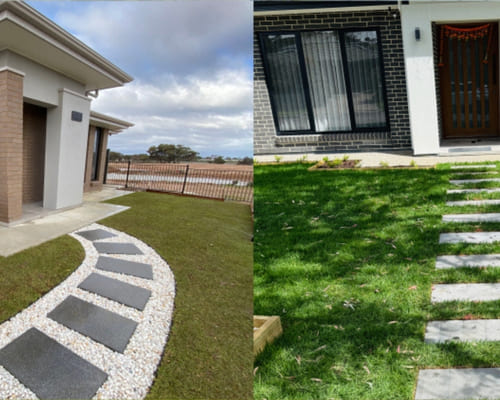
West Lakes Shore was gazetted on 30 September 1976, six months before West Lakes itself opened across the water, built on reclaimed swampy marshland under the same Delfin and South Australian Government scheme that filled the lake from November 1974. BP Blitz Gardening and Landscaping Services works the streets around the A.M. Ramsay Regatta Course every week, from lakefront blocks on Anglers Court needing structural hedge work on their near-fifty-year-old plantings to the semi-detached rows further back near Bartley Terrace Shopping Centre. Every quote is agreed in writing before we start, with the same crew returning each visit, backed by $20 million in public liability cover with a certificate of currency on request. Call Mitesh on 0406 147 913 for a free measured quote.
Beaumont was laid out as a village in 1849, and the ground it sits on has its own entry in Adelaide's soil record: the Beaumont Association, a shallow rendzina and terra rossa formed directly on outcropping Beaumont Dolomite. The state soil survey calls it invariably shallow, not more than one to two feet, roughly 300 to 600 millimetres, before a spade hits weathered limestone. That single fact explains most of what goes wrong in a Beaumont garden: alkaline lime-rich ground that locks up iron and yellows camellias and citrus, a root zone that runs dry fast through February, and slopes where the same survey warns of soil creep. Add heritage olives planted in 1852 and a canopy of deciduous street trees, and this is a suburb that rewards a gardener who knows the ground. Call Mitesh on 0406 147 913 for a free measured quote.
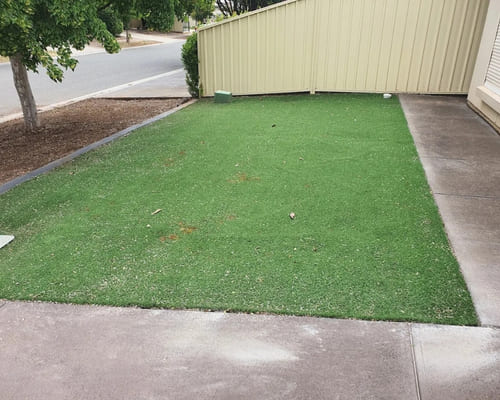
Brighton is the one suburb on our round where the garden is built on beach sand, and not figuratively. When the Coast Protection Board writes the specification for sand good enough to replenish Adelaide's beaches, the benchmark it measures against is the sand at Brighton: silica, at least half of it coarser than 0.2 millimetres, less than 5 per cent silt and clay. Under five per cent fines is the whole gardening problem in a single number, because silt and clay are the fraction that holds water and hangs on to fertiliser. Water drains before roots reach it, feed follows the water down, and the onshore wind carries salt over the top of the lot. Add kikuyu and couch escaping into the dunes, gutters corroding in salt air, and a suburb where nearly a third of homes are semi-detached with courtyard gardens, and Brighton rewards a gardener who works with the sand rather than against it. Call Mitesh on 0406 147 913 for a free measured quote.
Woodville was laid out as a township in 1849 on the road halfway between Adelaide and Port Adelaide, and the Halfway House inn that gave the area its first landmark stood a decade before the town survey was even drawn. The suburb's 2021 Census count of 2,180 residents lives across a real housing mix: 58 per cent separate houses on the older colonial-era blocks and just over 42 per cent semi-detached, townhouse and unit dwellings near the Woodville Road and Port Road corner, with 37.9 per cent of homes rented. BP Blitz Gardening and Landscaping Services works both sides of that mix every week, from established hedges on the Federation-era streets to rental garden maintenance ahead of an inspection. Every quote is agreed in writing before we start, backed by $20 million in public liability cover. Call Mitesh on 0406 147 913 for a free measured quote.
Broadview sits about 6 kilometres north of the city and it is a suburb in the middle of rebuilding itself. Laid out in 1915 and sold off in 1918, its original allotments carry 1920s bungalows and solid 1950s brick homes, and one by one those blocks are being split into pairs of two-storey courtyard houses. That leaves two entirely different gardens on the same street: deep established beds with eighty-year-old plantings next door to a courtyard finished last winter. Add carbonate-rich alkaline ground, a dry Adelaide summer and a suburb split across two councils with different green bin rules, and local knowledge genuinely counts here. BP Blitz covers Broadview on our inner-north round. Call Mitesh on 0406 147 913 for a free measured quote.
Woodville Park takes its name from the tree cover that gave neighbouring Woodville its own name a century earlier, and the suburb's streets still carry more established canopy than most of the blocks further out along the same railway corridor. The 2021 Census counted 1,852 residents with a median age of just 36, seven years younger than the state median, across a housing stock that's 76.3 per cent separate houses rather than the semi-detached mix found next door in Woodville. BP Blitz Gardening and Landscaping Services runs a regular round through these full house-block gardens on both sides of the Outer Harbor railway line that splits the suburb. Every quote is agreed in writing before we start, backed by $20 million in public liability cover. Call Mitesh on 0406 147 913 for a free measured quote.
TESTIMONIALS
What Our Customers Say About Us
ABOUT US
Reliable Gardening and Landscaping
BP Blitz Gardening and Landscaping Services is a Salisbury-based gardening and landscaping business run by Mitesh Patel. It was established in 2023, when Mitesh took on an existing local gardening business with more than 20 years of history in Adelaide's northern suburbs, and it has traded under the BP Blitz name for the three years since. That lineage matters. The gardens we look after in Salisbury, Ingle Farm and Para Hills have been tended by the same hands for decades, and we know exactly what the reactive clay soil and 40-degree summers do to a lawn. We handle fortnightly lawn mowing, weed control, hedge and rose pruning, fertilising, turf and artificial turf installation, irrigation, garden beds, mulch, pebble work and single-storey gutter cleaning, for residential, commercial and strata properties across more than 20 suburbs. Over 500 customers have used us. We are fully insured with $20 million in public liability cover, we quote in writing before we start, and we clear every clipping and latch every gate before we leave. Call Mitesh on 0406 147 913 for a free quote.
BUSINESS
SERVICES
OPERATING HOURS
Sun: 7:00am - 9:00pm
Mon: 7:00am - 9:00pm
Tue: 7:00am - 9:00pm
Wed: 7:00am - 9:00pm
Thu: 7:00am - 9:00pm
Fri: 7:00am - 9:00pm
Sat: 7:00am - 9:00pm