
Gardening and Landscaping in Dernancourt
Gardening and Landscaping in Dernancourt
Professional Gardening & Landscaping Solutions for Residential, Commercial & Strata Properties Across Adelaide
GET A FREE QUOTE
Dernancourt is the two-council suburb. Most of its 203 hectares sit inside the City of Tea Tree Gully, but the south-western corner around Riverside Grove, Ridgefield Avenue and Willowbrook Road falls inside the City of Port Adelaide Enfield, so two verge rulebooks run across one suburb barely 2.4 kilometres wide. The ground ignores the line. Dernancourt drops 53 metres from its Highbury edge down to the River Torrens, so every garden in it drains the same way and the bottom of the suburb stays wet long after the top has dried out. BP Blitz keeps a regular round through these streets, from Parsons Road and Balmoral Road to the tree-named grid off Lower North East Road, and we know which council a property answers to before we quote it rather than after.
OUR STORY
One Suburb, Two Councils, Two Verge Rulebooks
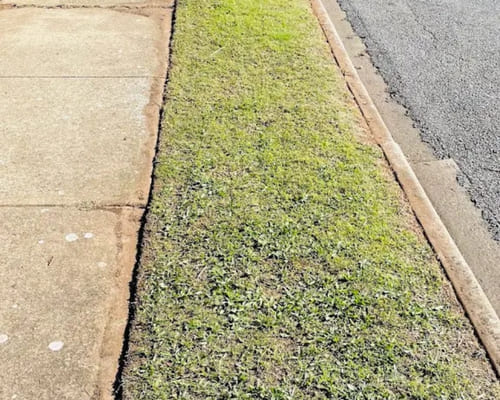
Most Adelaide suburbs answer to one council. Dernancourt answers to two. The bulk of its 203.4 hectares sits inside the City of Tea Tree Gully, but the south-western pocket running down Riverside Grove, Ridgefield Avenue and Willowbrook Road toward the river belongs to the City of Port Adelaide Enfield. On a suburb measuring only 2.41 kilometres east to west and 1.33 kilometres north to south, that means two rulebooks, two application forms and two phone numbers, with a boundary you cannot see from the footpath. It matters more than it sounds. On the Tea Tree Gully side, landscaping a verge, and that includes laying lawn, planting shrubs and running irrigation, needs council approval before work starts under a section 221 application to alter a public road, and once it is in the owner carries the ongoing maintenance of anything installed above council's minimum standard. Council mows and sprays the verge on its own schedule, from late winter through to early summer plus a sight-line cut at the end of spring, and its own page is blunt about what that leaves behind: cut grass is not collected but left on the verge. That single sentence is why half the calls we take here start with the strip in front of the house. On the Port Adelaide Enfield side a verge development application is required as well, even where the design already fits the guidelines, council plants the street trees rather than the owner, and manual watering is preferred although pop-up sprinklers and drippers are accepted. Lodge the wrong form and the job stops. We have worked this corner of Adelaide long enough to check which side a property sits on before quoting, and to tell an owner plainly when a verge idea needs paperwork first. It is also why our garden bed installation and mulch installation quotes for Dernancourt separate what happens inside the property line from what happens beyond it. Inside the fence nobody needs permission and we can start the same week. Past the fence, on either side of that invisible line, somebody does, and finding out afterwards is what costs people money.
SERVICES WE OFFER IN Dernancourt
Fifty Three Metres Of Fall, And Where All Of It Ends Up
Dernancourt is not flat, and that is the single most useful thing to know about gardening in it. Sampled across 51 points inside the suburb boundary, the ground runs from 109 metres at the north-eastern corner near the Highbury edge down to 56 metres at the south-western corner by the river, a fall of 53 metres over about 2.2 kilometres, or a shade under a 2.4 per cent average grade. There is no creek inside the boundary to take any of it. Fifth Creek and the River Torrens both run outside the suburb, so every drop that lands on a Kanangra Road or Talgara Avenue block either soaks in where it falls or runs downhill toward the Torrens Linear Parkway and the O-Bahn corridor along the bottom edge. The practical result is two different gardens in one postcode. Up on the high side beds shed water and dry out first, and loose mulch travels off an unretained bed in a single downpour. Down on the low side, off Riverside Grove and Willowbrook Road, moisture lingers, kerbside beds silt up and lawns hold on later into summer. Where that water is allowed to go is not a matter of preference. City of Tea Tree Gully requires stormwater from a property to discharge into the kerb, never onto the verge and never back into the yard, because verge discharge erodes the verge and the footpath and can undermine stobie poles, and the owner is held liable for the damage. On a block with this much fall that rules out the cheap fix of pointing a downpipe or a new bed's overflow at the nature strip, so we set levels and edging to carry run-off along the boundary to the kerb rather than across the footpath. The climate numbers set the rest of the calendar. Bureau of Meteorology records for the nearest gauge at this suburb's own elevation, Thorndon Park, 1.6 kilometres away at 85 metres, published through the SILO archive, average 573.1 millimetres of rain a year across 2000 to 2024, against 1,303 millimetres of reference evapotranspiration, a deficit of better than two to one. June brings 81.5 millimetres, February only 22.5, and the record holds a 62 day run without a single millimetre that finally broke on 25 March 2002. Add 23.2 days a year at 35 degrees or hotter and the message is simple: plant in autumn, water to depth rather than often, and put irrigation where the slope actually needs it.
Why choose us in Dernancourt
Why Dernancourt Owners Tend To Keep The Same Gardener
The 2021 Census counted 4,063 people here in 1,638 private dwellings, and the housing is about as consistent as Adelaide gets: 90.3 per cent separate houses, 56.9 per cent of them three bedroom, 41.6 per cent owned outright with another 37.6 per cent on a mortgage, and only 16.1 per cent rented. The median age is 43 and one resident in five is over 65. That profile shows up in the work. These are long-tenure owners with full-size back gardens on blocks subdivided during the 1960s and 1970s, and the plantings on them are the originals, so most of what we do in Dernancourt is a standing fortnightly or monthly round rather than rental turnarounds: lawn mowing, edging, hedge and bush trimming on hedges that have outgrown their beds, rose pruning through winter, and gutter cleaning under canopies now fifty to sixty years old. We turn up on the day we said, with the same faces, and the price is fixed and written down before anything starts. BP Blitz has traded under its own name since 2023 on a local gardening business with more than 20 years behind it, has looked after over 500 properties across Adelaide, carries 20 million dollars in public liability cover with a certificate of currency on request, and trades under ABN 59 193 634 840. The detail work is where a round is won or lost. We cut couch and kikuyu lower than buffalo and change the height by season rather than running one setting all year, we lay mulch about 75 millimetres deep and hold it back roughly 50 millimetres clear of trunks and stems so collars do not rot, and where a bed sits on the slope we edge it in galvanised steel and set woven weed mesh under pebble so the stone stays where it was placed. Green waste leaves on our trailer and is priced into the job. Both councils here run a fortnightly food and garden organics bin, and one honest hedge trim will fill a household's for the whole cycle, which is not a problem we think a customer should inherit.
SERVICES WE OFFER IN Dernancourt
The Dernancourt Streets We Cover, From Parsons Road To Riverside Grove
Dernancourt is small enough to hold on a single run, which is the main reason modest jobs here stay affordable. Through the middle we work Balmoral Road past Balmoral Reserve, Parsons Road at Dernancourt School, and the pocket of Reids Road, Watts Road, Wells Road, Hogarth Road, Brookvale Road and Heathfield Avenue. East of that sits the grid of Kanangra Road, Karingal Road, Talgara Avenue, Tandee Road, Puringa Road, Callemondah Road and Yaralinda Street, the high side of the suburb, where beds shed water fastest and irrigation earns its keep soonest. The orchard names on Almond Avenue, Walnut Grove, Orange Grove Circuit, Cedar Avenue, Larch Street, Jarrah Road and Karri Drive are a leftover from what this district ran on before the houses arrived, when it was orcharding, cropping and market gardening. What that history leaves behind in practical terms is tree cover, and on our round through those streets the recurring jobs are the tree-driven ones: lawn thinned out under shade, hedges stretching for light, and gutters that need clearing more than once a year. Along the top, Lower North East Road carries the Dernancourt Shopping Centre and the busiest frontages in the suburb, and its median belongs to the Department for Infrastructure and Transport rather than to council, which is worth knowing before anyone asks why the strip out front is cut on a different cycle to the street behind it. Down in the south-west we cover Riverside Grove, Ridgefield Avenue and Willowbrook Road, the Port Adelaide Enfield corner, where the ground bottoms out beside the Linear Park and the low beds hold damp into summer. The houses across all of it went up during the Tea Tree Gully boom of the 1960s and 1970s that took the council from just over 2,500 residents in 1954 to nearly 37,000 by 1971 and around 55,000 by 1975, with this southern end of the city finished by the late 1970s. Those gardens are now fifty to sixty years old, which is why so much of the work here is cutting overgrown shrubs back to the size the bed was actually built for, and why regular garden maintenance beats a once-a-year blitz on this round. We cover the neighbouring suburbs on the same trip, so Dernancourt sits alongside Paradise across the river on the same 5075 postcode, Highbury to the east, Hope Valley to the north-east, and Athelstone and Newton beyond them. If your street is not named above, ring 0406 147 913 and ask. It is almost certainly on the run.
Gardening and Landscaping Services we offer In Dernancourt
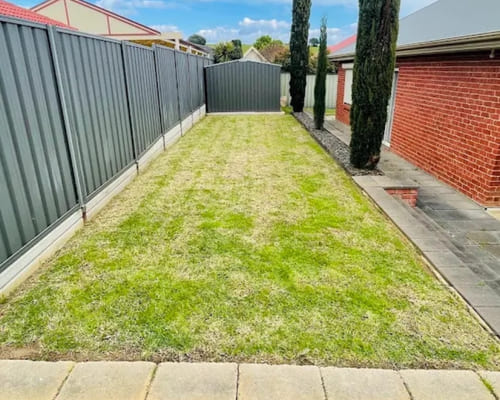
Scheduled mowing you can actually set your calendar by, with edging, trimming and a full blow-down included every visit. Cut height matched to your grass type so your lawn survives the Adelaide summer instead of scalping.
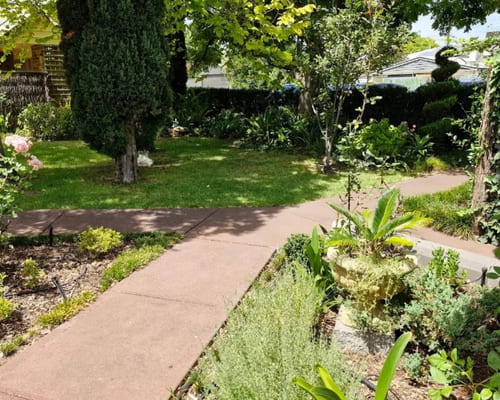
Weeds treated properly rather than just sprayed off the top. Selective lawn treatment, bed hand-weeding, paving knockdown and mulch suppression, timed to the Adelaide season so the weeds do not simply return in six weeks.
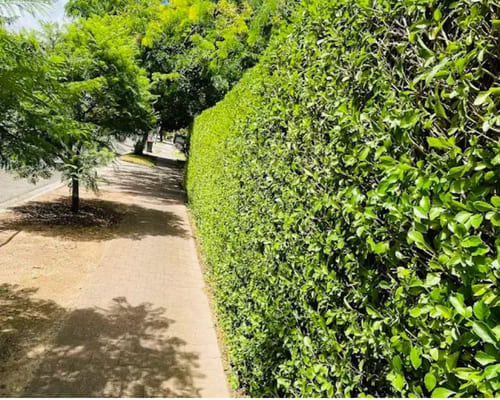
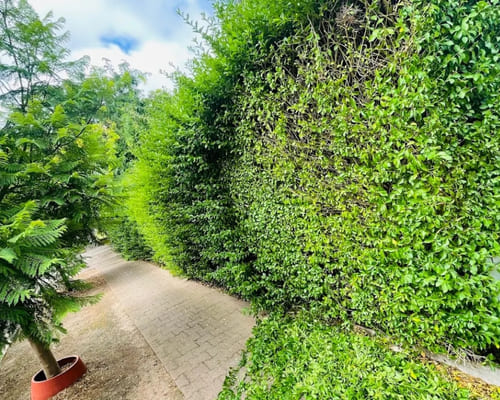
Hedges and shrubs cut to the species and the season, tapered so they stay green to the base rather than going bare and woody underneath. Every trimming cleared away, with the green waste cost agreed before we start.

Roses pruned the way they should be, by bush type, at the right time of year, with clean angled cuts to outward-facing buds. An open vase shape that beats black spot and gives you a proper flush of flowers in spring.
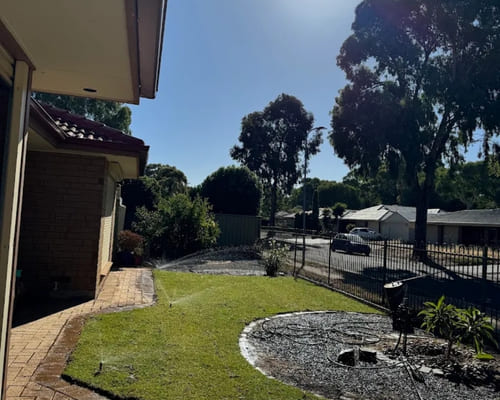
Feeding that actually reaches the roots. We condition Salisbury's reactive clay with gypsum, compost and wetting agents first, then apply the right slow-release or liquid feed for your lawn and beds, timed to the Adelaide seasons.
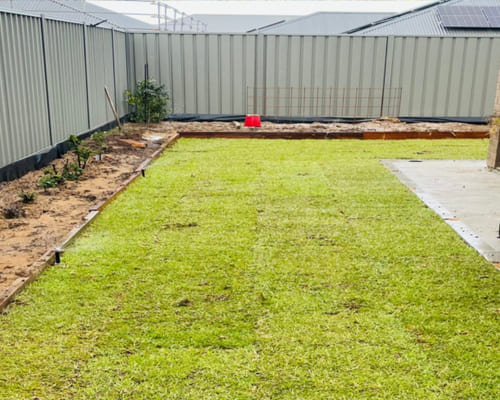
One crew, one schedule, one number that never changes. Mowing, edging, weeding, trimming and green waste handled on a set cycle so your garden never reaches the point where it needs an expensive rescue.
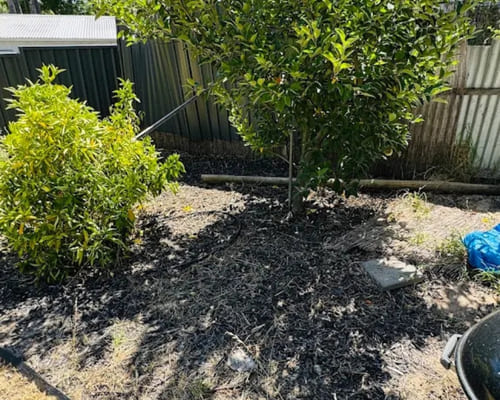
One visit to get a property back under control, quoted in writing before we touch anything. Bond returns, open inspections, council notices and overgrown blocks cleared completely, with the green waste cost agreed upfront.
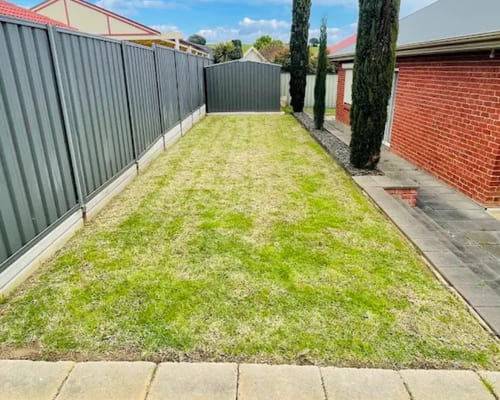
Strata grounds maintained on a fixed cycle with one point of contact, itemised invoicing your committee can approve, photo reporting and a current certificate of currency backed by $20 million public liability cover.
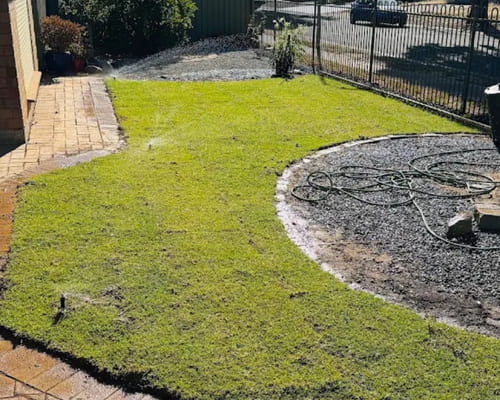
Commercial grounds kept to a consistent standard on a fixed schedule, worked around your trading hours, invoiced against an ABN with itemised lines and backed by $20 million public liability cover.
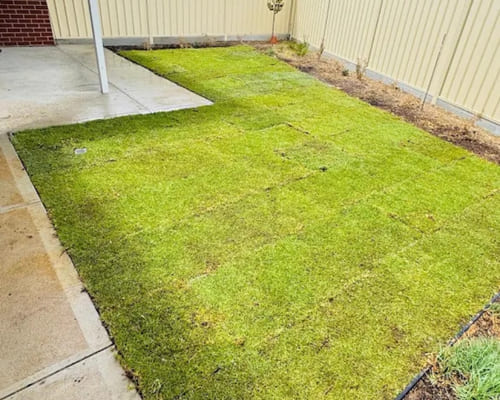
The whole property handled by one crew instead of three separate trades. Lawns, beds, hedges, mulch, irrigation and gutters on a single schedule, with one invoice and one number to call.
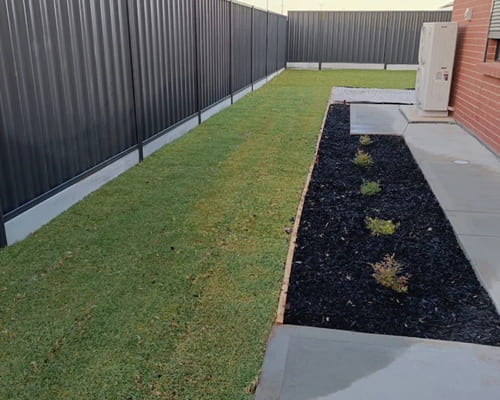
Turf that is still thriving in three years because the clay underneath was fixed first. Gypsum, compost, proper levels and screed sand before a single roll goes down, plus the watering plan that gets you through the critical first three weeks.
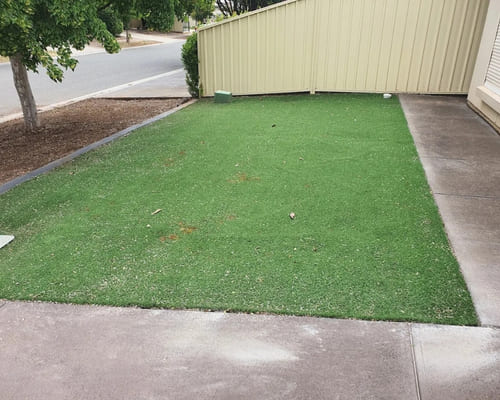
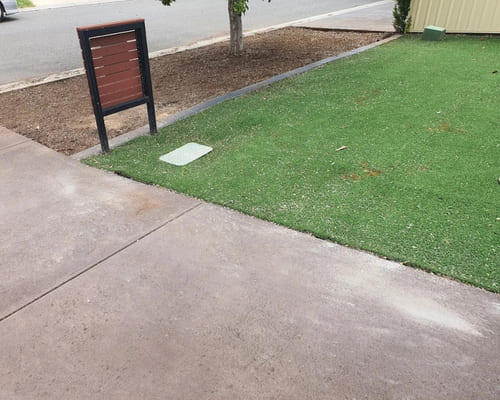
Artificial turf laid on a properly compacted crushed rock base, not straight onto dirt. Glued joints, secured edges and brushed-in infill so it still looks flat and upright after its third Adelaide summer.
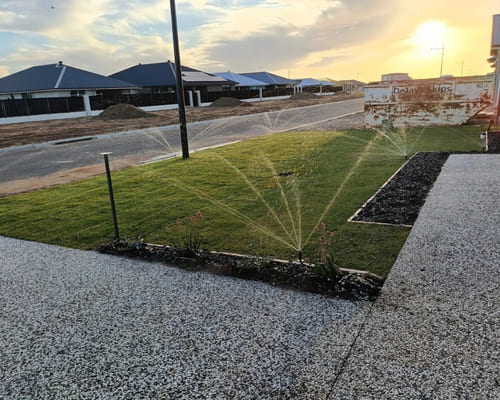
Irrigation designed off your actual mains pressure and flow, zoned by plant type and sun, and set for early-morning cycles that beat Adelaide evaporation. Every arc tested and adjusted before we hand it over.

Gardening and Landscaping In Dernancourt
FREQUENTLY ASKED QUESTIONS
Everything you need to know about our Gardening and Landscaping In Dernancourt
How much does a gardener cost in Dernancourt?
A standard maintenance visit in Dernancourt usually falls between $60 and $110, and this suburb sits mid to upper band rather than at the bottom of it. The reason is the housing: 90.3 per cent of dwellings here are separate houses and 33.3 per cent have four bedrooms or more, so the average block carries a real back garden rather than a courtyard. Catch-up clean-ups on a garden that has run away over summer are typically $150 to $400, and hedge work is either $70 to $120 an hour or quoted for the whole job, whichever is fairer to you. Every figure is fixed and written down before we start, so call Mitesh on 0406 147 913 and describe the garden.
Which council do I deal with in Dernancourt?
That depends on your street, which is unusual and catches people out. Most of Dernancourt is City of Tea Tree Gully, but the south-western corner around Riverside Grove, Ridgefield Avenue and Willowbrook Road sits in the City of Port Adelaide Enfield. It matters whenever work touches the verge, because both councils require approval before landscaping starts and each uses its own application. We check which side a property falls on before we quote anything on the nature strip, and we will tell you which form to lodge rather than quietly starting and hoping.
Do I need council approval to plant or turf my verge?
Yes, on both sides of the suburb. City of Tea Tree Gully treats laying lawn, planting small shrubs and installing irrigation on the verge as work needing approval before it starts, under a section 221 application to alter a public road, and once it is in you are responsible for maintaining anything above council's minimum standard. City of Port Adelaide Enfield requires a verge development application even where the design already meets its guidelines. Neither council charges us to tell you this, and we would rather you knew before the mulch arrives than after a compliance letter does.
Why does the council still leave my verge looking untidy after they cut it?
Because they are not tidying it, they are reducing risk. City of Tea Tree Gully cuts residential and main road verges from late winter to early summer and returns at the end of spring to clear sight lines for drivers, and its own page states that the cut grass is not collected but left on the verge. Outside that programme, cutting only happens if growth is creating a hazard. If you want the strip in front of your house to look finished rather than merely safe, that is a job for us, and we fold it into the regular visit rather than charging it as an extra.
My lawn browns off at the top of the block but stays green at the bottom. Why?
That is the slope doing exactly what slopes do. Dernancourt falls about 53 metres from its north-eastern corner down to the river, roughly a 2.4 per cent grade, and there is no creek inside the suburb, so water moves downhill across the blocks rather than being carried away. The high side sheds it and dries first, the low side holds it. With 573.1 millimetres of rain a year here against 1,303 millimetres of evapotranspiration, shallow watering never catches up on the high side. The fix is depth, not frequency, plus irrigation zoned to the slope instead of one setting for the whole yard.
Do you cover Paradise, Highbury and Hope Valley as well?
Yes. Paradise sits directly across the river on the same 5075 postcode, Highbury is over the eastern boundary and Hope Valley over the north-east, and Athelstone, Newton and St Agnes are all within a few minutes of the same run. Dernancourt is only 2.4 kilometres wide, so grouping neighbouring suburbs onto one trip is how we keep smaller jobs worth doing at a sensible price. If you are on the edge of the suburb and unsure, call 0406 147 913 and we will confirm on the spot rather than have you guess.
TESTIMONIALS
What Dernancourt Homeowners Say About Us
Request A Free Quote
GET A FREE QUOTE
BUSINESS
SERVICES
OPERATING HOURS
Sun: 7:00am - 9:00pm
Mon: 7:00am - 9:00pm
Tue: 7:00am - 9:00pm
Wed: 7:00am - 9:00pm
Thu: 7:00am - 9:00pm
Fri: 7:00am - 9:00pm
Sat: 7:00am - 9:00pm