
Pebble Installation Adelaide
Pebble Installation Experts
Professional Gardening & Landscaping Solutions for Residential, Commercial & Strata Properties Across Adelaide
GET A FREE QUOTE
Decorative pebble and gravel is the lowest-maintenance ground cover you can put in an Adelaide garden, and BP Blitz installs it across Salisbury and the northern suburbs for garden beds, side paths, driveways, dry creek beds, pool and tank surrounds and verges. The stone is not what makes a pebble job last, the preparation is: we excavate to depth, lay a quality weed mat rather than the thin builder's plastic that tears within a year, install edging so the stone stays where it was put, then spread evenly to depth and compact where the surface will be walked or driven on. On reactive clay, we also build in fall and drainage so water moves rather than pooling under the stone. Pebble is priced per square metre by stone type, depth and access, with small courtyards commonly a one-day job. Call Mitesh on 0406 147 913.
BP Blitz Gardening and Landscaping Services
Where Pebble and Gravel Work Best in Northern Adelaide
Decorative bed pebble is the most common use, either as a full replacement for mulch in low-planting beds or as a border detail around a house perimeter where you never want to be weeding. Driveway and side-path gravel is the workhorse application, particularly on the narrow side access strips found on so many Salisbury and Parafield Gardens blocks where grass never grows and mud is the alternative. Dry creek beds and drainage runs are where pebble earns its keep functionally rather than decoratively, moving stormwater across reactive clay that will not absorb it and preventing the boggy patches that appear every winter. Around pools, rainwater tanks, air conditioning units and unit courtyards, pebble gives a clean permanent finish that does not wash into the pool or clog a filter the way bark mulch does. Verge treatments are increasingly popular in these suburbs as councils and homeowners move away from unwatered nature strips that are dead grass for five months of the year. We will tell you where pebble is the wrong choice too, since a heavily planted bed with soft perennials is better mulched.
BP Blitz Gardening and Landscaping Services
How We Install Pebble So Weeds Do Not Come Through
Everything about a pebble job that fails comes back to what is underneath, and the stone itself is the least important part. We excavate to depth first, removing turf, roots and soft soil, because pebble spread over an existing lawn will sink and be swallowed within two seasons. Any perennial weed, particularly couch and kikuyu runners, is removed or sprayed out and given time to die off, since those will push through a weed mat given a starting point. A quality woven geotextile weed mat then goes down with generous overlaps, not the thin black plastic sheeting sold as weed mat, which tears on the first rake and blocks drainage into the clay below. Edging is installed to hold the perimeter, because without a physical edge, stone migrates into lawns and beds and you spend the next ten years raking it back. The pebble is then spread to an even depth, generally enough that you cannot see mat through it, and compacted where it will be walked or driven on. On clay we build in fall and, where needed, an aggregate drainage layer, so water moves through and away rather than sitting underneath and turning the base to mud.
BP Blitz Gardening and Landscaping Services
Why BP Blitz for Pebble and Gravel Work
The cheap version of this job is a load of pebble tipped onto plastic sheeting over an unweeded bed, and it looks fine for a summer. We do the excavation, the weed treatment, the proper geotextile and the edging, which is why our pebble areas still look like pebble areas rather than gravel scattered through weeds three years on. Twenty years working Salisbury's reactive clay means we understand drainage here specifically, and pebble laid without fall on clay creates a hidden bog that undermines paths and rots whatever is planted next to it. We tell you the stone type, the depth and the area in writing so you can see exactly what you are buying. We carry $20 million public liability cover and trade under ABN 59 193 634 840, with more than 500 customers served across northern Adelaide. Because we also do mulch, garden beds and artificial turf, we will give you a straight comparison rather than steering you to whichever surface suits us. Call Mitesh on 0406 147 913.
BP Blitz Gardening and Landscaping Services
What Pebble Installation Costs in Northern Adelaide
Pebble work is priced per square metre based on the stone selected, the depth required and how difficult the site is to access. Decorative stone is dearer per cubic metre than mulch, and the range is wide, with plain gravels and scoria at the affordable end and washed river pebble, quartz and specialist decorative stone costing considerably more. The materials that determine whether the job lasts, the quality weed mat and the edging, add real cost and are exactly what a cheap quote leaves out, so a very low price almost always means plastic sheeting and no edge. Excavation and disposal of the removed soil is a separate consideration on larger areas, since the spoil has to go somewhere. A small courtyard, verge or side path is commonly a one-day job, while a full front garden conversion with multiple beds and edging runs takes longer and is quoted on site. Call 0406 147 913 and we will measure the area, work out the volume and give you a written quote for free.
BP Blitz Gardening and Landscaping Services
Pebble, Mulch or Artificial Turf for a Low-Maintenance Garden
Pebble is the most permanent of the three, since it never breaks down and never needs topping up, which makes it the cheapest option over a ten-year view and the right answer for side paths, drainage runs, tank and air conditioner surrounds and anywhere you simply want to stop thinking about. Its drawbacks are real though: it adds nothing to the soil, it reflects heat back into the garden which matters when Salisbury hits 42 degrees, and it is difficult to remove if you change your mind. Mulch is better anywhere there is real planting, because it feeds the soil as it breaks down, keeps root zones cooler and holds moisture, at the cost of a top-up every year or two. Artificial turf is the choice where you want a soft green surface that people will walk and sit on, so play areas and courtyards, and it costs the most upfront at $50 to $100 or more per square metre. In practice most low-maintenance northern Adelaide gardens use all three: pebble on the paths and perimeters, mulch in the planted beds, and artificial turf on the one area that gets used. We will map that out on the quote.
Related Services
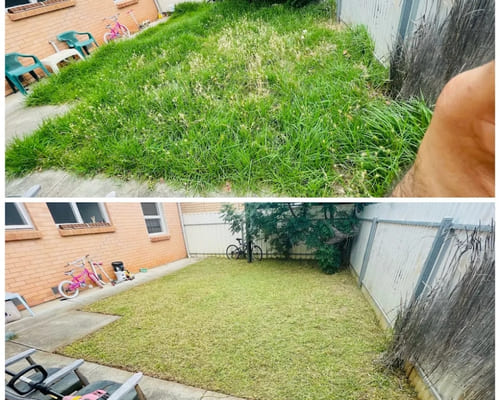
Turf that is still thriving in three years because the clay underneath was fixed first. Gypsum, compost, proper levels and screed sand before a single roll goes down, plus the watering plan that gets you through the critical first three weeks.
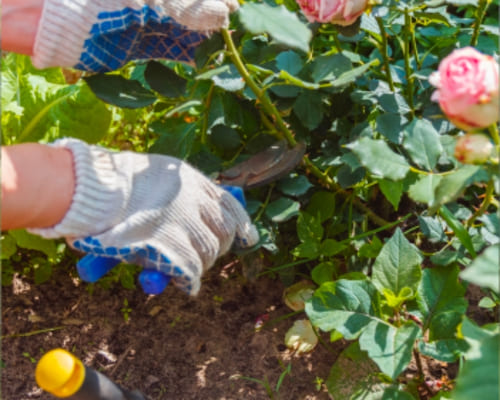
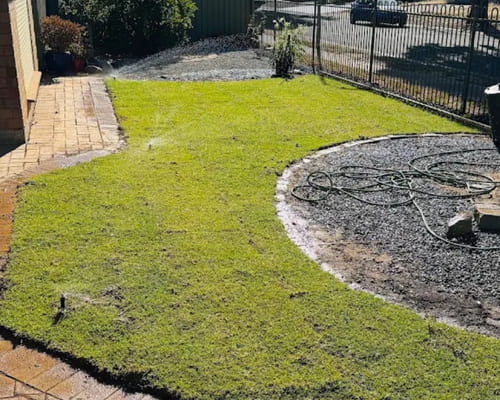
Hedges and shrubs cut to the species and the season, tapered so they stay green to the base rather than going bare and woody underneath. Every trimming cleared away, with the green waste cost agreed before we start.
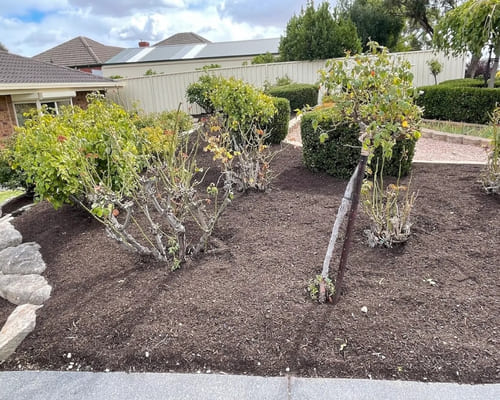
The whole property handled by one crew instead of three separate trades. Lawns, beds, hedges, mulch, irrigation and gutters on a single schedule, with one invoice and one number to call.
TESTIMONIALS
What Our Pebble Installation Customers Say About Us
The Process
3 Step Process For Your Pebble Installation Needs

Free Quote
Call or message us with what your garden needs. We visit, measure up, and send a fixed written price with no surprises.

We Blitz
Our team arrives on the agreed day, texts you before arrival, and works through the whole job properly using commercial-grade equipment.

Stay Tidy
We clear every clipping, latch your gates, and leave the site spotless. Book us fortnightly, monthly or seasonally to keep it that way.
Pebble Installation In Salisbury
FREQUENTLY ASKED QUESTIONS
Everything you need to know about our Pebble Installation In Salisbury
How much does pebble cost to install in Salisbury?
Pebble is quoted per square metre based on the stone type, the depth and site access. Plain gravels and scoria sit at the affordable end while washed river pebble, quartz and decorative stone cost considerably more per cubic metre, and bulk decorative stone is generally dearer than mulch. The weed mat and edging are what make the job last and they add real cost, so a very cheap quote usually means plastic sheeting and no edge. Small courtyards, verges and side paths are commonly a one-day job. Call Mitesh on 0406 147 913 for a free measured quote.
How long does a pebble installation take?
A small courtyard, verge or side access strip is usually a one-day job including excavation, weed mat, edging and spreading. A full front garden conversion with multiple beds, edging runs and a driveway strip typically takes two to three days. Excavation and removing the spoil is the slowest part on larger areas, and access makes a big difference, since a rear yard reached only by wheelbarrow through a side gate takes considerably longer than an area the truck can tip beside. You can generally walk on the finished surface straight away.
Will weeds grow through the pebble?
Not from below, if it is done properly. Weeds coming up through a pebble bed almost always mean either thin plastic sheeting was used instead of a woven geotextile weed mat, or the mat was laid over living perennial weeds such as couch and kikuyu which then pushed through. We strip and treat those first, then lay a quality mat with generous overlaps. What no installation prevents is wind-blown seed landing on top and germinating in the dust that accumulates in the stone over the years, but those are shallow-rooted and pull out easily, and an occasional spot spray keeps a pebble area clear with minimal effort.
What is involved in the installation?
We excavate the area to depth, removing turf, roots and soft soil so the pebble does not sink into it. Perennial weeds are removed or sprayed out and given time to die off. A woven geotextile weed mat goes down with overlaps, edging is installed around the perimeter so the stone cannot migrate, then the pebble is spread to an even depth and compacted where it will be walked or driven on. On Salisbury's clay we build in fall and, where needed, a drainage layer so water moves away rather than sitting under the stone. We clear all spoil and blow down the surrounding hard surfaces before we leave.
Does pebble make the yard hotter in an Adelaide summer?
Yes, to a degree, and it is worth factoring in. Stone absorbs and re-radiates heat, so a large pebbled area in full sun will feel warmer than mulch and considerably warmer than a natural lawn, and light-coloured stone reflects glare as well. Against a north or west-facing wall that effect can push heat back into the house. It matters much less on side paths, shaded areas, narrow borders and drainage runs, which is where most pebble goes anyway. Where a large sunny area is involved and heat is a concern, we will usually suggest mulch with planting or artificial turf instead, or breaking the area up with shrubs to shade the stone.
Should I use pebble or mulch in my garden beds?
Use mulch anywhere there is real planting you want to thrive, because it breaks down into organic matter, keeps root zones cooler and holds soil moisture, all of which matter enormously on reactive clay. Use pebble where the area is essentially a surface rather than a garden, such as side paths, house perimeters, drainage runs, tank and air conditioner surrounds, and low-planting feature beds where you never want to top anything up. The trade-off is simple: mulch costs a little every year or two and improves the soil, while pebble costs more once and does nothing for the soil. Most gardens are best with both, and we will recommend which areas get which when we quote.
Request A Free Pebble Installation Quote
GET A FREE QUOTE
BUSINESS
SERVICES
OPERATING HOURS
Sun: 7:00am - 9:00pm
Mon: 7:00am - 9:00pm
Tue: 7:00am - 9:00pm
Wed: 7:00am - 9:00pm
Thu: 7:00am - 9:00pm
Fri: 7:00am - 9:00pm
Sat: 7:00am - 9:00pm