
Mulch Installation Adelaide
Mulch Installation Experts
Professional Gardening & Landscaping Solutions for Residential, Commercial & Strata Properties Across Adelaide
GET A FREE QUOTE
Mulch is the cheapest thing you can do for a garden in Adelaide's north and the most commonly done badly. BP Blitz supplies and spreads pine bark, sugar cane, woodchip, forest blend and decorative mulches across Salisbury and the surrounding suburbs, weeding and edging the beds first so we are not simply burying the problem, then laying to a genuine 75 millimetre depth which is the point at which mulch actually suppresses weeds and holds moisture. Anything thinner than that is decoration. We keep mulch pulled back clear of trunks and stems to avoid collar rot, and we will tell you which blend suits your beds rather than spreading whatever is cheapest. Bulk mulch typically runs $40 to $90 per cubic metre for standard blends and $100 to $150 for premium pine bark, plus $30 to $80 delivery, with a typical front garden taking two to four cubic metres. Call Mitesh on 0406 147 913.
BP Blitz Gardening and Landscaping Services
The Mulches We Supply and Spread in Northern Adelaide
Pine bark is the most popular choice for front gardens and presentation beds, because it looks good, it breaks down slowly so it lasts two to three years, and it does not blow around in a northern Adelaide wind the way lighter materials do. Sugar cane and straw mulches break down fast and feed the soil as they go, which makes them excellent for vegetable beds and for improving tired clay, but they need topping up annually and they are not the look most people want out the front. Woodchip and arbor mulch is the cheapest by volume and is genuinely good under established trees and along informal paths, though it can be coarse and variable and it draws nitrogen from the soil surface as it breaks down. Forest blends and coloured mulches sit between pine bark and woodchip on price and give a more uniform finish, and the coloured products hold their look longest in full sun. Decorative pebble is the alternative worth considering where you want a permanent surface with no top-ups, though it does nothing for the soil. We will recommend the right material for each area rather than putting one product across the whole garden.
BP Blitz Gardening and Landscaping Services
How Mulch Should Be Laid So It Actually Works
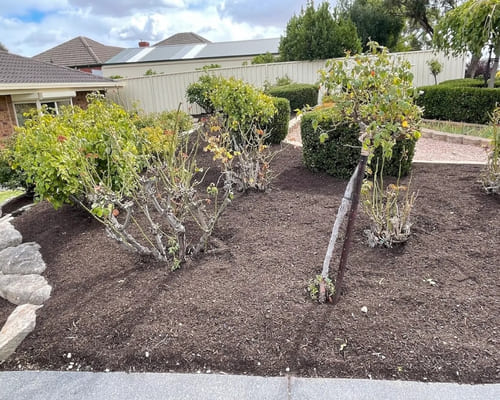
Weeding comes first, and it is not optional, because mulching over living weeds simply gives them a warm damp environment to grow through. Established perennial weeds such as couch runners and soursob need to be removed or treated before anything goes on top, since 75 millimetres of bark will not stop them. Beds are then edged so there is a defined line for the mulch to sit against, which stops it migrating onto the lawn and stops the lawn creeping into the bed. Depth is the thing that matters most, and we lay to around 75 millimetres because that is the depth at which mulch genuinely blocks light to germinating weed seed and meaningfully slows evaporation from the soil beneath. Anything at 25 or 30 millimetres is decorative and will do very little through a Salisbury summer. We keep the mulch pulled back clear of trunks, stems and the base of shrubs, since piling it against bark traps moisture and causes collar rot, which quietly kills more established plants than drought does. Where beds are on dripline, the mulch goes over the top of the line so water is delivered under the mulch rather than onto it.
BP Blitz Gardening and Landscaping Services
Why Use BP Blitz for Mulching
Mulching looks like the simplest job in gardening and it is where the most corners get cut, usually by spreading a thin layer over unweeded beds so the garden looks tidy for about six weeks. We weed and edge first, lay to a real depth, and keep it off the stems, which is why our mulch jobs are still working the following summer. Over 20 years on Salisbury's reactive clay means we understand why mulch matters so much here specifically, since this soil loses moisture fast once it cracks and mulch is the cheapest single intervention that changes that. We tell you the volume in cubic metres and the depth we are laying to, in writing, so you can see exactly what you are paying for rather than being quoted a vague garden mulch price. We carry $20 million public liability cover and trade under ABN 59 193 634 840. Mulching also folds neatly into a regular maintenance round as an autumn top-up. Call Mitesh on 0406 147 913 for a free measured quote.
BP Blitz Gardening and Landscaping Services
What Mulching Costs in Salisbury and Northern Adelaide
Bulk mulch itself typically runs $40 to $90 per cubic metre for standard blends such as forest mulch and woodchip, and $100 to $150 per cubic metre for premium pine bark, with delivery generally adding $30 to $80 depending on volume and distance. A typical suburban front garden takes two to four cubic metres to do properly at 75 millimetres, so the material cost alone commonly sits between about $150 and $500. Supplied and spread, most jobs are quoted per square metre or as a project price that includes the weeding, edging and spreading labour, with gardening labour in this market running around $50 to $80 an hour. Access matters more than people expect, since a rear garden reachable only by wheelbarrow through a narrow side path takes considerably longer than a front garden the truck can tip beside. If you have already got the mulch delivered, we are happy to quote spreading only. Call 0406 147 913 and we will measure the bed areas, calculate the volume properly and quote it for free.
BP Blitz Gardening and Landscaping Services
Pine Bark, Sugar Cane, Woodchip or Pebble
Pine bark is the best all-round choice for presentation beds, holding its look for two to three years and resisting wind, and it is what we recommend for most front gardens in these suburbs. Sugar cane and straw are the best choice for soil improvement and for vegetable gardens, breaking down within a season into genuine organic matter that reactive clay desperately needs, but they need replacing annually and they look rough in a formal setting. Woodchip and arbor mulch is the cheapest per cubic metre and is entirely appropriate under trees, along informal paths and on large rural-style blocks in Gawler or Virginia where the volume needed would make bark prohibitive. Pebble is the permanent option, and it makes sense on side paths, dry creek beds and areas you never want to touch again, though it adds nothing to the soil and it reflects heat back into the garden through summer. Our usual recommendation for a suburban property is pine bark out the front where it is seen, sugar cane or compost in the vegetable beds, woodchip under trees, and pebble only on paths and drainage runs. We will price a mix so you are not paying premium bark for an area nobody looks at.
Related Services
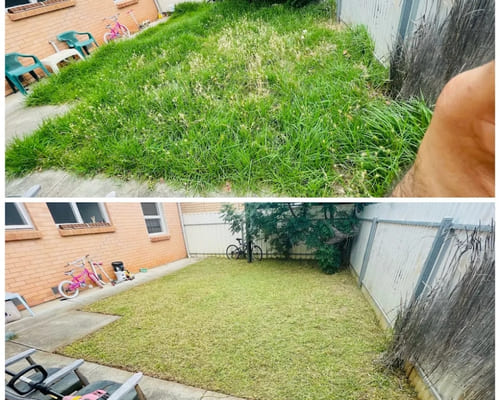
Turf that is still thriving in three years because the clay underneath was fixed first. Gypsum, compost, proper levels and screed sand before a single roll goes down, plus the watering plan that gets you through the critical first three weeks.
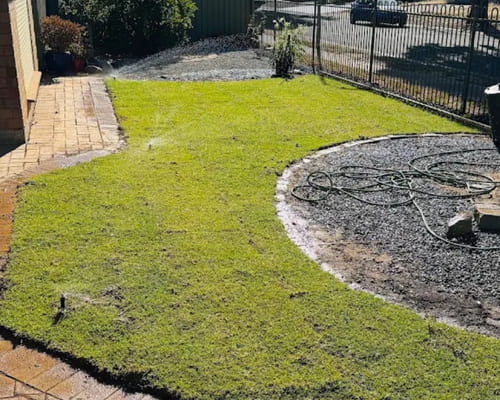
Hedges and shrubs cut to the species and the season, tapered so they stay green to the base rather than going bare and woody underneath. Every trimming cleared away, with the green waste cost agreed before we start.
The whole property handled by one crew instead of three separate trades. Lawns, beds, hedges, mulch, irrigation and gutters on a single schedule, with one invoice and one number to call.
TESTIMONIALS
What Our Mulch Installation Customers Say About Us
The Process
3 Step Process For Your Mulch Installation Needs

Free Quote
Call or message us with what your garden needs. We visit, measure up, and send a fixed written price with no surprises.

We Blitz
Our team arrives on the agreed day, texts you before arrival, and works through the whole job properly using commercial-grade equipment.

Stay Tidy
We clear every clipping, latch your gates, and leave the site spotless. Book us fortnightly, monthly or seasonally to keep it that way.
Mulch Installation In Salisbury
FREQUENTLY ASKED QUESTIONS
Everything you need to know about our Mulch Installation In Salisbury
How much does mulching cost in Salisbury?
Bulk mulch typically costs $40 to $90 per cubic metre for standard blends and $100 to $150 for premium pine bark, plus $30 to $80 delivery. A typical suburban front garden needs two to four cubic metres to be laid properly at 75 millimetres, putting the material cost around $150 to $500. Supplied and spread jobs are quoted per square metre or as a project price that includes weeding, edging and spreading, with labour in this market around $50 to $80 an hour. Call Mitesh on 0406 147 913 and we will measure the beds and quote for free.
When should you mulch in Australia?
In Adelaide the two best windows are autumn and spring. Autumn mulching, roughly March to May, goes on while the soil is still warm and holds that warmth and moisture through winter, and it suppresses the flush of winter weeds before it starts. Spring mulching, around September to October, is the more important one locally because it locks moisture into the soil before the summer heat arrives and gives you the biggest reduction in watering through December to February. Avoid mulching onto bone-dry soil in the middle of summer, since you will simply be sealing dry ground, so water thoroughly first or wait for rain.
What are the downsides of mulching?
Laid badly, mulch causes real problems. Piled against trunks and stems it traps moisture and causes collar rot, which kills established shrubs and trees slowly enough that nobody connects the two. Fine mulches can become hydrophobic and form a crust that sheds water instead of letting it through, which is worse than no mulch at all. Fresh woodchip and uncomposted material temporarily draws nitrogen out of the top layer of soil as it breaks down, which can yellow shallow-rooted plants. Mulch that is too thick, beyond about 100 millimetres, can starve the soil of oxygen, and mulch laid over unweeded beds simply hides the problem for a few weeks. Laid properly at 75 millimetres, clear of stems, over weeded ground, none of those apply.
What happens on the day you come to mulch?
We weed the beds first, removing or treating anything perennial such as couch runners and soursob, since mulch will not stop those. Bed edges are cut and defined so the mulch has a clean line to sit against and does not migrate onto the lawn. The mulch is then barrowed in and spread evenly to around 75 millimetres, raked to a consistent finish, and pulled back clear of every trunk and stem. If the beds are on dripline, the mulch goes over the line so water is delivered underneath it. We finish by blowing down paths and driveways, and we remove any weeds and debris rather than leaving them on site.
Why does water sit on top of my mulch and weeds still grow through it?
Water beading on the surface means the mulch has gone hydrophobic, which happens most with fine, aged or compacted materials that have dried out completely through a Salisbury summer. The fix is a wetting agent and breaking the crust up with a rake, and choosing a coarser mulch next time so water can find its way through. Weeds growing through almost always means the layer is too thin, since anything under about 50 millimetres lets enough light through for seed to germinate, or that the bed was not properly weeded before the mulch went on. Wind-blown seed will always land on top and germinate in the mulch itself, but those are shallow-rooted and pull out with two fingers, which is a very different problem to weeds coming up from below.
Which mulch should I use for my beds?
For front gardens and presentation beds, pine bark is usually the right answer because it looks good, lasts two to three years and does not blow around. For vegetable gardens and for improving tired clay, sugar cane or straw is better because it breaks down into organic matter within a season, though it needs annual replacement. For under trees, along informal paths and on large blocks, woodchip is cost-effective and entirely appropriate. Pebble is the choice where you want a permanent surface and do not care about feeding the soil, such as side paths and drainage runs. Most properties are best with a mix, and we will price it that way rather than putting premium bark somewhere nobody sees.
Request A Free Mulch Installation Quote
GET A FREE QUOTE
BUSINESS
SERVICES
OPERATING HOURS
Sun: 7:00am - 9:00pm
Mon: 7:00am - 9:00pm
Tue: 7:00am - 9:00pm
Wed: 7:00am - 9:00pm
Thu: 7:00am - 9:00pm
Fri: 7:00am - 9:00pm
Sat: 7:00am - 9:00pm