
Gardening and Landscaping in Findon
Gardening and Landscaping in Findon
Professional Gardening & Landscaping Solutions for Residential, Commercial & Strata Properties Across Adelaide
GET A FREE QUOTE
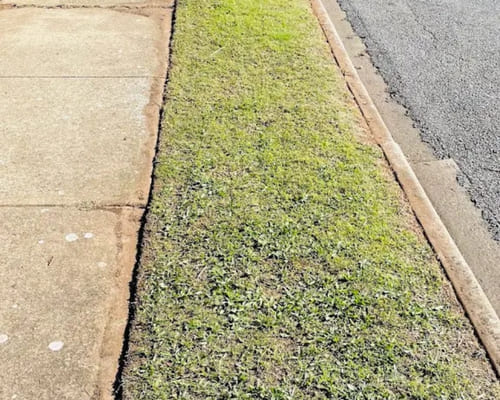
Findon was glasshouse country before it was suburbia. The City of Charles Sturt's own local history records eight men from the Veneto working market gardens on land it describes as now bounded by Grange, Findon, Valetta and Frogmore Roads, growing tomatoes and beans under glasshouses of 15 feet by 112 feet, and buying their ten-acre lots in 1950. The gardens that replaced those lots sit on flat, exposed ground. Council measured its tree canopy at 13.84 per cent in 2020 and says plainly that it is lower than most councils in metropolitan Adelaide, and the Adelaide Airport gauge records 410 millimetres of rain a year against 1,326 millimetres of evaporative demand. BP Blitz runs a regular round through Findon, from Grange Road up to Trimmer Parade, and prices a visit around how little shade this suburb actually has.
OUR STORY
Findon Was Ten-Acre Glasshouse Country Until 1950
Findon back gardens are deeper, better worked and far more productive than the houses in front of them suggest, and the reason sits on the council's own record. The City of Charles Sturt local history page From the Veneto to Frogmore Road records that in the 1920s a group of eight men escaping poverty in the Veneto region of Italy established market gardens on neighbouring leaseholds near the River Torrens, and states that the section of land they worked is now bounded by Grange, Findon, Valetta and Frogmore Roads. They grew tomatoes and beans in glasshouses measuring 15 feet by 112 feet, and took them apart sheet by sheet to move them every two years so disease did not build up in the ground underneath. That lesson still applies in the same soil: tomatoes and the rest of the solanums put back into the same bed year after year bring wilt and nematode problems with them, so a productive Findon bed wants rotating or resting, not just topping up. In 1950 most of the market gardeners bought their ten-acre lots, and some families kept their link to the ground by staying on or near Frogmore Road. The Marchioros were growing on Frogmore Road from 1927 and the Zampins bought on Angley Avenue by the mid-1950s, and those ten-acre holdings were the blocks later cut up into the streets we maintain today. What the growers left behind is not a plaque, it is planting. Back gardens on this side of Findon carry vines on wires, olives, figs and citrus far more often than an average Adelaide suburb does, and every one of them wants pruning at a different time and in a different way to an ornamental shrub. A regular garden maintenance round in Findon that treats every block as turf and hedges misses half the job. The timing is the part people get wrong. Grapevines and roses are cut back hard while they are dormant through winter, and July is the safe window for both, whereas olives and citrus resent being opened up in the cold and are better shaped after the last frost risk passes. Get that order wrong and you lose a season of fruit and a season of flower at the same time, which is why rose pruning is booked as its own visit here rather than squeezed into a summer tidy.
SERVICES WE OFFER IN Findon
The Least Shaded Ground On Our Adelaide Round
Charles Sturt is unusually blunt about its own shade. Its Tree Canopy Improvement Strategy states that city-wide canopy cover fell from a peak of 15.51 per cent in 2008 to 13.84 per cent in 2020, and that the council's canopy is lower than most local government areas in metropolitan Adelaide. Findon is not incidental to the response: when Council first investigated its canopy it looked at three suburbs, and Findon was one of them, alongside Woodville West and St Clair. Council is now planting hard, 5,224 trees across 294 streets in 2024-2025 alone, toward a 25 per cent target by 2045, and it notes that almost two-thirds of the city is impervious, absorbing heat by day and radiating it at night. For a garden that means less borrowed shade than almost anywhere else we work, and beds that take radiated heat off paving well after sunset. The rainfall figures put a number on the rest. The Adelaide Airport gauge, about 6.2 kilometres south, averaged 410.1 millimetres a year across 2000 to 2024 against 1,326 millimetres of FAO56 reference evapotranspiration, better than three to one, which in plain terms means an unwatered garden loses roughly three times what the sky returns, and no amount of feeding fixes a garden that is short of water. That rain lands on only 73.4 days a year, so it arrives in bursts a garden cannot bank. Summer does the damage: February averages 18.3 millimetres and the gauge records 16.7 days a year at or above 35 degrees, which is why we bring the last hard prune forward instead of pushing soft new growth out into the middle of it, and why autumn planting beats spring planting on these blocks. Findon is also flat, running from 5 metres above sea level near Grange Road to 19 metres through the middle, so water sits and evaporates rather than running off, and mulch stays where it is put. Shallow daily sprinkling fails here for exactly that reason, so irrigation installation means inline drip at roughly 300 millimetre emitter spacing through the beds, pressure-compensating heads on the longer runs, and a controller set to water deep and less often. It is also why turf choice is a decision rather than a preference. Couch gives the finest finish and recovers fastest from heat but browns hardest in winter, kikuyu is toughest and cheapest to establish but runs into beds and under fences, and a soft-leaf buffalo holds colour longest and copes with the part shade of a house or carport at a higher price per square metre, while a cool-season fescue or ryegrass mix looks superb in September and thins to bare ground by the end of a Findon February. We settle that before quoting a natural lawn installation, and lawn mowing that drops the height too low in February will scorch whichever one you choose.
Why choose us in Findon
Why Findon Households And Landlords Keep Us On The Round
The 2021 Census counted 6,997 people in 3,235 private dwellings across 243.7 hectares, and the mix tells you who is calling. Separate houses make up 65.5 per cent, but 21.3 per cent are semi-detached, row or terrace houses and townhouses and another 12.5 per cent are flats, so about a third of Findon is attached housing on tight ground. More than half of all homes, 55.6 per cent, are three-bedroom. Tenure splits 36.2 per cent rented, 33.5 per cent mortgaged and 27.3 per cent owned outright, so more than a third of the gardens on any Findon street are somebody's investment rather than their home, and they get maintained to a schedule and a budget instead of on a Saturday. The market-garden history still shows up in the numbers as well: Italian is the third ancestry here at 19.5 per cent and the most spoken language at home after English at 7.0 per cent, which is a fair guide to how many back gardens are still producing food rather than sitting under lawn. Most of the housing went up as those ten-acre lots were carved off from the 1950s onward, and that build era decides how a job runs: mature root systems under everything, side access down one boundary that is often barely a metre wide, and rear gardens a barrow at a time rather than a trailer at the gate. So one street can hold a long-held family home with a productive back garden and a rental where the agent wants a fixed price, a clean finish and photographs. Both get the same thing from us: a written price before anything starts, the same faces each visit, and green waste that leaves on our trailer. BP Blitz has traded under its own name since 2023 on a local gardening business with more than 20 years behind it, has looked after over 500 properties across Adelaide, carries 20 million dollars in public liability cover with a certificate of currency on request, and trades under ABN 59 193 634 840. On dry, exposed ground the small specifications are what make work last. Our mulch installation goes down as composted hardwood chip at about 75 millimetres deep, held roughly 50 millimetres clear of trunks and stems so collars do not rot, lift the mower to 30 to 40 millimetres through summer instead of the 15 to 20 millimetres that looks tidy in September and burns off by January, water deeply once or twice a week rather than lightly every day, and time hedge and bush trimming so soft new growth is not pushed out into a February heat run. For rentals and multi-unit sites, residential property maintenance on a set cycle costs less across a year than repeated catch-up visits.
SERVICES WE OFFER IN Findon
The Findon Streets We Cover, From Grange Road To Trimmer Parade
Findon is small enough that one trip covers it, and we group the streets the way they were built. Crittenden Road and Findon Road run through the middle, Grange Road holds the southern boundary and Trimmer Parade the northern edge. All four are main roads, which matters more than it sounds: Council cuts main-road verges around eight times a year against five on the residential streets behind them, so the contrast between a corner block and a mid-street block can be stark by November. Frogmore Road and Angley Avenue are the old market-garden addresses and still throw up the deepest, most heavily planted back gardens on the round. Brice Street and Thain Avenue are the newest job in the suburb, because under Council's Whole Street Planting Program the Brice Street section between Mill Street and Buccleuch Avenue was approved for Callery Pear, and Thain Avenue took Crepe Myrtle between Barker Avenue and Hurstfield Terrace and Pyrus betulaefolia between Crittenden Road and Barker Avenue, all planted between April and June 2024. Those trees are young, they are the resident's to water for three years, and their first real leaf drop onto front lawns is only a few seasons off. Drummond Avenue past Findon High School and the Crittenden Road frontage of Nazareth Catholic College carry heavy foot traffic twice a day, so those tidy-ups are booked outside pick-up rather than whenever the run reaches them. The post-war grid of Aberdeen Crescent, Airdrie Avenue, Falkirk Avenue, Dumfries Avenue and Strathbogie Avenue, along with Lasscock Avenue, Matheson Avenue, Reserve Parade, Bridgman Road and Worthley Road, is the classic Findon job: a mowing strip out the front with nothing shading it, and a single narrow side path to get everything through. Commercial frontages are their own kind of work, from the shopping centre at 275 Grange Road to the Adelaide 36ers Arena on Crittenden Road, where a forecourt has to be clean before an event rather than whenever the round arrives, and that is where our commercial property maintenance and strata property maintenance work concentrates. Gardens backing onto the open ground at Dampier Reserve, David Reserve, Ray Street Reserve, Pamela Reserve, Airdrie Reserve or the cycle speedway off Skid Kids Court dry out faster than the ones ringed by neighbours, and we water and mulch them accordingly. Neighbours come on the same trip, so Findon sits alongside Woodville South to the north, Kilkenny and Beverley to the east, Flinders Park to the south, Kidman Park to the south-west and Seaton to the west. If your street is not named here, ring 0406 147 913 and ask, because at this size it is almost certainly already on the run.
Gardening and Landscaping Services we offer In Findon
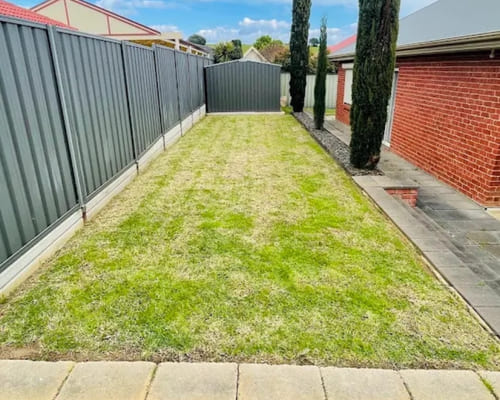
Scheduled mowing you can actually set your calendar by, with edging, trimming and a full blow-down included every visit. Cut height matched to your grass type so your lawn survives the Adelaide summer instead of scalping.
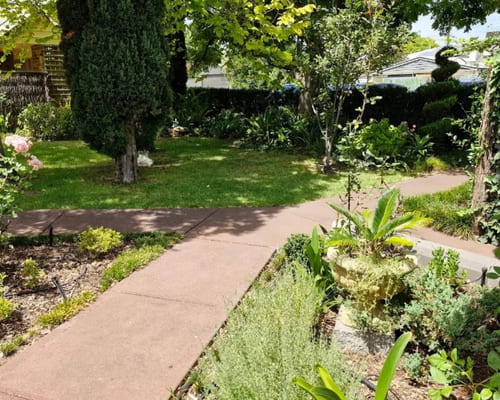
Weeds treated properly rather than just sprayed off the top. Selective lawn treatment, bed hand-weeding, paving knockdown and mulch suppression, timed to the Adelaide season so the weeds do not simply return in six weeks.
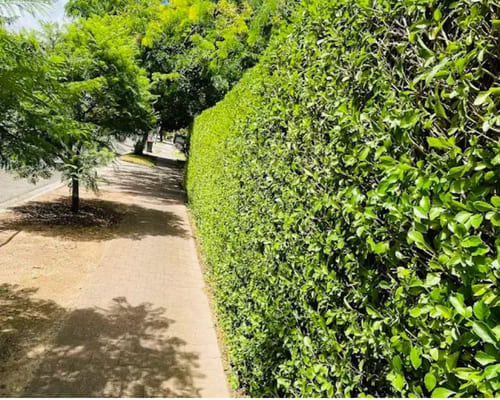
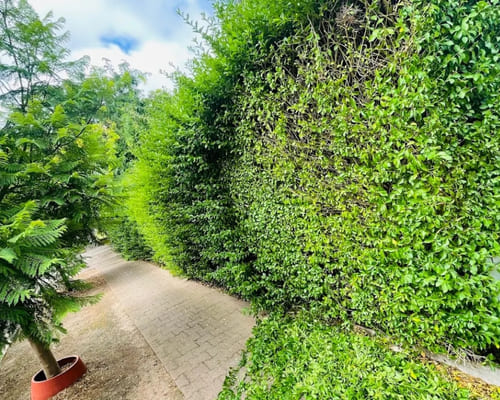
Hedges and shrubs cut to the species and the season, tapered so they stay green to the base rather than going bare and woody underneath. Every trimming cleared away, with the green waste cost agreed before we start.
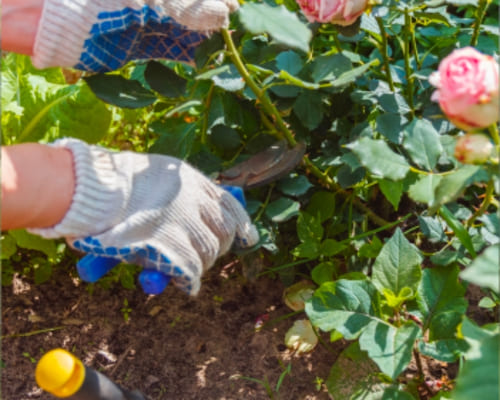
Roses pruned the way they should be, by bush type, at the right time of year, with clean angled cuts to outward-facing buds. An open vase shape that beats black spot and gives you a proper flush of flowers in spring.
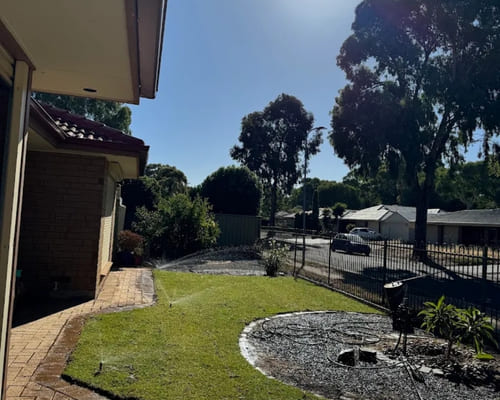
Feeding that actually reaches the roots. We condition Salisbury's reactive clay with gypsum, compost and wetting agents first, then apply the right slow-release or liquid feed for your lawn and beds, timed to the Adelaide seasons.
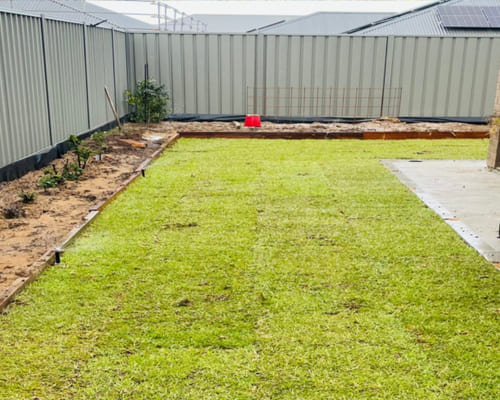
One crew, one schedule, one number that never changes. Mowing, edging, weeding, trimming and green waste handled on a set cycle so your garden never reaches the point where it needs an expensive rescue.
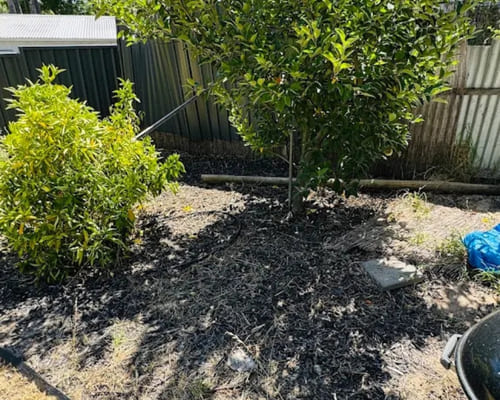
One visit to get a property back under control, quoted in writing before we touch anything. Bond returns, open inspections, council notices and overgrown blocks cleared completely, with the green waste cost agreed upfront.
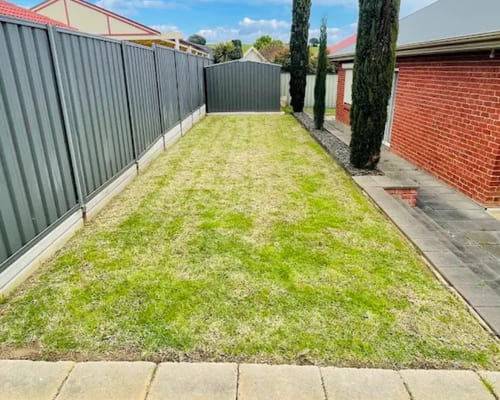
Strata grounds maintained on a fixed cycle with one point of contact, itemised invoicing your committee can approve, photo reporting and a current certificate of currency backed by $20 million public liability cover.
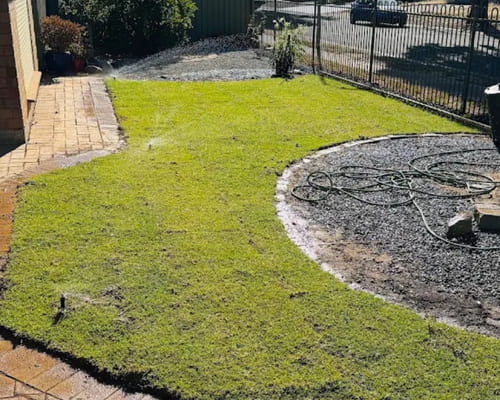
Commercial grounds kept to a consistent standard on a fixed schedule, worked around your trading hours, invoiced against an ABN with itemised lines and backed by $20 million public liability cover.
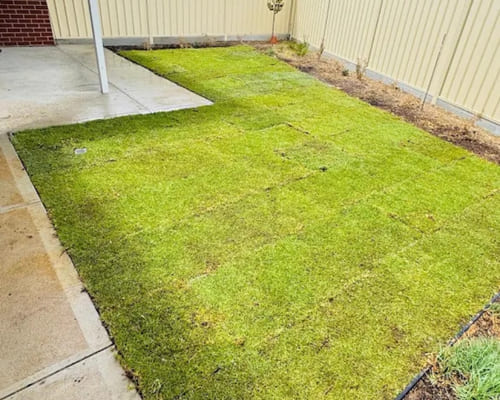
The whole property handled by one crew instead of three separate trades. Lawns, beds, hedges, mulch, irrigation and gutters on a single schedule, with one invoice and one number to call.
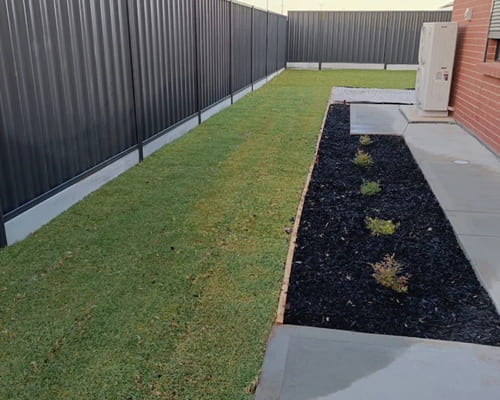
Turf that is still thriving in three years because the clay underneath was fixed first. Gypsum, compost, proper levels and screed sand before a single roll goes down, plus the watering plan that gets you through the critical first three weeks.
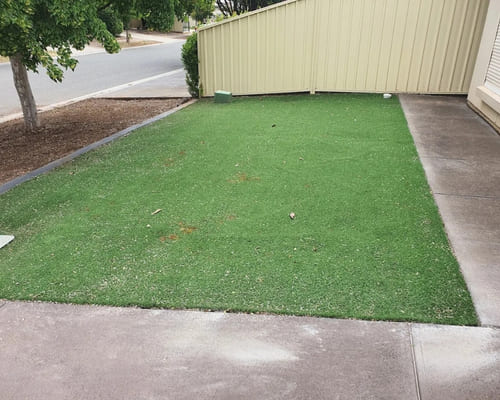
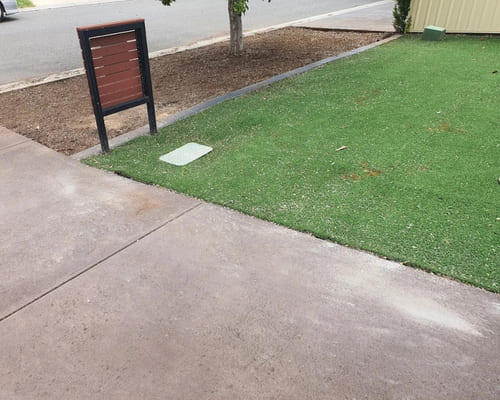
Artificial turf laid on a properly compacted crushed rock base, not straight onto dirt. Glued joints, secured edges and brushed-in infill so it still looks flat and upright after its third Adelaide summer.
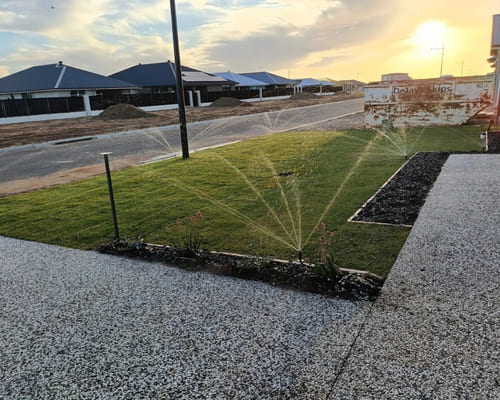
Irrigation designed off your actual mains pressure and flow, zoned by plant type and sun, and set for early-morning cycles that beat Adelaide evaporation. Every arc tested and adjusted before we hand it over.
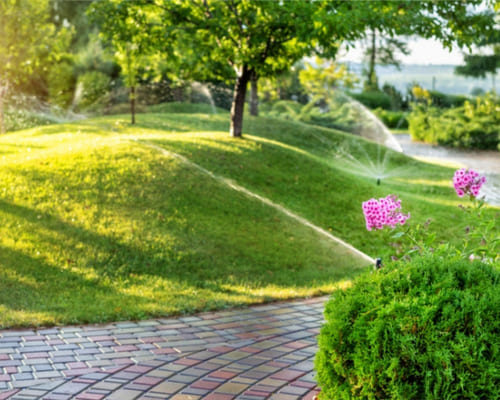
Gardening and Landscaping In Findon
FREQUENTLY ASKED QUESTIONS
Everything you need to know about our Gardening and Landscaping In Findon
How much does a gardener cost in Findon?
A standard maintenance visit in Findon generally runs $60 to $110, and most blocks here land in the middle of that band. Findon allotments are bigger than the eastern courtyard suburbs, but 55.6 per cent of homes are three-bedroom on a single lot rather than sprawling, so a fortnightly mow, edge and tidy is usually a straightforward visit. What moves the price is not lawn area, it is what else is on the block: productive planting, hedges and older shrubs that have been left too long all add time. Catch-up clean-ups are typically $150 to $400 depending on volume and removal, and hedge work is $70 to $120 an hour or quoted for the whole job. Call Mitesh on 0406 147 913 with your street name and a rough block size and you will get a fixed figure in writing before anyone turns up.
Council only cuts my Findon verge a few times a year. Can you keep it tidy?
Yes, and Council is upfront about the gap. The City of Charles Sturt maintains more than 52,000 verges and publishes its schedule: local roads get 5 cuts a year, every 12 weeks from December to August and every 6 weeks from September to November, while main roads such as Grange Road and Trimmer Parade get about 8. In a wet September that means grass can be knee high well before the next cut is due. Council also says plainly that you can mow and maintain your verge any time, so we simply take it in with the front lawn on a regular visit. If you would rather it was left entirely to us, you can ring Council on 8408 1111 and ask to be removed from the verge management and herbicide spraying schedule.
Council planted a tree on my verge and told me to water it. Is that really my job?
It is, and it is a condition of the planting. Charles Sturt plants street trees free on request from the ratepayer, takes requests by the end of August and plants from May to the end of September while the ground is moist, and supplies a bucket, gloves, an information sheet and liquid fertiliser. In return you must agree to water the tree for a minimum of the first three years, once a week in summer and twice a week in extreme heat. On the Brice Street and Thain Avenue plantings from 2024 that obligation is still running. We fold it into a regular visit for customers on those streets, because a young tree that misses two hot weeks in February will not recover the season.
Can I get the council to remove a street tree that keeps dropping onto my lawn?
Almost certainly not, and it is worth knowing before you spend time on the application. Charles Sturt assesses removal requests against its Tree and Streetscape Policy, and the policy states that a valid reason does not include complaints about leaf litter, twigs or other debris, complaints about tree roots protruding above the ground or competing with lawns, shading of solar panels, or simply preferring no tree. Council is trying to lift canopy from 13.84 per cent to 25 per cent by 2045, so it is planting, not removing. That makes the litter and the root competition a permanent garden job instead of a council one, which is exactly what a maintenance round handles. Trees inside your own fence are your responsibility, and if one has a trunk circumference of a metre or more measured a metre above the ground it is a regulated tree under the rules that changed on 16 May 2024, so pruning or removal needs development approval.
What happens to the green waste from a Findon clean-up?
It leaves on our trailer. Your green bin is collected fortnightly on the same day as the blue waste bin, with recycling in the alternate week, and it will only take branches up to 60 centimetres long and 10 centimetres thick. A single overgrown Findon back garden will fill that bin several times over. The other catch is what is banned outright: dirt, soil and sand, stones, rocks, bricks and rubble, plastic pots and trays, old irrigation hose and treated timber are all refused, and those are the four things a real clean-up produces most of. We price removal into a one-off garden clean-up rather than leaving a pile at the kerb and a problem for you.
Do you cover Seaton, Kidman Park, Flinders Park and Woodville South as well?
Yes. Findon shares a boundary with Woodville South to the north, Kilkenny and Beverley to the east, Flinders Park to the south, Kidman Park to the south-west and Seaton to the west, and they all sit in the same council area with the same verge schedule and the same bin cycle. Grouping neighbouring suburbs into one trip is how we keep a modest job worth doing at a fair price, and it is why we can be on a Findon street at short notice when something has got away from you. That includes the shopfronts and offices along Grange Road, Findon Road and Trimmer Parade, which usually want a different visit time to the houses behind them. If you are not sure which side of a boundary road you sit on, call 0406 147 913 and we will confirm it on the spot.
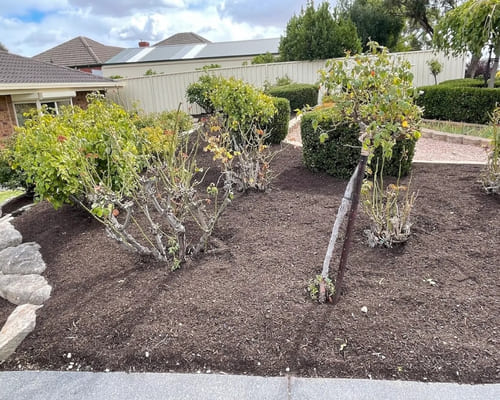
TESTIMONIALS
What Findon Homeowners Say About Us
Request A Free Quote
GET A FREE QUOTE
BUSINESS
SERVICES
OPERATING HOURS
Sun: 7:00am - 9:00pm
Mon: 7:00am - 9:00pm
Tue: 7:00am - 9:00pm
Wed: 7:00am - 9:00pm
Thu: 7:00am - 9:00pm
Fri: 7:00am - 9:00pm
Sat: 7:00am - 9:00pm