
Gardening and Landscaping in Glenunga
Gardening and Landscaping in Glenunga
Professional Gardening & Landscaping Solutions for Residential, Commercial & Strata Properties Across Adelaide
Glenunga sits in the City of Burnside, a few kilometres south-east of the Adelaide CBD, on 89 hectares first farmed in the 1840s as part of the same Knoxville land that gave neighbouring Glenside its start. Council's own street-tree strategy splits the suburb in two: broad, jacaranda-lined verges in the north toward Glenside, and narrower verges in the south nearer Glen Osmond, where Prunus and Melia take over instead. The ground rises steadily toward the foothills, from around 68 metres near the Glenside boundary to 125 metres toward Portrush Road, and Glenunga gets noticeably more rain than its flatter neighbours as a result. Glenunga International High School and the Glenunga Village shops anchor the middle of the suburb, and a backyard on Bevington Road is where the Hills Hoist got its start. BP Blitz works Glenunga's older quarter-acre gardens and newer townhouse blocks, alongside Glenside and Fullarton next door.
GET A FREE QUOTE
OUR STORY
From Knoxville Farmland To The Backyard That Built The Hills Hoist
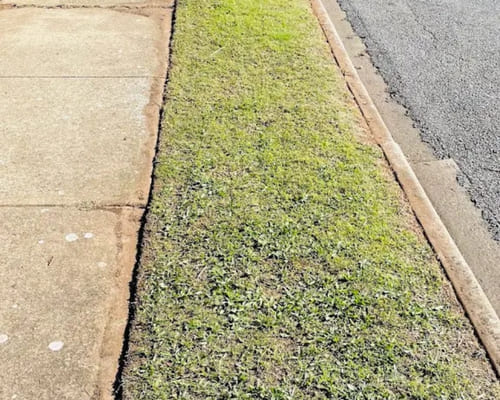
Glenunga was subdivided from 1860, but the land under it had already been working land for two decades. Through the 1840s this corner of Burnside, once known as Knoxville along with neighbouring Glenside, carried grazing paddocks, coach company yards and, from 1882, a slaughter yard on what is now the grounds of Glenunga International High School, which at its peak supplied about half of Adelaide's meat. That working history is part of why the suburb's blocks were laid out generously from the start, wide enough to carry the established jacarandas and shade trees that now define Glenunga's older streets. The suburb's best-known piece of history, though, happened in someone's own backyard. In 1945, Lance Hill bought a wooden prototype rotary clothes hoist and its plans and began building and selling the design from his home on Bevington Road, Glenunga, with his brother-in-law Harold Ling joining as a partner the following year. Production soon outgrew the yard and moved first to Glen Osmond Road, then to a larger site at Edwardstown, but the Hills Hoist, the fixture in almost every Australian backyard for two generations, started life in a Glenunga garden. Bevington Road is still a real, currently gardened Glenunga street today, and it happens to carry White Cedar street trees due for replacement under Council's current tree strategy, so we still work that same stretch regularly. The 2021 Census counted 2,184 people across 884 dwellings in Glenunga, and the housing mix tells you what kind of gardens we're actually looking after: 67.5 per cent separate houses, but 20.0 per cent semi-detached, row or terrace homes and townhouses, plus 13.6 per cent flats or units, a noticeably higher flat share than most of the suburbs we cover nearby. That means a meaningful slice of Glenunga jobs are compact courtyard or strata gardens rather than full quarter-acre blocks, and we plan the visit differently depending on which one we're walking into. On the older, generously proportioned blocks near the Glenside boundary we're usually managing established trees and hedges that have had sixty-plus years to grow into their space; on the newer townhouse and unit developments closer to Glenunga Village, the job is a tighter, lower-maintenance garden that still has to look considered against its established neighbours. Either way, regular garden maintenance in Glenunga is rarely a one-size job, and we quote it after walking the specific block, not off a generic suburb rate.
SERVICES WE OFFER IN Glenunga
A Suburb Split By Its Own Street Trees, And A Climb Toward The Foothills
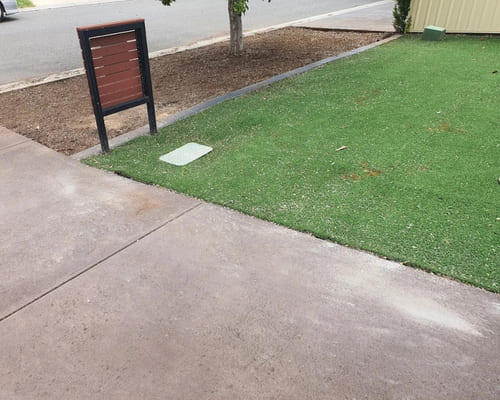
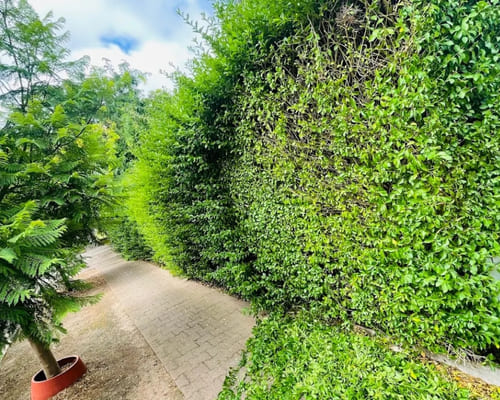
Most suburbs we cover have one tree story. Glenunga has two, and Council's own Urban Tree Strategy says so directly: the suburb has "a blended mix of both wide and narrow verges," with the broader verges usually on streets that extend into Glenside, and narrower verges on the upper sections nearer Glen Osmond. Trees follow the same split, with Jacaranda, Lophostemon and Fraxinus dominant in the northern streets and Prunus and Melia dominant in the south. Practically, that means the pruning and clean-up job on a wide-verge northern street like Allinga Avenue or Rowell Avenue is a different job to a narrow-verge southern street nearer Glen Osmond, and we plan for both rather than treating Glenunga as one uniform round. Council has also flagged Allinga Avenue and Glenunga Avenue specifically for fewer future street trees, because recent road widening has eaten into the growing space, which over time shifts more of the shade and screening job onto private hedges and garden trees rather than the verge. White Cedar sits on five Glenunga streets under Council's current plan, Bevington Road, Cedar Avenue, Glenunga Avenue, L'Estrange Street and Trevorten Avenue, and it drops fruit that's rated extremely toxic by Queensland Health's poisons information service. On those streets a fallen-fruit sweep-up is a safety job around kids and pets, not just tidiness, and we treat it that way. Elevation is the other thing that sets Glenunga apart from the suburbs around it. Sampled across the boundary, the ground climbs from about 68 metres near the Glenside edge to 125 metres toward Portrush Road, a 57-metre rise that's noticeably steeper than flatter neighbours like Dulwich. That higher ground pulls more rain: over the past 25 years Glenunga has averaged 591 millimetres of rain a year against roughly 511 millimetres at nearby Dulwich, with June the wettest month at around 87.5 millimetres and February the driest at around 21 millimetres. On the higher, steeper blocks toward Portrush Road we lay mulch at 50 to 75 millimetres to hold that extra moisture and slow run-off rather than letting it wash straight off the slope, and on lawns under the established northern canopy we generally recommend a soft-leaf buffalo turf kept at a 50 to 75 millimetre mowing height, because it holds up far better in dappled shade than a full-sun couch variety. Fewer extreme-heat days than flatter suburbs nearby, 18.8 a year on average against Dulwich's 24.4, also means Glenunga gardens generally cope better through a dry summer once the watering and mulching are right. Mulch installation and irrigation installation bookings in Glenunga are set up around this slope-and-rainfall pattern rather than a flat, one-size Adelaide average. With almost 86 rain days a year on average and June alone averaging 87.5 millimetres, gutters under Glenunga's northern jacaranda canopy fill faster through autumn than in a drier suburb, so we time gutter cleaning visits around that seasonal drop rather than a fixed calendar date. On hedges and screening shrubs along the narrower southern streets, where blocks sit tighter to the fence line, we generally trim to a flat top and square sides at around 1.5 to 1.8 metres for a standard privacy hedge, high enough for screening but low enough to maintain safely from the ground without scaffolding.
Why choose us in Glenunga
Why Glenunga Households And The School Community Choose BP Blitz
BP Blitz Gardening and Landscaping Services carries $20,000,000 in public liability insurance and more than 20 years of combined local experience gardening across Adelaide's eastern suburbs, which matters on Glenunga's mix of established blocks with mature trees close to fences and the tighter townhouse driveways near Glenunga Village. Across more than 500 customers served, the feedback we hear most in a suburb like Glenunga is that the same team turns up each visit already knowing which streets carry White Cedar, which blocks sit on the steeper ground toward Portrush Road, and which gardens are on a strata title rather than a single title. We quote every job upfront after walking the property, whether it's a single one-off garden clean-up or a standing regular maintenance visit, and we explain what needs doing now against what can safely wait. With Glenunga International High School and its roughly 2,300 students sitting in the middle of the suburb, a lot of our Glenunga clients are families whose weeks run around school drop-off and pick-up, and a standing fortnightly or monthly booking that just happens without a phone call each time suits that routine better than a one-off callout. For the suburb's townhouse and unit developments, closer to the 20 per cent semi-detached and 13.6 per cent flats the 2021 Census recorded here, we quote strata property maintenance separately from a single residential block, working around body corporate access and common areas rather than treating every job the same way. And on Kingsley Avenue, where Council's own heritage database lists the row of Date Palms itself, not just a house, as a Local Heritage Place, we check before any pruning or reshaping goes near it, the kind of local knowledge that only comes from already working the street. Call Mitesh on 0406 147 913 and we'll talk through your Glenunga block before booking anything in. We're straightforward about what a Glenunga garden actually needs rather than upselling work it doesn't, and that consistency is why so many of our Glenunga bookings turn into a standing arrangement rather than a single visit.
SERVICES WE OFFER IN Glenunga
The Glenunga Streets And Neighbouring Suburbs We Cover
Glenunga runs from the Glenside boundary in the north down to the higher ground toward Glen Osmond in the south, bordered by Linden Park to the north-east, St Georges to the east and south-east, Myrtle Bank to the south, Fullarton to the south-west and west, and Frewville to the north-west. Through the northern half we regularly work Allinga Avenue, Rowell Avenue, Queen Street, Sydney Street, Lebanon Avenue and Taminga Avenue, wide-verge streets carrying the established Jacaranda plantings Council's own strategy singles out for this end of the suburb. Toward the southern, narrower-verge streets nearer Glen Osmond we cover Bevington Road, Cedar Avenue, Glenunga Avenue, L'Estrange Street and Trevorten Avenue, all currently carrying White Cedar under Council's replacement plan. Around Glenunga International High School on L'Estrange Street and the Glenunga Village shops on Portrush Road, we service both the family homes in the school catchment and the strata-titled units closer to the shops, and we maintain the garden beds around Glenunga Reserve and Kingsley Avenue Reserve on a standing schedule for nearby residents. We also work directly across Glenunga's borders into Glenside, Linden Park, St Georges, Myrtle Bank, Fullarton and Frewville on the same run of days, so if your street sits close to any of those boundaries, we're almost certainly already covering it. Call 0406 147 913 with your street name and we'll confirm on the spot.
Gardening and Landscaping Services we offer In Glenunga
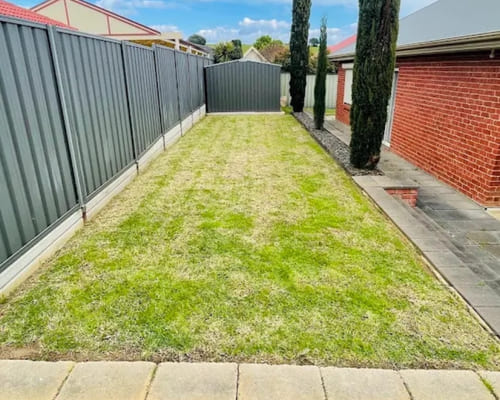
Scheduled mowing you can actually set your calendar by, with edging, trimming and a full blow-down included every visit. Cut height matched to your grass type so your lawn survives the Adelaide summer instead of scalping.
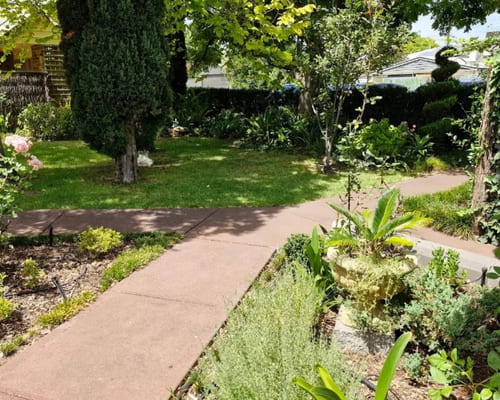
Weeds treated properly rather than just sprayed off the top. Selective lawn treatment, bed hand-weeding, paving knockdown and mulch suppression, timed to the Adelaide season so the weeds do not simply return in six weeks.
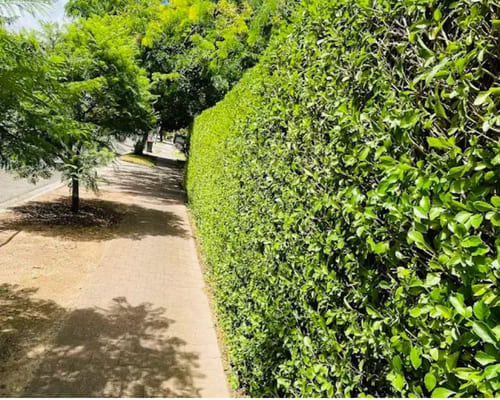
Hedges and shrubs cut to the species and the season, tapered so they stay green to the base rather than going bare and woody underneath. Every trimming cleared away, with the green waste cost agreed before we start.
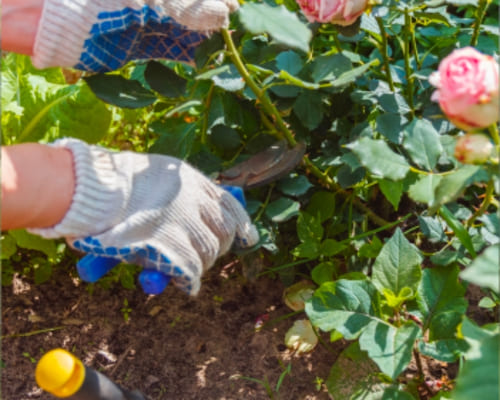
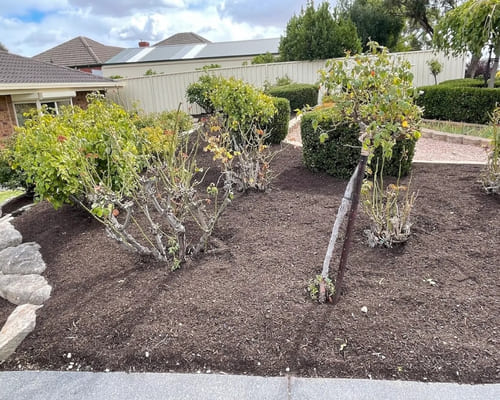
Roses pruned the way they should be, by bush type, at the right time of year, with clean angled cuts to outward-facing buds. An open vase shape that beats black spot and gives you a proper flush of flowers in spring.
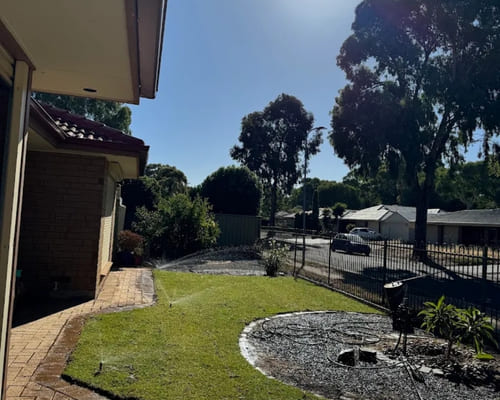
Feeding that actually reaches the roots. We condition Salisbury's reactive clay with gypsum, compost and wetting agents first, then apply the right slow-release or liquid feed for your lawn and beds, timed to the Adelaide seasons.
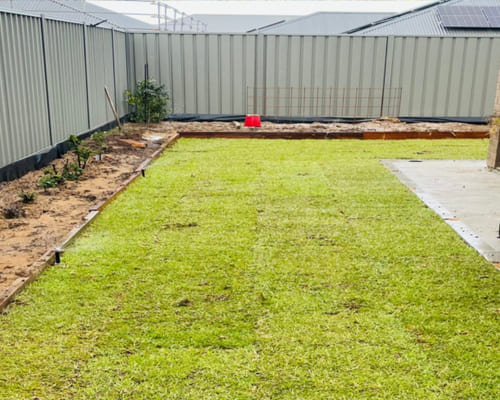
One crew, one schedule, one number that never changes. Mowing, edging, weeding, trimming and green waste handled on a set cycle so your garden never reaches the point where it needs an expensive rescue.
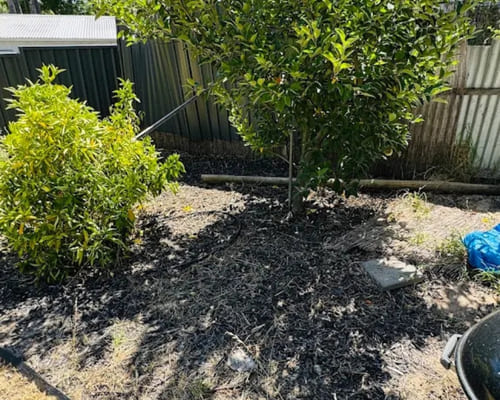
One visit to get a property back under control, quoted in writing before we touch anything. Bond returns, open inspections, council notices and overgrown blocks cleared completely, with the green waste cost agreed upfront.
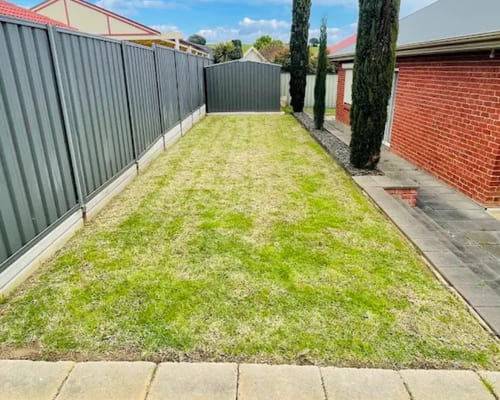
Strata grounds maintained on a fixed cycle with one point of contact, itemised invoicing your committee can approve, photo reporting and a current certificate of currency backed by $20 million public liability cover.
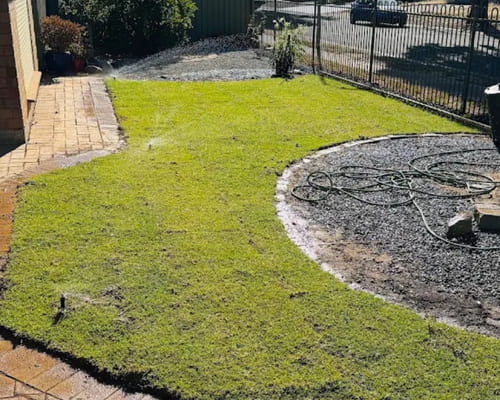
Commercial grounds kept to a consistent standard on a fixed schedule, worked around your trading hours, invoiced against an ABN with itemised lines and backed by $20 million public liability cover.
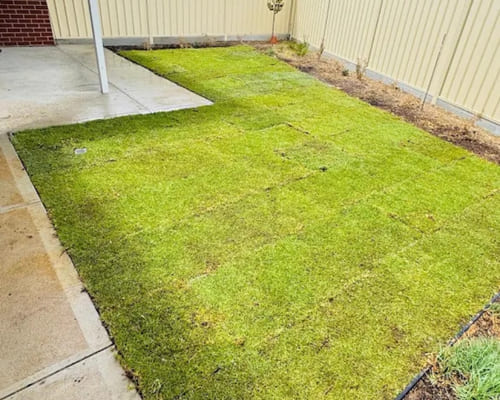
The whole property handled by one crew instead of three separate trades. Lawns, beds, hedges, mulch, irrigation and gutters on a single schedule, with one invoice and one number to call.
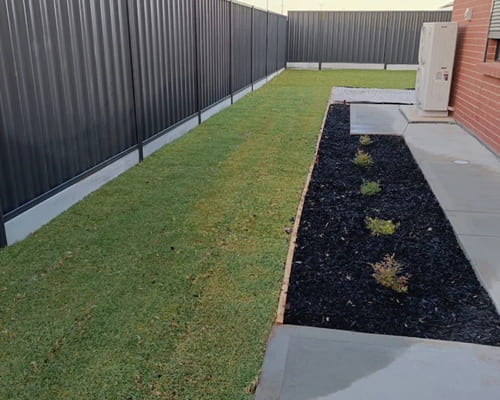
Turf that is still thriving in three years because the clay underneath was fixed first. Gypsum, compost, proper levels and screed sand before a single roll goes down, plus the watering plan that gets you through the critical first three weeks.
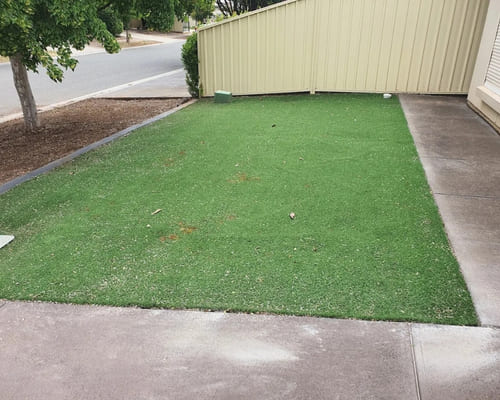
Artificial turf laid on a properly compacted crushed rock base, not straight onto dirt. Glued joints, secured edges and brushed-in infill so it still looks flat and upright after its third Adelaide summer.
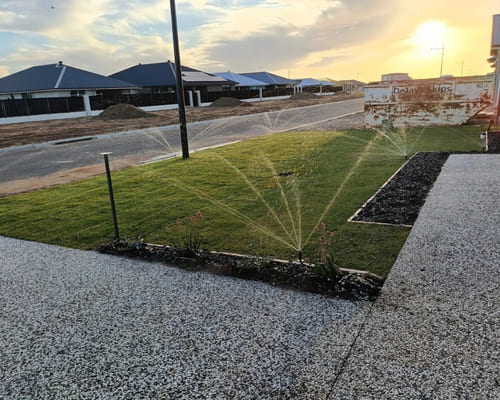
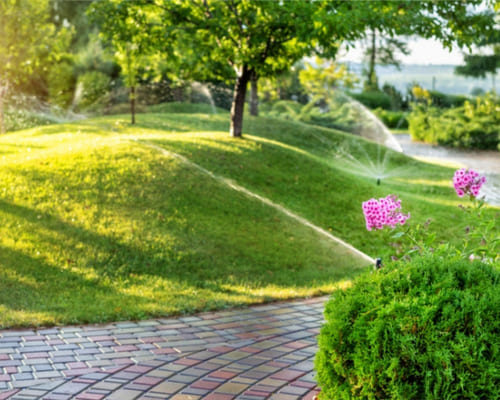
Irrigation designed off your actual mains pressure and flow, zoned by plant type and sun, and set for early-morning cycles that beat Adelaide evaporation. Every arc tested and adjusted before we hand it over.
Gardening and Landscaping In Glenunga
FREQUENTLY ASKED QUESTIONS
Everything you need to know about our Gardening and Landscaping In Glenunga
TESTIMONIALS
What Glenunga Homeowners Say About Us
Request A Free Quote
GET A FREE QUOTE
BUSINESS
SERVICES
OPERATING HOURS
Sun: 7:00am - 9:00pm
Mon: 7:00am - 9:00pm
Tue: 7:00am - 9:00pm
Wed: 7:00am - 9:00pm
Thu: 7:00am - 9:00pm
Fri: 7:00am - 9:00pm
Sat: 7:00am - 9:00pm