
Gardening and Landscaping in Clarence Gardens
Gardening and Landscaping in Clarence Gardens
Professional Gardening & Landscaping Solutions for Residential, Commercial & Strata Properties Across Adelaide
Clarence Gardens is the alkaline one. It is a rectangle of roughly 1.26 kilometres by 870 metres, hemmed in by Cross Road, South Road, Winston Avenue and Edward Street, with no creek anywhere inside it. Under the lawns sits Edwardstown Association red-brown earth: a brown sandy loam skin, a compact sandy loam layer from about five inches down, friable red-brown clay beneath that and a lime horizon just below two feet. The published profile for this soil reads pH 7.1 at a foot and 8.9 at four feet, which is why the citrus and gardenias here yellow between green veins while the grass beside them looks perfectly healthy. Add 915 dwellings that are 84.1 per cent separate houses and this is full-size garden work on ground that has to be fed correctly. Call Mitesh on 0406 147 913 for a free measured quote.
GET A FREE QUOTE
OUR STORY
A Rectangle Of Detached Houses Between Cross Road And Edward Street
Clarence Gardens is small, square and almost entirely detached. Cross Road runs along the top of it, South Road down the western side, Winston Avenue up the east and Edward Street across the bottom, and the whole suburb measures about 1.26 kilometres north to south by 870 metres across. Inside that rectangle the 2021 Census counted 2,373 people living in 915 private dwellings, and the housing mix is what sets this round apart from most of our Adelaide work: 84.1 per cent of occupied dwellings are separate houses, only 5.5 per cent are semi-detached, row or terrace houses and townhouses, and 11 per cent are flats or apartments. Nearly half the dwellings, 47.7 per cent, carry three bedrooms and another 27.9 per cent carry four or more, which is the fingerprint of an interwar and post-war suburb whose original houses are being extended, rebuilt and re-landscaped rather than carved up into units. The street names hold the same date stamp. Messines Avenue takes its name from the 1917 battle, and Aldershot Street, Bideford Avenue, Solent Street, Ilford Road, Clovelly Avenue and Ripon Road all belong to the English naming fashion of Adelaide subdivisions between the wars, with the local post office opening on 1 August 1946. What that history means at ground level is straightforward. These are proper back lawns with room to turn a mower, side boundaries long enough to carry a real hedge, and trees that have had sixty to a hundred years to put on size. There is no creek and no reserve belt threading between the blocks, so every garden drains to its own kerb and its own pipe. A week of ours here runs from mowing full-size lawns, through a hedge and shrub run along fence lines planted when the houses went up, to scheduled maintenance for owners who want the place held at a standard rather than rescued twice a year.
SERVICES WE OFFER IN Clarence Gardens
Sandy Loam For Five Inches, Clay Beneath It, Lime At Two Feet
The reason gardens misbehave in this suburb is written into the soil profile. Clarence Gardens sits in what the state bulletin, The Soils and Geology of Adelaide and Suburbs, maps as the Edwardstown Association, the soils of the lower portions of the Upper Outwash Plains, formed under a higher water table than the Urrbrae soils further up the slope and therefore tending, in the bulletin's own words, to be shallower and to show some effects of hydromorphism. The dominant soil, Type RB5, runs brown sandy loam for the first five inches, then a light reddish-brown compact sandy loam to about eleven inches, then friable red-brown clay, with a lime horizon just below two feet and mottling deeper again. The analytical data for that soil type is the part gardeners actually feel. Its pH reads 7.1 at a foot and 7.4 at two feet, then 8.9 at four feet and 9.0 at six; total soluble salts climb from 0.021 per cent near the surface to 0.147 per cent at depth; and clay content jumps from 36 per cent at a foot to 85 per cent at two. Three consequences follow, and between them they explain most of the calls we take here. First, anything deep-rooted is drinking from alkaline, mildly salty subsoil, which locks up iron, so citrus, gardenias, camellias and magnolias go yellow between green veins while the lawn beside them stays fine. The answer is a chelate that survives the pH, meaning an EDDHA iron chelate, which holds up to around pH 9, rather than the cheaper EDTA form that lets go of its iron above about 6.5, supported by elemental sulphur to bring the topsoil down over a season or two. Lime is the one thing this ground never needs. Second, a planting hole cut straight into that clay behaves like a sump, so garden beds here get built up rather than dug down, and the sides of any hole are broken open instead of left polished by the spade. Third, the compact layer between five and eleven inches stops roots and water alike, which is why a lawn watered every day still browns off in patches: the fix is hollow-tine coring and a sandy top dressing, not another five minutes on the controller. Rainfall leaves no room for a set-and-forget programme either. The Bureau of Meteorology gauge at Adelaide (Keswick), station 023115, stands 2.8 kilometres away at 34 metres on the same plain, and across 22 complete years from 2002 to 2024 it averages 466.1 millimetres, with 286.2 millimetres in 2006, 715.0 millimetres in 2016 and just 315.2 millimetres as recently as 2024. February has recorded exactly 0.0 millimetres three times in that record, in 2002, 2015 and 2024. On this profile that means irrigation set to long, infrequent cycles that push salt down past the root zone, re-timed each season rather than left where the installer set it, and feeding given as small repeated doses that the sandy surface cannot flush straight through.
Why choose us in Clarence Gardens
River Red Gums, A Fortnightly Green Bin And A Tip That Will Not Take Us
The trees here are bigger than the blocks they stand on. The City of Mitcham's own water initiatives page describes the significant river red gum in Fulton Place that had blocked the footpath and lifted the kerb and road pavement until water pooled and ran into a resident's driveway during heavy rain, and the rebuilt street now uses permeable paving so stormwater passively irrigates the verge and cul-de-sac planting instead. That tree is a fair emblem for the suburb. Root plates run under lawns all over these streets, and that changes how the work is done: cutting height comes up over surface roots instead of scalping them, edging stays off the root flare, and we will not sever a structural root to tidy a line. Where a tree is beyond us we say so plainly. In South Australia a regulated tree is one with a trunk circumference of a metre measured a metre above the ground, and a significant tree is two metres or more, and both need development approval before pruning or removal, so that work belongs with an arborist and an application rather than a gardener with a pole saw. Gums also shed all year, leaves, bark and capsules together, which is why gutter cleaning on a big-tree street here is a twice-yearly job rather than an annual one. Canopy is under real pressure at this end of the council. The 2022 Green Adelaide mapping, reported by the council on 20 May 2024, put tree canopy across the whole City of Mitcham at 39.77 per cent, up from 32.32 per cent in 2018-19, with council reserves at 55.5 per cent, against roughly 17 per cent for metropolitan Adelaide as a whole. That headline figure is lifted by the hills face, and Green Adelaide's own finding is that loss shows up in residential areas with high demand for development land and along major arterial roads that have undergone infrastructure upgrades. Clarence Gardens is both of those things at once, with infill on the older blocks and the South Road corridor and its Torrens to Darlington works running the full length of the western boundary, so holding the private canopy and hedging that remains is genuine work. Green waste is the last practical point and it is worth understanding before you compare quotes. Mitcham households get a 240 litre green organics bin collected fortnightly, and residents can use the Lynton green organics drop-off on Beagle Terrace, including 12 free days between October and January. Neither of those helps a contractor, because the facility is for residents maintaining their own properties and is expressly not open to commercial operators, so everything we cut leaves on our trailer and the removal is priced into the clean-up before we start. BP Blitz works out of Brooklyn Avenue in Salisbury, carries 20 million dollars in public liability cover with a certificate of currency on request, and trades under ABN 59 193 634 840. We have run under the BP Blitz name since 2023 on a local gardening business with more than 20 years behind it, we have looked after over 500 properties across Adelaide, and every price is fixed and written down before anyone starts. Call Mitesh on 0406 147 913.
SERVICES WE OFFER IN Clarence Gardens
The Streets We Work In Clarence Gardens, From South Road To Winston Avenue
Our Clarence Gardens round splits neatly along the grid. Against South Road on the western edge we work Delaine Avenue, Messines Avenue, Neville Avenue, Angus Avenue, Pearson Street, Abercrombie Street, Abercrombie Court, Dennis Court and Hilda Street, the strip that carries the dust and traffic of the corridor works and the one we try to book earlier in the day. Along the northern side under Cross Road we cover Homer Road, Ripon Road, Oakfield Avenue, East Avenue, Clovelly Avenue, Pulford Street, Ilford Road, Thomas Street, Arthur Street, Leith Avenue, Ackland Avenue, Bideford Avenue and Dinwoodie Avenue, which is also where Nieass Reserve sits. Through the middle we work Dawn Street, Aldershot Street, Goodale Avenue, Avenue Road, Grigg Court, Hessian Avenue, Lovell Court, Winona Avenue, Chamberlain Avenue, Bice Street, Wainwright Street, Lyric Place, Albert Street and Edith Street, the blocks wrapped around the A.A. Bailey Recreation Ground and Goodale Reserve. The bowling greens and tennis courts in there are specialist sports turf and we do not pretend otherwise, but club surrounds, reserve edges and shared grounds of that kind are quoted per site as commercial maintenance rather than as a residential visit, and on the houses backing onto that open space we plan the round around weekend fixtures and the cars they park along the kerb. At the southern end toward Edward Street we cover Lee Street, Gladys Street, Caulfield Avenue, Solent Street and Fulton Place, where the big gum and the permeable road surface are. Winston Avenue closes the suburb on the east, and the stormwater collected off it is soaked into the ground through roughly 60 metres of gravel-filled trench at Skitch Reserve just over the line in Melrose Park, which tells you how flat and how pipe-dependent this country is. Straight over Winston Avenue is Cumberland Park, with Colonel Light Gardens, Millswood, Panorama, Pasadena and Mitcham all on the same southern run, while Glandore, Edwardstown, Black Forest, Clarence Park, Melrose Park and Daw Park sit immediately across the four boundary roads. Call 0406 147 913 with your street name and we will tell you which day we are already in Clarence Gardens.
Gardening and Landscaping Services we offer In Clarence Gardens
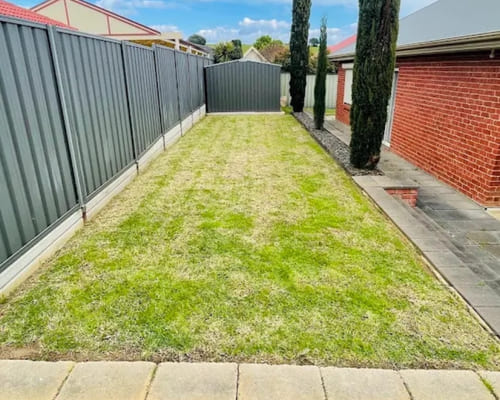
Scheduled mowing you can actually set your calendar by, with edging, trimming and a full blow-down included every visit. Cut height matched to your grass type so your lawn survives the Adelaide summer instead of scalping.
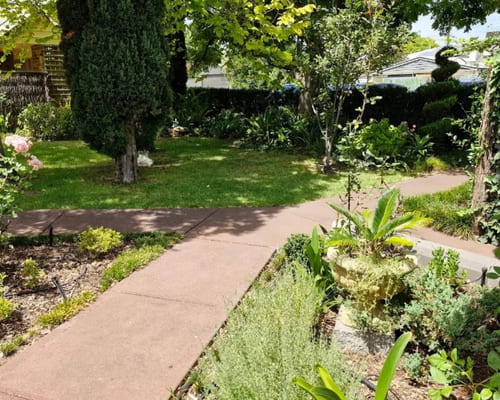
Weeds treated properly rather than just sprayed off the top. Selective lawn treatment, bed hand-weeding, paving knockdown and mulch suppression, timed to the Adelaide season so the weeds do not simply return in six weeks.
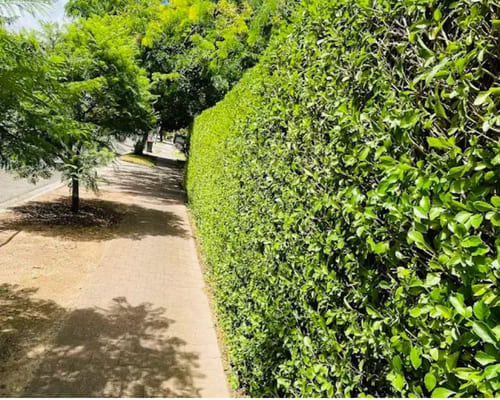
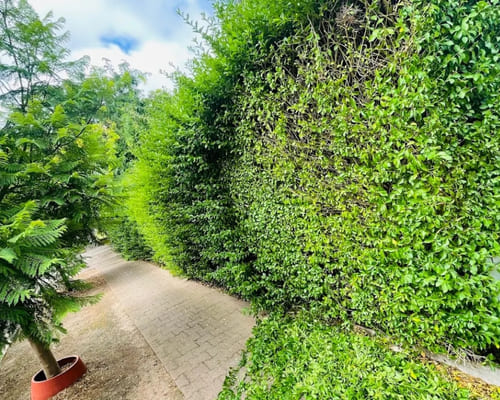
Hedges and shrubs cut to the species and the season, tapered so they stay green to the base rather than going bare and woody underneath. Every trimming cleared away, with the green waste cost agreed before we start.
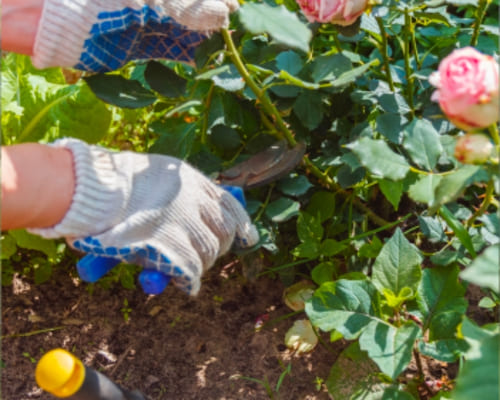
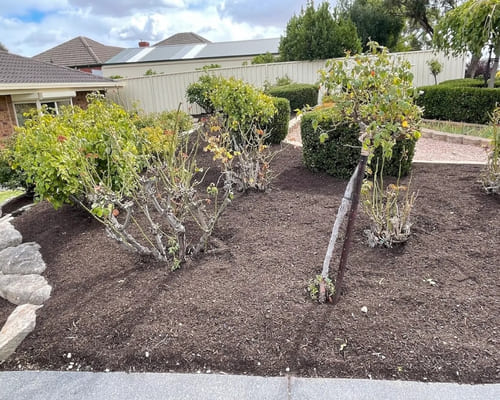
Roses pruned the way they should be, by bush type, at the right time of year, with clean angled cuts to outward-facing buds. An open vase shape that beats black spot and gives you a proper flush of flowers in spring.
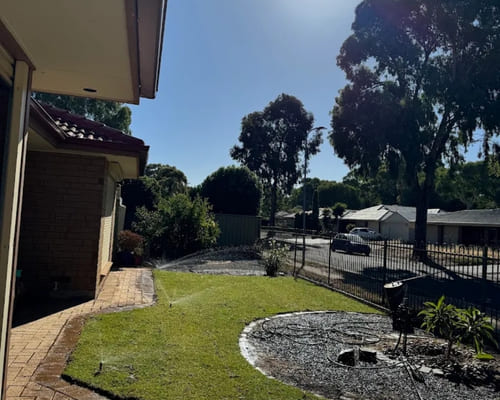
Feeding that actually reaches the roots. We condition Salisbury's reactive clay with gypsum, compost and wetting agents first, then apply the right slow-release or liquid feed for your lawn and beds, timed to the Adelaide seasons.
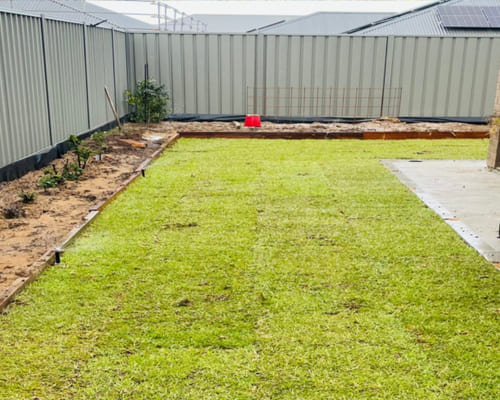
One crew, one schedule, one number that never changes. Mowing, edging, weeding, trimming and green waste handled on a set cycle so your garden never reaches the point where it needs an expensive rescue.
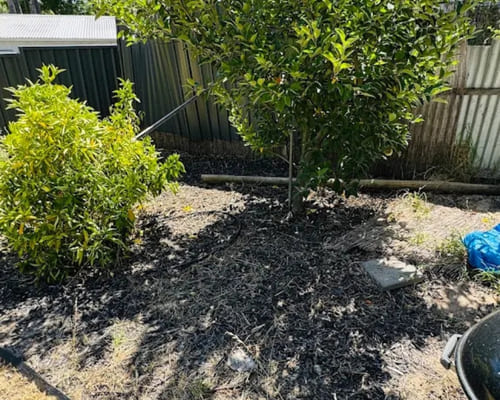
One visit to get a property back under control, quoted in writing before we touch anything. Bond returns, open inspections, council notices and overgrown blocks cleared completely, with the green waste cost agreed upfront.
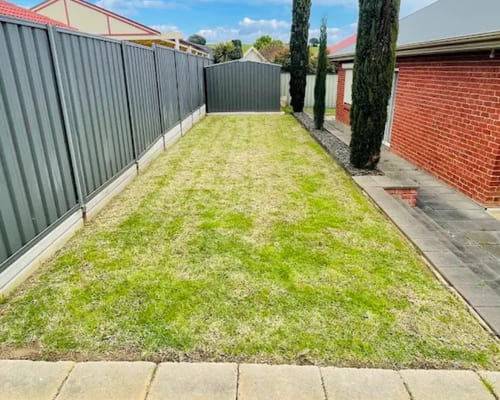
Strata grounds maintained on a fixed cycle with one point of contact, itemised invoicing your committee can approve, photo reporting and a current certificate of currency backed by $20 million public liability cover.
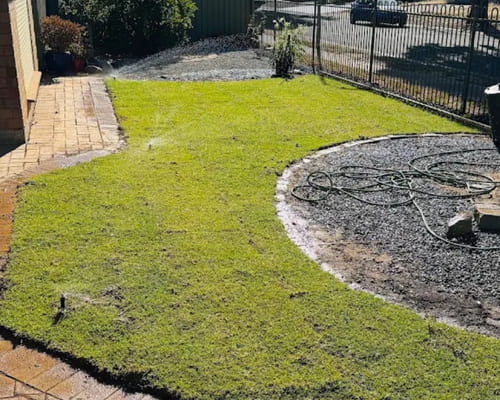
Commercial grounds kept to a consistent standard on a fixed schedule, worked around your trading hours, invoiced against an ABN with itemised lines and backed by $20 million public liability cover.
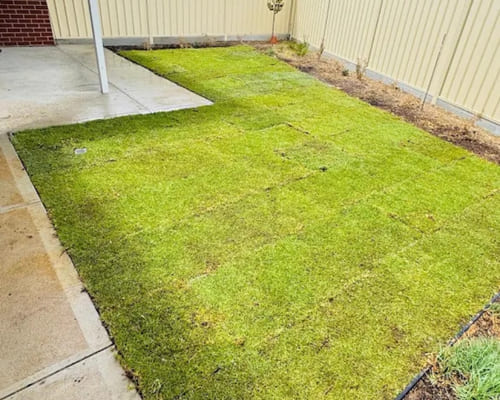
The whole property handled by one crew instead of three separate trades. Lawns, beds, hedges, mulch, irrigation and gutters on a single schedule, with one invoice and one number to call.
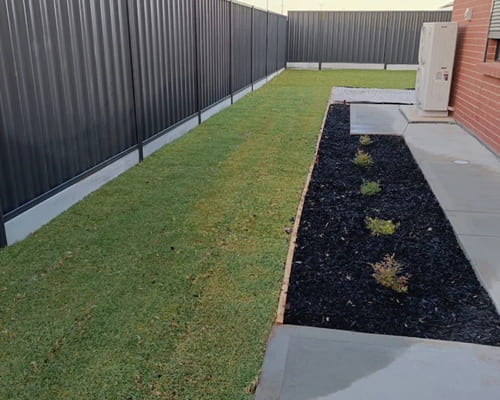
Turf that is still thriving in three years because the clay underneath was fixed first. Gypsum, compost, proper levels and screed sand before a single roll goes down, plus the watering plan that gets you through the critical first three weeks.
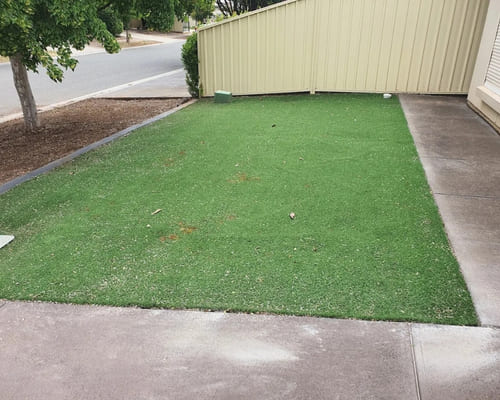
Artificial turf laid on a properly compacted crushed rock base, not straight onto dirt. Glued joints, secured edges and brushed-in infill so it still looks flat and upright after its third Adelaide summer.
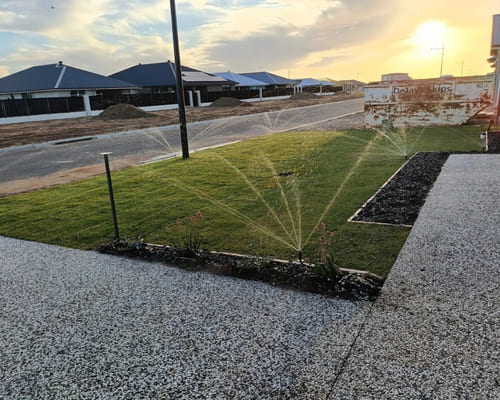
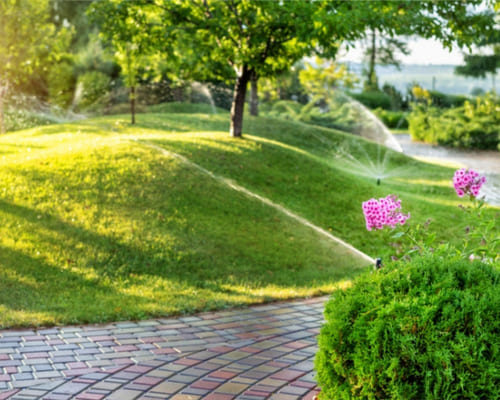
Irrigation designed off your actual mains pressure and flow, zoned by plant type and sun, and set for early-morning cycles that beat Adelaide evaporation. Every arc tested and adjusted before we hand it over.
Gardening and Landscaping In Clarence Gardens
FREQUENTLY ASKED QUESTIONS
Everything you need to know about our Gardening and Landscaping In Clarence Gardens
How much does a gardener cost in Clarence Gardens?
A standard maintenance visit on a Clarence Gardens block, taking in the mow, the edging, a trim and the blow-down, generally sits between $60 and $110. Blocks here are bigger than the Adelaide average, since 84.1 per cent of the dwellings are separate houses and three quarters of them carry three or more bedrooms, so a deep back lawn with established beds around it usually lands in the upper half of that band. A garden that has been left to run is a clean-up rather than a maintenance visit and normally falls between $150 and $400, with removal included, because the council drop-off will not accept a contractor's load. Every figure is fixed and written down before we start. Call Mitesh on 0406 147 913.
Why do my citrus and gardenias go yellow between the veins in Clarence Gardens?
That pattern, yellow leaf with the veins still green, is iron lockout rather than hunger, and the soil here causes it. The published profile for the Edwardstown Association soil under this suburb reads pH 7.1 at a foot but 8.9 at four feet, with a lime horizon just below two feet, so a mature shrub or tree is feeding out of strongly alkaline ground even when the topsoil tests fine. Pouring on more general fertiliser will not fix it. What works is an EDDHA iron chelate, which stays available up to around pH 9, where the common EDTA form gives up its iron above roughly 6.5, plus elemental sulphur worked into the surface to bring the top layer down gradually. Whatever you do, do not add lime or dolomite to this ground.
My lawn browns off in patches even though I water it every day. What is wrong?
Almost always it is the compact layer sitting between about five and eleven inches down, which is a normal feature of the soil type mapped across this suburb. Water and roots both stall on it, so daily sprinkling wets the top few centimetres, evaporates and never reaches a root system that has nowhere to go anyway. Hollow-tine coring, a sandy top dressing and a shift to longer, less frequent watering will do more in one season than any amount of extra run time. It matters most in a dry summer, and the Keswick gauge nearby has recorded a February with 0.0 millimetres three times since 2002.
There is a big gum lifting my footpath and lawn. Can you cut the roots back?
No, and we would rather explain why than take the job. The council's own case study on Fulton Place in Clarence Gardens involved a river red gum that had lifted the kerb and road pavement and pushed water into a driveway, and the answer there was permeable paving around the tree rather than cutting into it. Beyond the engineering, a regulated tree in South Australia is one with a trunk circumference of a metre measured a metre above the ground, and a significant tree is two metres or more, and both need development approval before pruning or removal. What we can do is mow higher over the root plate, keep edging off the flare, mulch the area properly and put you onto an arborist for anything structural.
Where does the green waste go if the council tip will not take it?
It leaves on our trailer, and the cost of that is quoted before the work starts. City of Mitcham gives households a 240 litre green organics bin on a fortnightly cycle, plus the Lynton green organics drop-off on Beagle Terrace with 12 free days between October and January, but that facility is for residents maintaining their own properties and is expressly closed to commercial operators. Any gardener who tells you the bin will absorb a full clean-up either has not seen the garden or plans to leave half of it in piles. We size the load at the quote stage so there is no second invoice at the end.
Do you cover Cumberland Park, Melrose Park and Colonel Light Gardens as well?
Yes. Cumberland Park is straight over Winston Avenue, Melrose Park and Daw Park sit across Edward Street and Glandore and Edwardstown are over South Road, so all of them usually run on the same morning as Clarence Gardens. Colonel Light Gardens, Millswood, Panorama, Pasadena and Mitcham are on the same southern circuit and share the same soil behaviour, so advice given on one street holds good on the next. Running neighbouring suburbs together is how we keep travel out of the price on smaller jobs, which is worth mentioning if you and someone in the next street both want a regular cycle. Call 0406 147 913 with your address and we will confirm the day.
TESTIMONIALS
What Clarence Gardens Homeowners Say About Us
Request A Free Quote
GET A FREE QUOTE
BUSINESS
SERVICES
OPERATING HOURS
Sun: 7:00am - 9:00pm
Mon: 7:00am - 9:00pm
Tue: 7:00am - 9:00pm
Wed: 7:00am - 9:00pm
Thu: 7:00am - 9:00pm
Fri: 7:00am - 9:00pm
Sat: 7:00am - 9:00pm